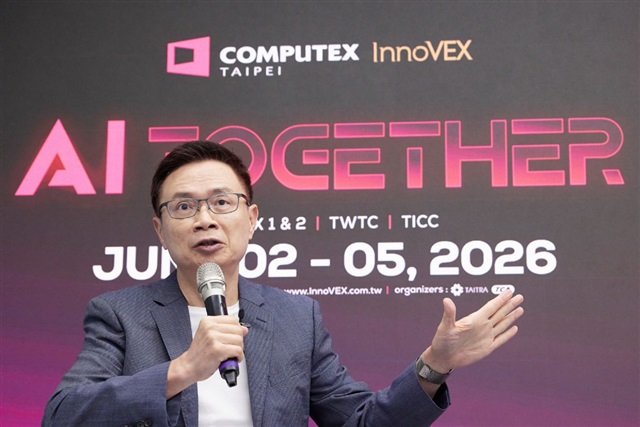
Computex 2024: The Economic Power of the Tech Ecosystem
The Taiwan External Trade Development Council (TAITRA) announced that companies participating in the 2024 edition of Computex represent a combined market value exceeding US$10 trillion. This figure, reported by DIGITIMES, not only highlights the economic stature of the players present at the event but also underscores Computex's central role as a showcase for innovations shaping the future of global technology.
The Taipei event has long been a benchmark for the hardware, semiconductor, and consumer electronics industries. The impressive market value of the exhibiting companies reflects their collective influence on the global technology supply chain, from advanced chip manufacturing to the assembly of complex systems, all fundamental elements for the advancement of sectors such as artificial intelligence and Large Language Models (LLMs).
The Crucial Role of Hardware in the LLM Era
The aggregated value of the companies present at Computex offers a perspective on the industry's capacity to invest and innovate in enabling technologies. For organizations evaluating LLM deployment, hardware represents a critical component, especially for self-hosted and on-premise solutions. The availability of high-performance GPUs, with ample VRAM and high throughput capabilities, is essential for managing intensive training and inference workloads.
Hardware infrastructure decisions have a direct impact on Total Cost of Ownership (TCO) and performance. The choice between different silicon architectures, the configuration of bare metal servers, and the optimization of data pipelines are aspects that CTOs and system architects must carefully consider. Computex, in this context, becomes a barometer of trends and available solutions for building robust and scalable AI infrastructures.
Data Sovereignty and On-Premise Deployment: A Strategic Priority
The emphasis on hardware and infrastructure, typical of events like Computex, aligns perfectly with the needs of companies prioritizing data sovereignty and regulatory compliance. On-premise deployment of LLMs allows for granular control over sensitive data, a fundamental aspect for regulated sectors such as finance or healthcare. Air-gapped environments, for example, offer a level of security and isolation that cloud solutions may not fully guarantee.
Companies exhibiting at Computex often present solutions that support these requirements, offering servers, storage systems, and networking components designed for AI workloads in controlled environments. The ability to keep data within corporate or national borders is an increasingly relevant decision-making factor, and the ecosystem represented at Computex is a cornerstone for implementing such strategies.
Future Prospects and Trade-offs for AI Infrastructure
The overall market value of companies at Computex is an indicator of the vitality and resilience of the technology sector. However, for decision-makers dealing with AI infrastructure, the choice is never simple. There are inherent trade-offs between initial (CapEx) and operational (OpEx) costs, between cloud flexibility and self-hosted control, and between performance and energy consumption. The innovation presented at Computex offers new options but requires careful evaluation.
For those evaluating on-premise deployments, AI-RADAR provides analytical frameworks on /llm-onpremise to examine these trade-offs in detail. The goal is not to identify a universal solution but to provide tools for making informed decisions that balance performance, security, compliance, and TCO. Computex, with its impressive market representation, continues to be a crucial crossroads for understanding the future directions of these complex dynamics.











💬 Comments (0)
🔒 Log in or register to comment on articles.
No comments yet. Be the first to comment!