
Computex 2026: The Global Hardware Stage
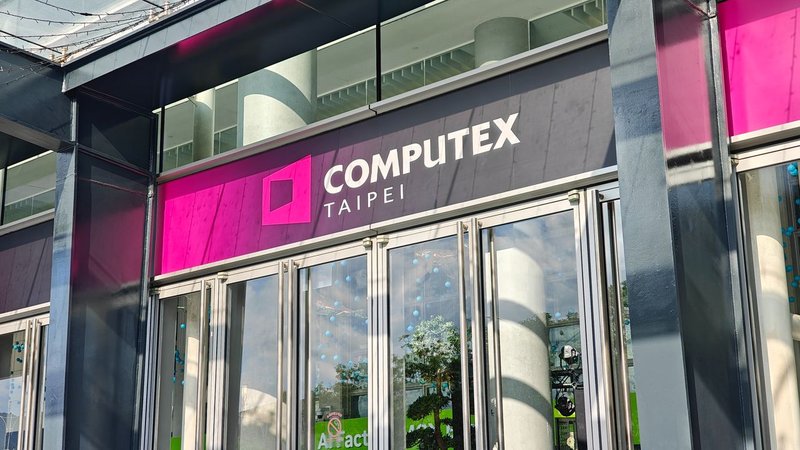
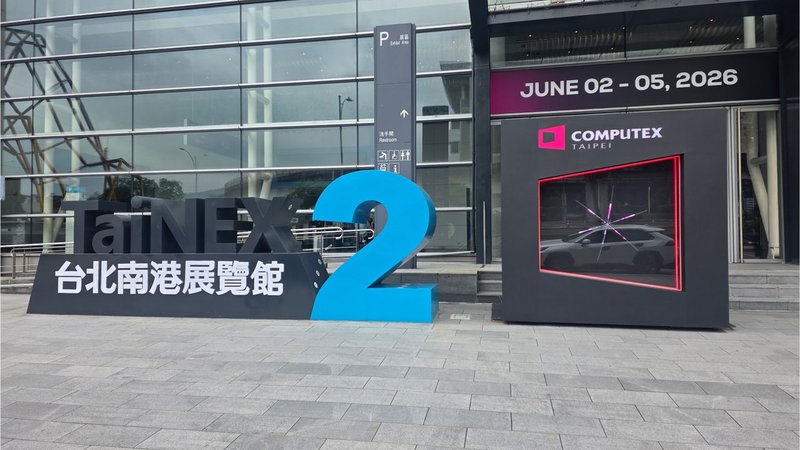
Computex Taipei consistently proves to be one of the most significant events in the global technology calendar, year after year. This event, held in Taiwan's vibrant capital, is traditionally where major hardware manufacturers unveil their latest innovations, from processors and graphics components to storage solutions and complete systems. For the artificial intelligence sector, and particularly for those evaluating on-premise deployments of Large Language Models (LLMs), Computex is not merely a product showcase but a barometer of future trends and available technological capabilities.
The 2026 edition, while still in its preliminary stages, promises to be a crossroads for the strategic decisions companies will face. Media coverage, such as that anticipated by specialized publications, is already exploring the landscape, seeking to capture signals about the directions silicon giants and infrastructure providers will take. For technical decision-makers, understanding these dynamics is crucial for planning future investments and architectures.
The Core of On-Premise AI Hardware Innovation
AI-RADAR's interest in events like Computex stems from its ability to anticipate developments in hardware critical for AI workloads. On-premise LLM deployments demand robust infrastructures capable of handling intense computational requirements for both training and inference. Components such as high-VRAM GPUs, dedicated accelerators, and high-speed interconnect solutions are at the heart of this transformation.
Innovations presented in Taipei often define the standards for throughput, latency, and energy efficiency—crucial factors for those implementing local AI stacks. The availability of new silicon with increased memory, improved bandwidth, and architectures optimized for Transformers can significantly reduce the TCO of a self-hosted infrastructure, allowing for the execution of larger models or the handling of a greater volume of requests with less hardware. This is particularly relevant for companies that need to maintain complete control over their data and processes.
Data Sovereignty and TCO: On-Premise Priorities
For CTOs, DevOps leads, and infrastructure architects, the choice between cloud and on-premise for AI workloads is complex and driven by multiple factors. Data sovereignty, regulatory compliance (such as GDPR), and the need for air-gapped environments are often non-negotiable constraints. In this context, new hardware announcements at Computex gain strategic importance, as they provide the foundation for building high-performance and secure local solutions.
A thorough TCO analysis, which includes not only the initial hardware cost (CapEx) but also operational expenses (OpEx) related to energy, cooling, and maintenance, is essential. Innovations in energy efficiency and computational density can tip the scales in favor of self-hosted deployments, making them more economically advantageous in the long run compared to recurring cloud costs. Events like Computex are the first window into these opportunities.
Future Prospects and Strategic Decisions
Computex 2026, even in its early stages, underscores the importance of a proactive approach to infrastructure planning. Decisions regarding the adoption of new generations of AI hardware are not merely technical but strategic, influencing a company's ability to innovate, maintain competitiveness, and ensure the security of its information assets. For those evaluating on-premise deployments, AI-RADAR offers analytical frameworks on /llm-onpremise to assess the trade-offs between different architectures and solutions.
As the tech world prepares for Taipei, AI-RADAR's focus remains on how these hardware innovations will translate into concrete opportunities for our readers. Understanding the specifications of new silicon, the implications for LLM fine-tuning and inference, and the impact on TCO, is fundamental for navigating the rapidly evolving landscape of artificial intelligence. The event will be a catalyst for in-depth discussions on the best strategies for implementing AI in a controlled and sustainable manner.




💬 Comments (0)
🔒 Log in or register to comment on articles.
No comments yet. Be the first to comment!