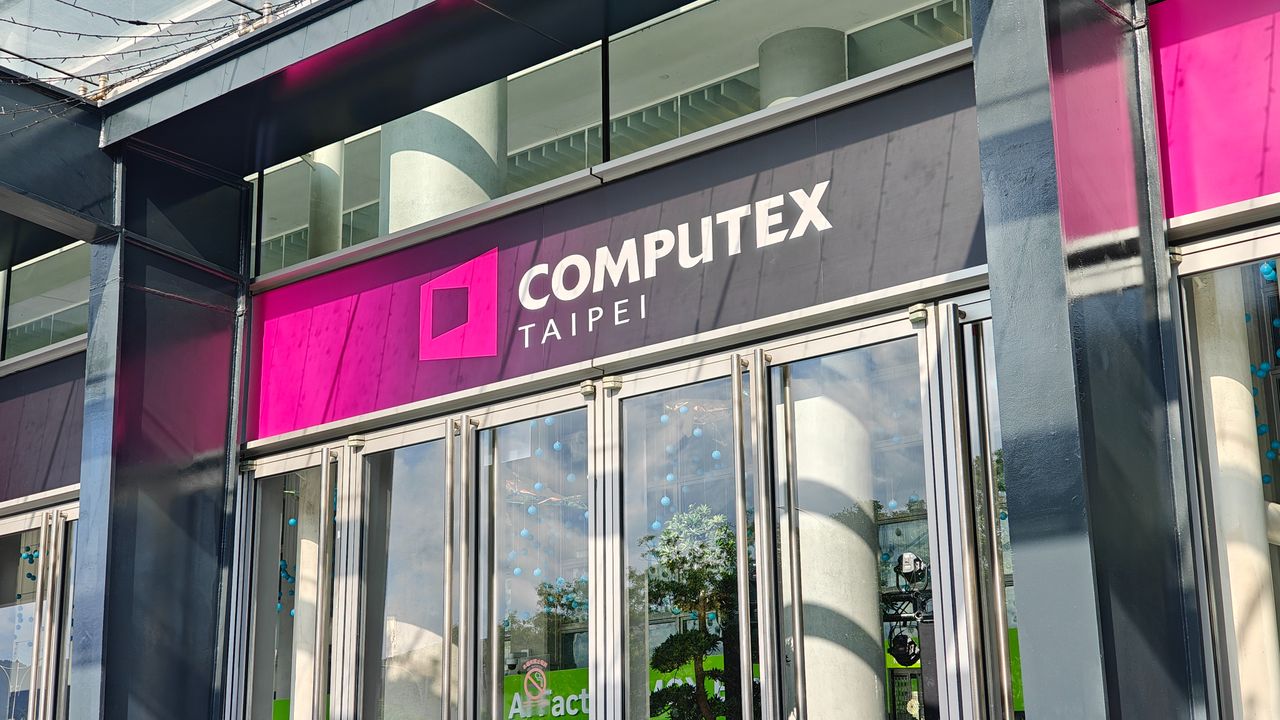
Computex 2026: AI Hardware at the Core of On-Premise Innovation
Computex 2026 has commenced in Taipei, reaffirming its status as one of the most significant global events for the hardware industry. Each year, this exhibition provides a prime stage for leading semiconductor manufacturers, component providers, and system builders to showcase their latest innovations. For companies operating in the field of artificial intelligence, particularly those evaluating or managing on-premise Large Language Model (LLM) deployments, Computex offers essential insights into the future direction of technological infrastructure.
The focus is on solutions capable of supporting increasingly demanding AI workloads, with a keen eye on performance, energy efficiency, and scalability. Strategic hardware decisions are, in fact, crucial for the success of AI projects, directly influencing processing capability, latency, and model throughput.
The Impact of Hardware on Local AI Infrastructures
The innovations presented at Computex are of particular interest to those designing and managing self-hosted AI infrastructures. The availability of new generations of GPUs, featuring increasingly larger VRAM capacities and high bandwidth, is a critical factor for the inference and training of complex LLMs. Large models require significant computational resources, and selecting the right hardware can determine the economic and technical feasibility of an on-premise deployment.
Beyond individual GPUs, the event also highlights advancements in interconnection systems, such as NVLink or CXL technologies, which are fundamental for creating high-performance computing clusters. These developments are crucial for addressing challenges related to model parallelization (like tensor parallelism or pipeline parallelism) and for ensuring that local infrastructure can compete in terms of throughput and latency with cloud offerings, while maintaining data control.
Data Sovereignty and TCO: The Role of On-Premise Deployment
For many organizations, choosing an on-premise deployment for AI workloads is not just a matter of performance, but also of data sovereignty and regulatory compliance. Sectors such as finance, healthcare, or public administration often operate in air-gapped environments or with stringent data residency requirements, making cloud solutions less suitable or even impractical. In this context, the hardware showcased at Computex becomes a fundamental enabler for building robust and secure AI infrastructures within their own data centers.
Total Cost of Ownership (TCO) analysis is another key element. While the initial investment (CapEx) for on-premise hardware can be significant, careful planning and resource optimization can lead to lower operational costs (OpEx) in the long run compared to cloud subscription models, especially for stable and predictable workloads. Innovations in energy efficiency and computational density, often anticipated at Computex, contribute to improving the overall TCO of self-hosted solutions.
Future Prospects for AI on Proprietary Infrastructure
Computex 2026, while not yet having revealed all its specific first-day announcements, serves as a reminder of the strategic importance of hardware in the AI ecosystem. The innovations emerging from events like this are the engine driving the evolution of computing capabilities, making on-premise LLM deployments increasingly powerful, efficient, and accessible.
For CTOs, DevOps leads, and infrastructure architects, monitoring these trends is essential for making informed decisions about future investments. The ability to balance performance, cost, security, and data control remains the central challenge. AI-RADAR continues to provide analytical frameworks and insights on /llm-onpremise to help companies navigate these complex trade-offs and build AI infrastructures that meet their specific sovereignty and control needs.





💬 Comments (0)
🔒 Log in or register to comment on articles.
No comments yet. Be the first to comment!