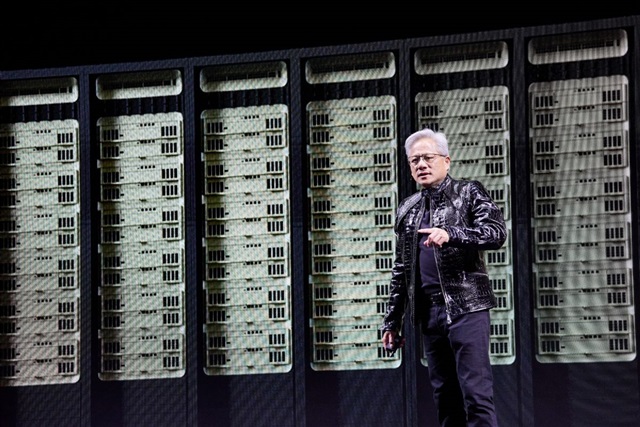
The Evolution of AI Hardware at Computex
Computex, one of the world's leading technology exhibitions, has traditionally served as a crucial stage for hardware innovations. This year, the pervasive influence of artificial intelligence has drawn attention, bringing not only traditional GPUs but also CPUs and ASICs to the forefront as fundamental components for AI infrastructure. This "AI spillover," meaning its widespread impact across all technological domains, is redefining deployment priorities and strategies for businesses.
For CTOs and infrastructure architects, this evolution introduces new strategic considerations. Hardware selection is no longer a linear path but requires a thorough evaluation of trade-offs between flexibility, efficiency, and cost. The goal is to support increasingly diverse AI workloads, from complex Large Language Models (LLMs) to lighter inference applications, while maintaining control over data and operational costs.
CPUs and ASICs: New Players in the AI Ecosystem
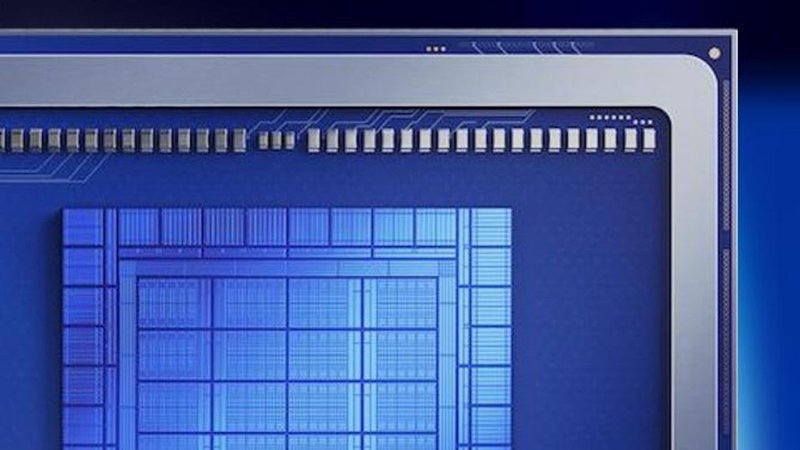
While GPUs remain indispensable for intensive training and large-scale LLM inference, Computex highlighted how CPUs and ASICs are carving out increasingly defined roles. CPUs, thanks to their general-purpose nature and widespread presence in existing infrastructures, prove to be a viable solution for inferring smaller models or for AI workloads that do not require the massive parallelization of GPUs. They can offer a more economical adoption path for those looking to leverage existing servers, reducing initial CapEx.
ASICs, on the other hand, represent the pinnacle of specialization. Specifically designed to accelerate certain AI operations, they offer superior energy efficiency and throughput for well-defined tasks. Their rigidity, however, makes them less flexible than GPUs or CPUs for rapidly evolving workloads. The choice between these architectures thus depends on the specificity of the AI task, the desired scalability, and the overall TCO, which includes both acquisition and operational costs related to energy consumption.
Implications for On-Premise Deployment
The emergence of CPUs and ASICs as viable options for AI directly impacts on-premise deployment strategies. For organizations prioritizing data sovereignty, regulatory compliance (such as GDPR), and security in air-gapped environments, the ability to choose among different self-hosted hardware architectures is crucial. Utilizing existing CPUs can facilitate rapid, low-cost deployment for smaller LLM inference, while ASICs can be the optimal choice for optimizing OpEx on stable, high-volume AI workloads.
Evaluating these alternatives requires a detailed analysis of factors such as available VRAM, expected throughput in tokens per second, and latency for specific batch sizes. AI-RADAR, for instance, offers analytical frameworks on /llm-onpremise to help companies assess the trade-offs between various hardware and architectural options, supporting informed decisions that balance performance, costs, and control requirements.
Future Outlook and Strategic Choices
The AI hardware landscape is continuously evolving, and Computex underscored the importance of a holistic approach to infrastructure planning. There is no single "best" universal solution, but rather a series of trade-offs that must be carefully evaluated based on each organization's specific needs. The ability to efficiently perform LLM inference on various hardware platforms, from GPUs to custom silicon, opens new opportunities for resource optimization and ensuring resilience.
For technical decision-makers, understanding the capabilities and limitations of CPUs, GPUs, and ASICs is fundamental for building robust and scalable local stacks. The key is to align hardware choices with business objectives, considering not only pure performance but also TCO, ease of management, and the ability to adapt to future technological developments. The AI era demands a flexible and informed hardware strategy that leverages the diversity of available solutions to its fullest.





💬 Comments (0)
🔒 Log in or register to comment on articles.
No comments yet. Be the first to comment!