
The Conflict Between Innovation and Proprietary Control
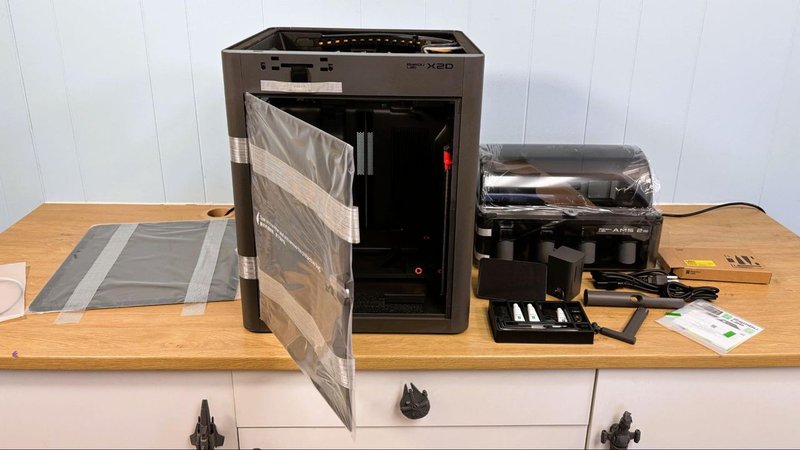
The recent clash between Bambu Lab, a 3D printer manufacturer, and an Open Source community developer, culminating in the shutdown of the OrcaSlicer-BambuLab project, offers significant insight into the dynamics of control and innovation in the tech sector. A developer re-enabled features that Bambu Lab had disabled in the firmware of its printers, triggering an immediate reaction from the company, which threatened legal action. This episode, while specific to the 3D printing world, raises fundamental questions that resonate deeply in the context of Large Language Model (LLM) deployments and artificial intelligence in general.
For organizations considering the adoption of AI solutions, particularly those aiming for a self-hosted or air-gapped infrastructure, the ability to maintain complete control over their technology stack is a strategic imperative. The Bambu Lab incident highlights how reliance on proprietary ecosystems can limit flexibility, innovation, and ultimately, sovereignty over one's data and processes.
Case Details and Its Ramifications
The OrcaSlicer-BambuLab project was a fork of a popular Open Source slicer, adapted for Bambu Lab printers. The developer in question had identified and restored certain functionalities that, despite being present in the hardware, had been deactivated via software by the manufacturer. This practice, common in various industries, often aims to segment the market or push users towards more expensive models. Bambu Lab's response, with the threat of legal action, forced the developer to shut down the project, effectively eliminating an alternative that offered greater freedom and customization to users.
This scenario underscores the inherent tension between business models based on proprietary control and the Open Source philosophy, which promotes transparency, modifiability, and collaboration. For companies investing in complex AI infrastructures, such as servers with high VRAM GPUs for LLM Inference or Fine-tuning, the ability to access and modify software at all levels of the Pipeline is crucial.
Implications for On-Premise AI Deployments
The Bambu Lab case serves as a warning for CTOs, DevOps leads, and infrastructure architects evaluating on-premise LLM deployments. The choice of a self-hosted approach is often motivated by the desire for granular control, ensuring data sovereignty, and optimizing the Total Cost of Ownership (TCO) in the long run. However, this control can be compromised if underlying hardware or software components are bound by restrictive licenses or a closed architecture.
Consider, for example, the importance of being able to optimize VRAM utilization on GPUs like NVIDIA A100 or H100 for high-Throughput Inference workloads. The ability to intervene in the serving Framework, model Quantization, or memory management is fundamental for maximizing performance and reducing latency. A proprietary ecosystem that limits such interventions can negate the expected benefits of an investment in Bare metal hardware, pushing organizations towards less efficient or more costly solutions. AI-RADAR offers analytical frameworks on /llm-onpremise to evaluate these trade-offs, providing tools to compare the costs and benefits of different deployment strategies.
Future Perspectives and Strategic Infrastructure Choices
The Bambu Lab incident reinforces the argument for careful vendor evaluation and licensing policies when planning AI infrastructure investments. The freedom to modify, adapt, and optimize one's technology stack is not just a matter of ideological preference, but an enabling factor for business competitiveness and resilience. Dependence on a single vendor, or an ecosystem that restricts access to essential functionalities, can create vulnerabilities and hinder future innovation.
Organizations must balance the convenience of "turnkey" solutions with the need to maintain strategic control. Adopting Open Source solutions, both at the Framework level and for LLM models, combined with internally managed Bare metal infrastructure, can offer the flexibility required to address future challenges, ensure regulatory compliance, and protect data sovereignty in a rapidly evolving technological landscape. The ability to choose and control every component of the AI Pipeline thus becomes an invaluable strategic asset.







💬 Comments (0)
🔒 Log in or register to comment on articles.
No comments yet. Be the first to comment!