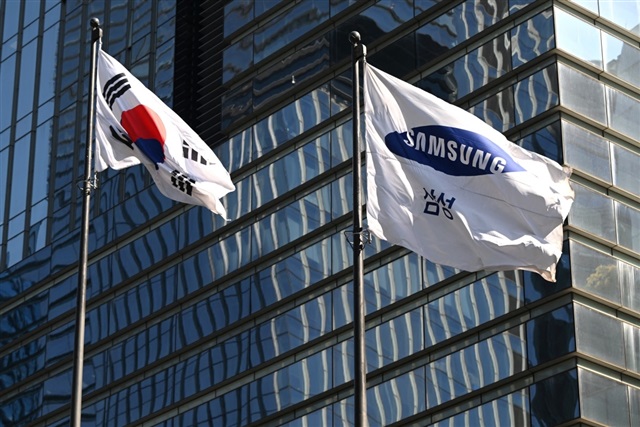
South Korea and the Dynamics of the AI Market
South Korea has recently raised an alarm regarding a potential "industrial hollowing-out" in its manufacturing sector. This concern emerges within the context of the rapidly expanding market for artificial intelligence servers. This trend, which sees Taiwan significantly benefiting from the increasing demand, underscores the complex interdependencies and inherent vulnerabilities within high-tech global production chains. The race for AI, particularly for the development and deployment of Large Language Models (LLMs), is redefining global priorities and manufacturing capabilities.
This phenomenon is not isolated but reflects a broader reorganization of value chains, where specialization and innovation capacity in key segments, such as advanced chip production and AI server assembly, become critical factors. For nations unable to keep pace in these strategic sectors, the risk is a loss of market share and fundamental competencies, with long-term repercussions on their economy and technological security.
The AI Server Market: Implications for Infrastructure
The AI server boom is fueled by an unprecedented demand for computing power, essential for the training and inference of increasingly complex LLMs. These servers are not generic machines; they require highly specialized components, primarily high-end GPUs with ample VRAM and parallel processing capabilities, along with advanced cooling systems and high-speed interconnects. The production of these components, and the assembly of the servers themselves, is concentrated among a limited number of players and geographical regions.
This concentration creates bottlenecks and makes the market susceptible to external shocks, whether geopolitical, economic, or health-related. Companies aiming to build or expand their on-premise AI infrastructure must contend with extended delivery times, high costs, and limited hardware availability. Strategic planning thus becomes crucial to mitigate these risks and ensure the operational continuity of their AI projects.
Data Sovereignty, TCO, and On-Premise Deployment
For organizations evaluating on-premise LLM deployment, the dynamics of the AI server market directly impact the Total Cost of Ownership (TCO) and the ability to maintain data sovereignty. Reliance on a concentrated production chain can translate into higher initial costs (CapEx) and greater uncertainty regarding long-term operational costs (OpEx), due to price volatility and component availability.
The choice of a self-hosted infrastructure is often motivated by the need for complete data control, regulatory compliance (such as GDPR), and the requirement to operate in air-gapped environments. However, hardware procurement difficulties can compromise these objectives, pushing some companies to reconsider hybrid or cloud solutions, despite potential compromises on privacy and control. AI-RADAR offers analytical frameworks on /llm-onpremise to evaluate these trade-offs, providing tools for an in-depth analysis of deployment options.
Future Prospects and Mitigation Strategies
The concern expressed by South Korea highlights the urgency for nations and companies to develop resilient strategies. This includes diversifying suppliers, investing in local production capabilities (where feasible), and promoting more robust technological ecosystems. For businesses, long-term planning that accounts for fluctuations in the hardware market is indispensable.
In a continuously evolving technological landscape, the ability to adapt to supply chain challenges will be a distinguishing factor. Whether it involves optimizing the use of existing hardware through quantization techniques, exploring Open Source alternatives, or investing in research and development for more efficient solutions, infrastructural resilience will become a fundamental pillar for the success of AI projects.







💬 Comments (0)
🔒 Log in or register to comment on articles.
No comments yet. Be the first to comment!