
South Korea's 260,000 GPU Plan: Reliance on Taiwan and the AI Challenge
South Korea's ambitious plan to acquire 260,000 Graphics Processing Units (GPUs) to power its artificial intelligence initiatives highlights a critical reliance on Taiwan's manufacturing capabilities. This observation, emphasized by the DIGITIMES Chair, underscores an undeniable reality in the current global technological landscape: the concentration of advanced silicio production in a few hands.
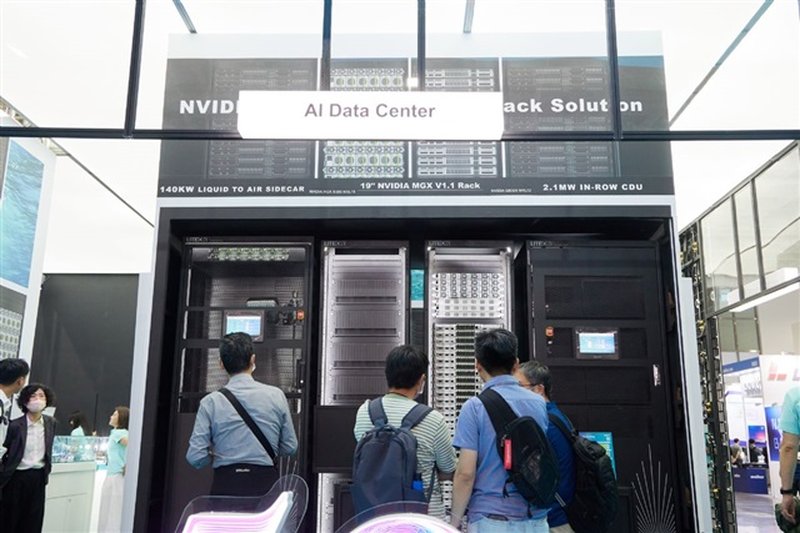
In an era where AI is redefining entire sectors, from scientific research to industry, the availability of specialized hardware has become a strategic factor of primary importance. A country's ability to develop and deploy LLMs and other AI applications is intrinsically linked to its capacity to access these fundamental computational resources.
Strategic Dependence and AI Hardware
South Korea's massive demand for GPUs is not an isolated case but reflects a global trend. GPUs are the beating heart of AI infrastructure, indispensable for both intensive Large Language Model training and large-scale inference. Their parallel architecture makes them ideal for handling the complex matrix calculations required by deep neural networks. However, the production of these components, especially high-end ones with high VRAM and throughput, is an extremely sophisticated and costly process, dominated by a limited number of foundries and manufacturers.
This concentration creates a point of vulnerability in the global supply chain. For companies and nations evaluating on-premise deployments of AI workloads, the security of hardware supply becomes a crucial consideration. Planning a self-hosted infrastructure requires not only the ability to manage hardware and software locally but also the assurance of being able to access the necessary components in sufficient quantities and at predictable costs, directly impacting the overall TCO.
Collaboration in the AI Era and Deployment Implications
The need for collaboration in the AI era, as suggested by the DIGITIMES Chair, extends beyond mere production. It encompasses research and development, standard setting, and building more resilient supply chains. For CTOs, DevOps leads, and infrastructure architects, this global dynamic translates into complex deployment decisions. The choice between cloud and self-hosted solutions for AI workloads is not just a matter of operational costs (OpEx) versus capital expenditures (CapEx), but also of control, data sovereignty, and resilience.
An on-premise deployment offers unparalleled control over data and the computational environment, essential for regulated industries or applications requiring air-gapped environments. However, it entails the challenge of procuring, maintaining, and upgrading complex hardware infrastructure, including managing GPUs and their specifications (e.g., VRAM, interconnects like NVLink). Reliance on a single region for silicio production can introduce geopolitical and availability risks that must be carefully evaluated.
Future Prospects and Challenges for Digital Sovereignty
South Korea's plan is emblematic of a broader trend: nations are investing heavily in AI infrastructure to secure their competitiveness and digital sovereignty. However, the reality of the global supply chain mandates a collaborative and strategic approach. A country's ability to manage its data and AI applications independently is directly related to its ability to control the underlying hardware.
While cloud providers offer scalability and flexibility, the decision to keep AI workloads on-premise, or in a hybrid model, is often driven by the need for greater control, security, and long-term TCO optimization. For those evaluating on-premise deployment, AI-RADAR offers analytical frameworks on /llm-onpremise to assess the trade-offs between different options, considering factors such as hardware availability, energy costs, and compliance requirements. The challenge is not just acquiring GPUs, but also integrating them into a robust and sustainable infrastructure.







💬 Comments (0)
🔒 Log in or register to comment on articles.
No comments yet. Be the first to comment!