CoreWeave's Ascent in the AI Landscape
CoreWeave, an increasingly prominent name in the artificial intelligence cloud infrastructure sector, has announced its inclusion in the Nasdaq-100 Index. This achievement, which will become effective before market open on June 22, marks a significant moment for the company and the broader AI ecosystem. The news comes just 15 months after its IPO in March 2025, priced at $40 per share, demonstrating rapid growth and market establishment.
CoreWeave's story is particularly interesting, as the company originated as Atlantic Crypto, a cryptocurrency mining operation in New Jersey. This transition from the mining sector, characterized by intense demand for computing power, to AI infrastructure, reflects a broader trend in the technological landscape: the repurposing of computational resources to support the development and deployment of Large Language Models and other artificial intelligence applications.
The AI Cloud Infrastructure Model
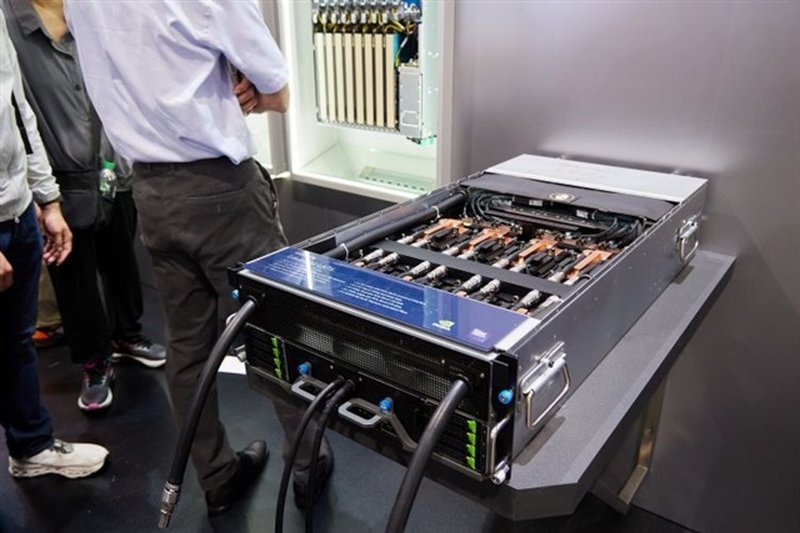
CoreWeave's inclusion in the Nasdaq-100 underscores the growing importance of specialized AI cloud infrastructure providers. Unlike general-purpose cloud providers, companies like CoreWeave focus on offering high-performance GPU clusters, optimized for intensive workloads such as LLM training and inference. This includes access to high VRAM, low-latency interconnects, and high throughput, which are critical elements for managing complex models and large datasets.
The demand for these resources has exploded with the advent of LLMs, prompting many companies to seek solutions that can guarantee scalability and performance without the initial costs and complexity of an on-premise deployment. While the source does not specify the GPU models or hardware configurations used by CoreWeave, it is common practice in this sector to offer the latest silicon architectures, such as NVIDIA H100 or A100 GPUs, configured to maximize parallel computing capacity and memory bandwidth.
Context and Implications for Deployment Decisions
CoreWeave's success highlights the strong demand for AI computational capacity, a factor that directly influences the strategic decisions of CTOs, DevOps leads, and infrastructure architects. The choice between utilizing specialized cloud services and implementing self-hosted or bare metal on-premise infrastructures is complex and depends on multiple factors, including Total Cost of Ownership (TCO), data sovereignty, and compliance requirements.
While AI cloud providers offer flexibility and an OpEx spending model, on-premise solutions can ensure greater control over data, enhanced security for air-gapped environments, and, in some scenarios, a more advantageous TCO in the long term for stable and predictable workloads. For those evaluating on-premise deployment, analytical frameworks are available at /llm-onpremise that can help compare the trade-offs between cloud and self-hosted solutions, considering aspects such as latency, throughput, and resource management.
Final Outlook: The Future of AI Infrastructure
CoreWeave's ascent into the Nasdaq-100 is a clear indicator of the maturing artificial intelligence market and its underlying infrastructure. The ability of a company to rapidly transform from a cryptocurrency mining operation to a key player in AI cloud in such a short time underscores the agility and innovation required in this sector.
For companies facing the decision of how to power their AI workloads, the landscape of options continues to evolve. Whether leveraging the scalability and convenience of specialized cloud services or investing in on-premise infrastructure for specific control and security needs, the strategic decision regarding AI infrastructure remains crucial for long-term success.






💬 Comments (0)
🔒 Log in or register to comment on articles.
No comments yet. Be the first to comment!