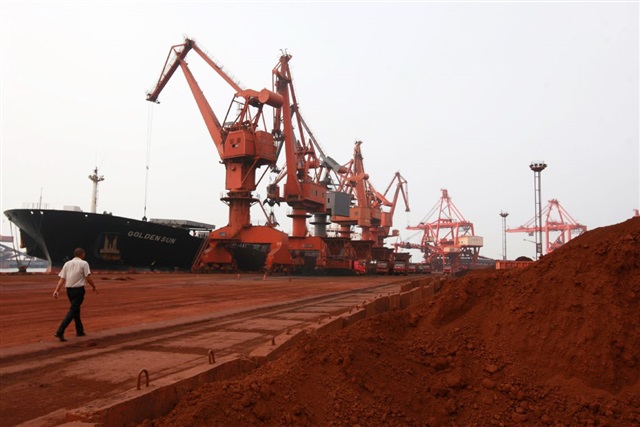
The news is the kind that raises eyebrows among industry observers: China's talent demand in artificial intelligence is no longer limited to data scientists and machine learning engineers, but is gobbling up key figures in the semiconductor, rare earth, and new materials supply chains. This pivot says a lot about where AI's competitive frontier really lies, far beyond pure language modeling.
Behind this trend lies a realization that has solidified over the past two years: computing power, and therefore advanced chips, is the true bottleneck for scaling Large Language Models and for bringing inference from the cloud to local data centers. It's no coincidence that China, under a technological embargo on the most powerful GPUs, is trying to close the gap by training and hiring talent capable of designing alternative chip architectures, optimizing packaging processes, and even investigating new alloys or compounds to improve thermal dissipation or server energy efficiency.
This shift in skill demand toward the physical layer of AI has structural consequences. First, it accelerates China's push for self-sufficiency in inference and training hardware: with new specialists in domestic ASIC and GPU design, companies like Biren Technology or Moore Threads could narrow the performance gap with Nvidia solutions, at least for specific workloads. Second, the focus on rare earths – elements indispensable for the production of magnets and electronic components – further strengthens Beijing's grip on a critical slice of the global supply chain. Anyone in the world building AI data centers, on-premise or in the cloud, depends on these materials.
For enterprise decision-makers evaluating on-premise LLM deployments, this scenario introduces delicate variables. On one hand, the emergence of Chinese AI chip suppliers could broaden the market and, in the medium term, temper costs, altering the TCO equation for self-managed clusters. On the other, reliance on hardware components tied to geopolitical dynamics adds risk factors around supply continuity and regulatory compliance – central issues for those with data sovereignty requirements (think GDPR in Europe or similar norms in other markets).
The most significant aspect, however, is the macro signal this talent hunt sends to the entire ecosystem: AI's next big leap won't be won on algorithms alone, but on the ability to manufacture the computational raw material. In a field where efficient, low-latency inference is crucial for enterprise adoption, those who can integrate materials science expertise with systems engineering will have a competitive advantage that is hard to replicate. For those designing on-premise infrastructure today, these moves are worth watching closely: the next generation of AI accelerators may well emerge from labs studying rare earths and novel compound semiconductors, not just from the usual silicon giants.






💬 Comments (0)
🔒 Log in or register to comment on articles.
No comments yet. Be the first to comment!