A New Player in the DRAM Supply Chain
Corsair, a well-established name in the PC component landscape, has made a significant move in its supply chain. The company has started integrating DRAM modules manufactured by ChangXin Memory Technologies (CXMT), China's largest memory chipmaker, into its DDR5 memory kits. This decision signals an opening to new suppliers in a market traditionally dominated by a few major players.
The diversification of sourcing can have broad repercussions across the entire industry. For companies that rely on high-performance hardware, such as those running intensive Large Language Models (LLM) workloads on self-hosted infrastructure, the stability and competitiveness of component prices are crucial factors for the Total Cost of Ownership (TCO) of their systems.
Technical Details of the Identification
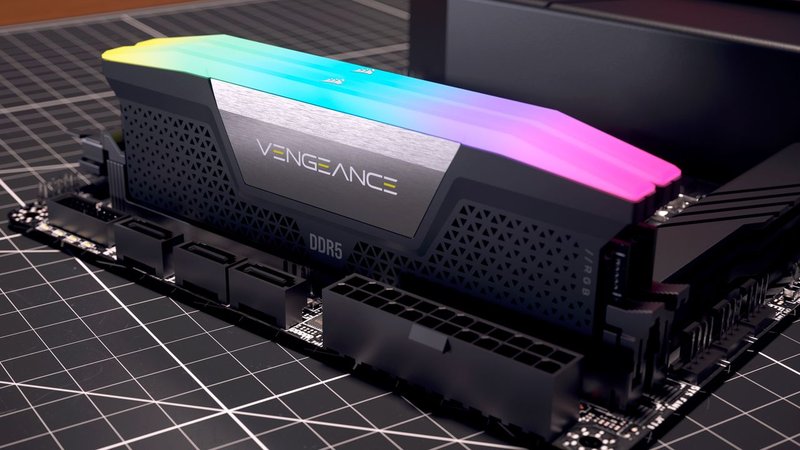
Corsair's adoption of CXMT DRAM did not go unnoticed. Hardware enthusiasts shared screenshots on social platforms showing the identification of the chips. Specifically, a Corsair Vengeance DDR5-6000 module, with part number CMK5X16G3E60C36A2, was analyzed using standard diagnostic software like CPU-Z and HWiNFO64. Both tools confirmed that the DRAM manufacturer was ChangXin Technologies.
This technical verification is fundamental to understanding the scope of the news. DDR5-6000 memory represents a high-performance tier for the consumer and workstation markets, indicating that CXMT is capable of producing chips that meet stringent performance standards. The ability of a new supplier to enter this segment is an indicator of its technological maturity and potential influence on the global market.
Context and Market Implications
The entry of a player like CXMT into the supply chain of a leading Western brand such as Corsair has significant implications. Historically, the DRAM market has been characterized by volatile price cycles, influenced by demand, supply, and the production capacity of a limited number of suppliers. The addition of a large Chinese manufacturer could alter these balances.
For enterprises evaluating on-premise deployments for AI/LLM workloads, the availability of competitively priced memory is a key factor. Memory, particularly GPU VRAM, is a common bottleneck for LLM inference and fine-tuning. Increased competition in the DRAM sector could translate into lower costs for memory modules, helping to reduce the overall TCO of dedicated hardware infrastructures. This is particularly relevant for strategies prioritizing data sovereignty and complete control over hardware.
Future Outlook and TCO
The potential drop in memory prices, suggested by this move, could represent an advantage for the entire technology ecosystem. For decision-makers managing infrastructure, more accessible DDR5 memory costs could accelerate the adoption of new platforms and enable more generous hardware configurations, which are essential for handling increasingly complex AI models.
However, it is important to note that market dynamics are complex and influenced by multiple factors, including geopolitical scenarios and global demand. While Corsair's integration of CXMT DRAM is a promising signal for increased competition and potential price reductions, the actual impact on TCO and long-term availability will require constant monitoring. AI-RADAR continues to provide analysis on the trade-offs and constraints related to on-premise deployments, including hardware and cost aspects, to support companies' strategic decisions.






💬 Comments (0)
🔒 Log in or register to comment on articles.
No comments yet. Be the first to comment!