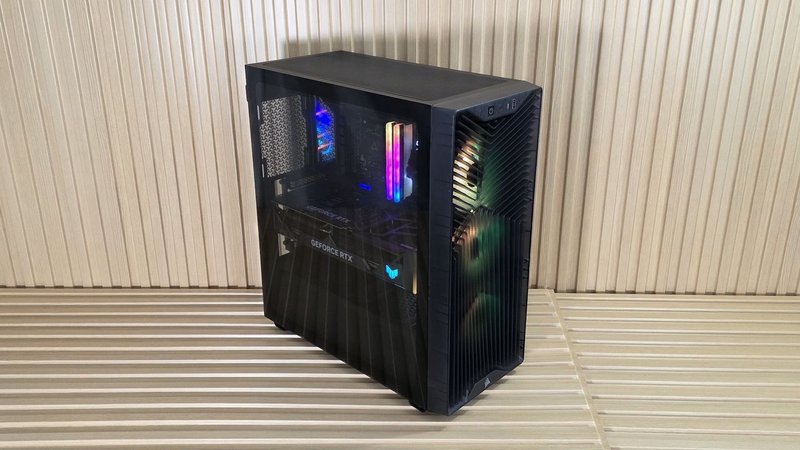
Corsair's AI Workstation and Price Increase
Corsair recently revised the price list for its AI Workstation 300, a system designed to support artificial intelligence workloads locally. The flagship model, equipped with the Ryzen AI Max 395+ processor, has seen its price rise to $3,399. This adjustment is not an isolated event but is part of a broader context of fluctuations in the hardware component market, which directly impacts the final cost of AI-dedicated solutions.
The introduction of workstations like the Corsair Strix Halo AI Workstation 300 responds to a growing demand for AI processing capabilities directly on-site, away from cloud data centers. This trend is particularly relevant for companies that need to maintain control over their data and perform Large Language Model (LLM) inference or other AI models in self-hosted or air-gapped environments, where data sovereignty and compliance are absolute priorities.
Technical Details and Market Context: The "RAMpocalypse"
At the heart of the flagship configuration is the Ryzen AI Max 395+, a processor that integrates AI processing capabilities, indicating a clear direction towards hardware acceleration for artificial intelligence at the endpoint or workstation level. While specific details on its performance for LLM workloads were not provided in the source, the presence of "AI Max" in the name suggests optimization for local inference tasks, such as language model processing or computer vision.
The price increase has been attributed to what has been called a "RAMpocalypse," a term that highlights the difficulties and increased costs in the RAM memory sector. Memory is a critical component for any system, but it takes on even greater importance for AI workloads, which often require large amounts of VRAM and system RAM to load complex models and manage voluminous datasets. RAM price fluctuations can therefore have a significant impact on the Total Cost of Ownership (TCO) of AI infrastructures, whether they are individual workstations or larger clusters.
Implications for On-Premise Deployment
For CTOs, DevOps leads, and infrastructure architects evaluating the deployment of AI solutions, hardware price trends like that of the Corsair AI Workstation 300 are a crucial factor. AI workstations represent a valid alternative to cloud services for specific scenarios, offering greater control, reduced latency, and potentially a lower TCO in the long run, especially for constant and predictable workloads. However, the initial investment (CapEx) and management of on-premise hardware require careful planning.
The choice between a self-hosted approach and a cloud-based solution involves a series of trade-offs. Local workstations ensure data sovereignty and the ability to operate in air-gapped environments, essential for regulated sectors. On the other hand, cloud solutions offer immediate scalability and an OpEx model. The increase in component costs, such as RAM, shifts the balance, making the evaluation of the overall TCO even more complex. For those evaluating on-premise deployment, AI-RADAR offers analytical frameworks on /llm-onpremise to assess these trade-offs in a structured manner.
Future Outlook and Final Considerations
The evolution of the AI hardware market is dynamic and subject to multiple factors, from technological innovations to supply chain challenges. The price increase of a high-end AI workstation like Corsair's highlights how even systems dedicated to local processing are sensitive to these pressures. Companies aiming to build or expand their on-premise AI capabilities must carefully monitor these developments, considering not only technical specifications but also price stability and component availability.
In a landscape where the ability to run LLMs and other AI models efficiently and securely is increasingly strategic, the availability of high-performance and predictably priced hardware remains a priority. The decision to invest in AI workstations or broader infrastructures for local deployment requires in-depth analysis that balances performance, costs, security, and compliance requirements, taking into account continuous market evolutions.






💬 Comments (0)
🔒 Log in or register to comment on articles.
No comments yet. Be the first to comment!