The Rise of On-Premise LLM Inference
The interest in generative artificial intelligence continues to grow, and with it, the need for infrastructure capable of handling Large Language Model (LLM) workloads. While many companies rely on cloud services for their scalability and flexibility, a parallel trend is emerging: the adoption of on-premise or self-hosted solutions. A recent example of this dynamic comes from a community member who shared their experience building a system with two NVIDIA RTX 3090 GPUs, primarily dedicated to LLM inference.
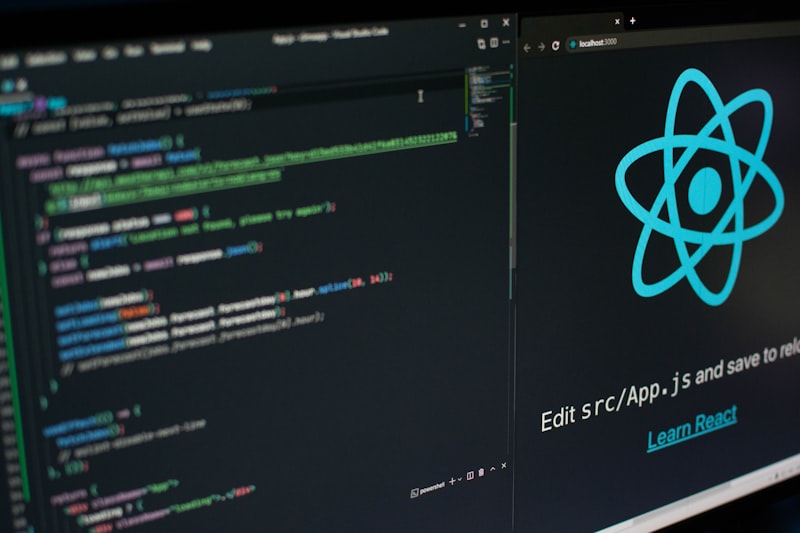
This initiative reflects a common motivation among developers and businesses: the desire to maintain control over their data and operational costs. The user, driven by a renewed interest in software engineering, configured a local environment to experiment with models like Qwen 3.6 27B, using tools such as VSCode preview and an Nginx server. The on-premise approach helps mitigate concerns related to data sovereignty and the recurring costs associated with intensive cloud resource utilization.
Technical Details and Deployment Goals
The core of this configuration consists of two NVIDIA RTX 3090 GPUs. Each GPU offers 24GB of VRAM, a significant capacity for running medium-sized LLMs, especially if optimized through quantization techniques. The choice of a model like Qwen 3.6 27B, which requires considerable VRAM, underscores the need for robust hardware for local inference. The user aims to develop capabilities for "agentic work" and to enhance codebase knowledge through RAG (Retrieval Augmented Generation) pipelines, which demand a wide context window and efficient data access.
The key question raised by the user concerns the most effective tool stack to make this configuration usable in a professional work environment. They ponder the suitability of adopting "MCP servers" (presumably referring to server management solutions or orchestrators) or relying on custom tools and scripts. This reflection highlights one of the main challenges of on-premise deployment: the need to balance the flexibility offered by custom solutions with the robustness and manageability of more structured stacks.
The Context of On-Premise Deployment and Trade-offs
The decision to invest in dedicated hardware for local LLM inference is often driven by economic and strategic considerations. The fear that cloud services might become too expensive for the average user is a determining factor. The self-hosted approach offers greater control over the Total Cost of Ownership (TCO), transforming the recurring operational costs (OpEx) of the cloud into an initial capital expenditure (CapEx) for hardware.
Beyond TCO, data sovereignty and regulatory compliance play a crucial role. For sectors with stringent requirements, such as finance or healthcare, keeping data and models within a proprietary infrastructure, potentially even air-gapped, is an imperative. This ensures that sensitive information never leaves the organization's controlled environment. For those evaluating on-premise deployment, AI-RADAR offers analytical frameworks on /llm-onpremise to assess the trade-offs between performance, costs, and security.
Future Prospects for Local LLMs
The landscape of local LLMs is rapidly evolving. The developer community continues to innovate with new optimization techniques, such as advanced quantization, which enable the execution of increasingly larger models on hardware with limited VRAM. This progress is fundamental to making on-premise inference accessible to a wider audience and to supporting complex workloads like agentic tasks or RAG pipelines.
The discussion about optimizing the tool stack, whether through customized "bare metal" solutions or more structured frameworks, reflects the maturation of the sector. While scalability and maintenance can pose challenges for self-hosted configurations, the benefits in terms of control, privacy, and TCO continue to make them a valid and increasingly attractive alternative to cloud services, especially for specific scenarios and for those seeking greater operational autonomy.





💬 Comments (0)
🔒 Log in or register to comment on articles.
No comments yet. Be the first to comment!