AI Server Demand Drives ODM/EMS Revenue Surge in 2026
The Original Design Manufacturer (ODM) and Electronics Manufacturing Services (EMS) sectors experienced a significant revenue surge in March 2026. This growth is directly attributable to the strong demand for AI servers, a rapidly expanding segment that is redefining priorities in hardware manufacturing. ODM and EMS companies, critical to the technology supply chain, are responsible for designing and producing components and systems on behalf of other brands, and their performance is a key indicator of market health and direction.
The acceleration in demand for AI infrastructure reflects the increasingly widespread adoption of Large Language Models (LLM) and other artificial intelligence applications across various industries. This scenario presents new challenges and opportunities for manufacturers, who must rapidly adapt their capabilities to meet increasingly stringent technical requirements.
AI Infrastructure: An Evolving Ecosystem
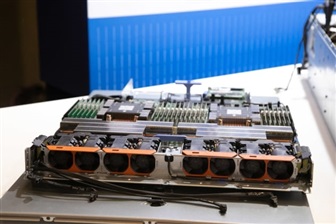
AI servers are not mere evolutions of traditional servers; they represent highly specialized systems designed to handle intensive workloads that require enormous parallel computing capabilities. At the core of these systems are high-performance GPUs, often equipped with large amounts of VRAM and high-speed interconnects, essential for training and inference of complex models. The demand for these components has a cascading effect throughout the entire supply chain, from silicio production to the manufacturing of motherboards and complete systems.
The complexity of these servers demands specific expertise in thermal design, power delivery, and the integration of advanced components. ODM and EMS companies that successfully master these challenges are strategically positioned to capitalize on market growth. The ability to provide complete and optimized solutions becomes a critical success factor.
Implications for On-Premise Deployments and TCO
The escalating demand for AI servers has profound implications for organizations evaluating on-premise deployment strategies for their artificial intelligence workloads. Opting for self-hosted solutions offers advantages in terms of data sovereignty, direct control over infrastructure, and potential long-term Total Cost of Ownership (TCO) optimization, especially for consistent and predictable workloads. However, it requires significant investment in specialized hardware and internal expertise for management and maintenance.
The availability and cost of AI servers directly influence CapEx planning for local infrastructures. Companies must balance the need for computing power with the complexity of managing bare metal or hybrid environments. For those evaluating on-premise deployments, AI-RADAR offers analytical frameworks on /llm-onpremise to assess the trade-offs between initial, operational costs, and strategic benefits compared to cloud alternatives.
Future Outlook and the Race for Innovation
The growth trend in AI server demand shows no signs of slowing down, projecting a future where computing infrastructure will be increasingly AI-centric. This evolution drives innovation not only in GPUs but also in other areas such as high-speed storage solutions, low-latency networks, and advanced cooling systems. The manufacturing supply chain's ability to keep pace with this demand and continuously innovate will be crucial.
Challenges include managing supply chain disruptions, the need for continuous investment in research and development, and the training of a specialized workforce. The performance of ODM and EMS companies in this context will be an important barometer for the overall health of the artificial intelligence market and its ability to sustain widespread adoption.




💬 Comments (0)
🔒 Log in or register to comment on articles.
No comments yet. Be the first to comment!