
EU Relents on Chip Policy to Save Auto Industry
In a move highlighting the complex interdependencies of the global economy, the European Union found itself compelled to grant an exemption to a Chinese silicon manufacturer previously subject to restrictions. This decision, representing a significant compromise on export control and supply chain security policies, was driven by urgent warnings from the continent's automotive industry. European factories had cautioned about an imminent supply crisis, fearing a potential collapse of the supply chain that would have devastating repercussions for the sector.
This situation underscores the fragility of global value chains, especially in technologically intensive sectors like automotive, where semiconductors have become critical components. Reliance on specific suppliers, often located in geopolitically sensitive regions, can create significant vulnerabilities that demand rapid and pragmatic responses, even at the cost of revising established political strategies.
The Automotive Industry's Alarm
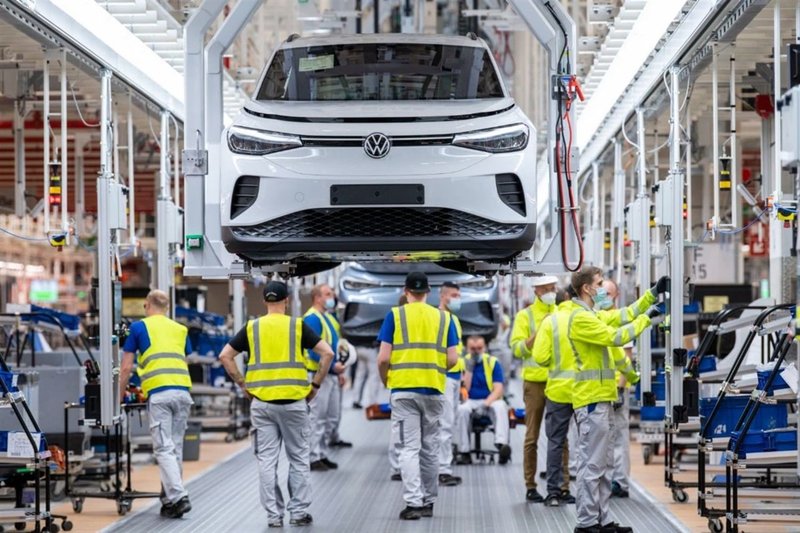
The warning issued by the European automotive industry was not minor. Companies in the sector, including giants like Volkswagen, reported a concrete risk of production halts due to chip shortages. Modern vehicles are increasingly dependent on a wide range of semiconductors, controlling everything from infotainment systems to engines and complex driver-assistance systems. A shortage of these components can halt entire assembly lines, leading to cascading economic consequences far beyond individual manufacturers.
In this context, the threat of a "supply chain collapse" is not an exaggeration. The just-in-time approach, adopted by many manufacturers to optimize costs and reduce inventories, makes companies particularly vulnerable to sudden disruptions. When a critical component, such as a specific chip, is unavailable, the entire production pipeline can grind to a halt, generating significant losses and jeopardizing jobs and regional economic stability.
Implications for Sovereignty and TCO
This incident offers crucial insights for technology decision-makers, particularly for CTOs and infrastructure architects evaluating on-premise Large Language Models (LLM) deployments. Dependence on a global supply chain for silicon, whether for automotive applications or for the high-performance GPUs required for LLM Inference and training, introduces significant risks. The ability to procure specific hardware, such as boards with high VRAM or AI accelerators, can be affected by geopolitical dynamics and supply chain disruptions similar to those that impacted the automotive industry.
For those considering on-premise deployments, it is essential to evaluate the Total Cost of Ownership (TCO) not only in terms of direct CapEx and OpEx but also by including the implicit costs related to supply chain resilience. Interruptions in hardware availability can delay projects, increase procurement costs, and compromise data sovereignty if forced to resort to less controllable cloud solutions. AI-RADAR offers analytical frameworks on /llm-onpremise to assess these complex trade-offs, highlighting the importance of a robust procurement strategy.
Future Outlook and Infrastructure Resilience
The episode of the exemption for the Chinese chipmaker serves as a warning about the need to build more resilient and diversified supply chains. For companies investing in self-hosted AI infrastructures, the ability to ensure a constant flow of hardware components is as critical as the choice of Framework or LLM model. Strategic planning must therefore include a thorough analysis of risks related to the procurement of silicon and other essential components.
Looking ahead, the pursuit of greater strategic autonomy and a reduction of critical dependencies will become a fundamental pillar for economic and technological security. This translates into investments in local semiconductor production, diversification of suppliers, and the development of internal capabilities to mitigate risks. Only in this way can businesses and economies face the challenges of an increasingly volatile global landscape, ensuring operational continuity and innovation capacity in key sectors such as artificial intelligence.







💬 Comments (0)
🔒 Log in or register to comment on articles.
No comments yet. Be the first to comment!