Introduction: AI Memory and the Return of DDR3
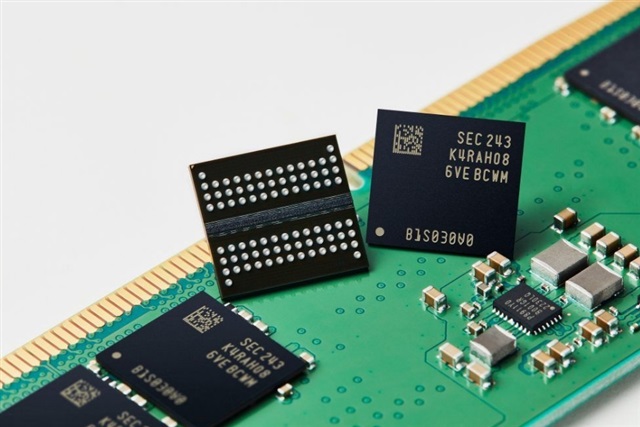
The rapid expansion of artificial intelligence, particularly Large Language Models (LLMs), is putting pressure on the entire hardware supply chain. An unexpected sign of this resource "hunger" is the surprising return of DDR3 memory to the PC market. This seemingly anachronistic phenomenon highlights the complex dynamics between capacity demand, costs, and component availability, especially for those managing self-hosted AI infrastructures.
The need to process ever-increasing volumes of data and complex models is pushing the limits of current memory technologies. In this context, the re-emergence of an older technology like DDR3 suggests that the market is seeking creative solutions to balance performance requirements with economic and supply considerations.
LLMs' Memory Hunger and the Role of Silicio
Large Language Models require vast amounts of memory to operate efficiently. Each model parameter, the size of the context window, and the batch size for inference or training directly translate into VRAM requirements for GPUs and system RAM for pre-processing and data management. Memory capacity and bandwidth are critical factors that directly influence the throughput and latency of AI workloads.
While high-end GPUs rely on HBM (High Bandwidth Memory) for extreme performance, the systems hosting them need system memory (DDR4, DDR5) to support the entire pipeline. The re-emergence of DDR3 suggests that, for some applications or market segments, pure low-cost capacity is becoming a more critical factor than extreme bandwidth, especially for system memory not directly attached to the GPU.
DDR3: An Unexpected Return Amidst Costs and Performance
DDR3 memory, introduced over a decade ago, offers lower performance in terms of speed and bandwidth compared to its more modern counterparts, DDR4 and DDR5. However, its cost per gigabyte is significantly lower, and its availability in the secondary market or for niche productions can be higher. This "revival" in the PC market might indicate that some players are looking to assemble cost-effective systems where system memory is not the primary bottleneck for specific AI workloads, or where overall capacity is prioritized over pure speed.
For companies evaluating on-premise deployments, optimizing TCO is crucial, and using cheaper components can represent an acceptable trade-off for certain applications, particularly those that do not require maximum system memory bandwidth but benefit from greater total capacity at a lower cost. This approach can be especially relevant for infrastructures handling smaller models or data pre-processing stages.
Implications for On-Premise Deployment and Future Strategies
For CTOs, DevOps leads, and infrastructure architects, hardware selection is a complex decision balancing performance, cost, energy consumption, and data sovereignty. The interest in DDR3, though limited to specific contexts, highlights the cost pressure on AI infrastructures. Opting for self-hosted solutions requires careful TCO analysis, where every component, from the GPU to system RAM, contributes to the total cost of ownership.
This scenario suggests that there is no universal solution: while some workloads demand the most performant GPUs with the latest generation HBM, others might benefit from a more pragmatic approach, leveraging less expensive hardware for specific tasks, thereby reducing initial investment and operational costs. For those evaluating on-premise deployments, AI-RADAR offers analytical frameworks on /llm-onpremise to assess these trade-offs and define the hardware strategy best suited to their performance, budget, and compliance needs.








💬 Comments (0)
🔒 Log in or register to comment on articles.
No comments yet. Be the first to comment!