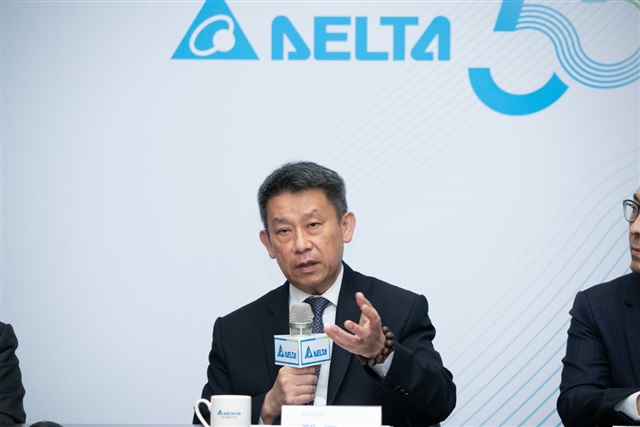
Delta Electronics' Warning and Taiwan's Role in Global Tech
Ping Cheng, Chairman of Delta Electronics, recently expressed serious concerns regarding Taiwan's progress within the RE100 initiative. According to Cheng, delays in adopting renewable energy sources could not only hinder the island's sustainability goals but also jeopardize its dominant position in the global technology supply chain. This situation directly threatens Taiwan's ability to maintain global orders for crucial components, from advanced semiconductors to complex electronic systems.
Taiwan is an irreplaceable pillar of the global technology industry, particularly for the production of silicon and other essential hardware components. Its capacity to supply cutting-edge technologies is closely linked to the availability of stable and, increasingly, clean energy. The implications of an energy shortage or a failure to meet sustainability standards extend far beyond the island's borders, affecting every sector that relies on these technologies, including Large Language Model (LLM) deployments and other artificial intelligence applications.
Green Energy and Silicon Production: An Indissoluble Link
The RE100 initiative commits companies to using 100% renewable energy in their operations. For a manufacturing hub like Taiwan, which hosts giants in the semiconductor industry, achieving this goal is a complex but fundamental challenge. Chip production, in particular, is an extremely energy-intensive process, requiring a constant and reliable power supply. The transition to renewable sources is not just an environmental issue but also a strategic one for competitiveness.
A shortage of green energy not only increases operational costs for Taiwanese companies but can also make it more difficult for them to meet the sustainability requirements imposed by their international clients. Many global companies, in fact, require their suppliers to adhere to strict environmental standards. Failure to comply with these standards could lead to a loss of orders, with significant repercussions on Taiwan's economy and the global availability of critical hardware, such as the high-performance GPUs needed for LLM Inference and training.
Impact on Global Supply Chain and On-Premise Deployments
Ping Cheng's warnings highlight a systemic vulnerability in the technology supply chain. Should Taiwan face disruptions or reductions in production due to energy issues, the cascading effect would be felt worldwide. Companies planning on-premise AI solution deployments, for example, might encounter hardware delivery delays, cost increases, or even difficulties in sourcing specific components.
For CTOs and infrastructure architects evaluating self-hosted alternatives versus the cloud for AI/LLM workloads, supply chain stability is a crucial factor in calculating TCO. Reliance on a single production hub, however efficient, introduces risks that must be carefully managed. Data sovereignty and control over infrastructure are priorities for AI-RADAR, but these are inherently dependent on the availability and reliability of the underlying hardware. For those evaluating on-premise deployments, there are trade-offs that include supply chain resilience, an aspect that articles on /llm-onpremise delve into to help assess these complexities.
Future Prospects: Resilience and Energy Sovereignty
The situation outlined by Delta Electronics underscores the importance of long-term strategies for supply chain resilience and energy sovereignty. To maintain its technological leadership, Taiwan will need to accelerate its transition to a more sustainable and diversified energy mix. This will not only ensure compliance with global standards but also reduce vulnerability to fluctuations and shortages.
Globally, companies that depend on Taiwan for their technology components will need to consider how to mitigate these risks. This could include diversifying suppliers, investing in regional production capabilities, or planning for larger inventory buffers. In an era where AI and LLMs are becoming increasingly central to business operations, ensuring a stable supply of hardware is as critical as designing software architecture and managing data. Energy stability is, ultimately, a prerequisite for technological stability.







💬 Comments (0)
🔒 Log in or register to comment on articles.
No comments yet. Be the first to comment!