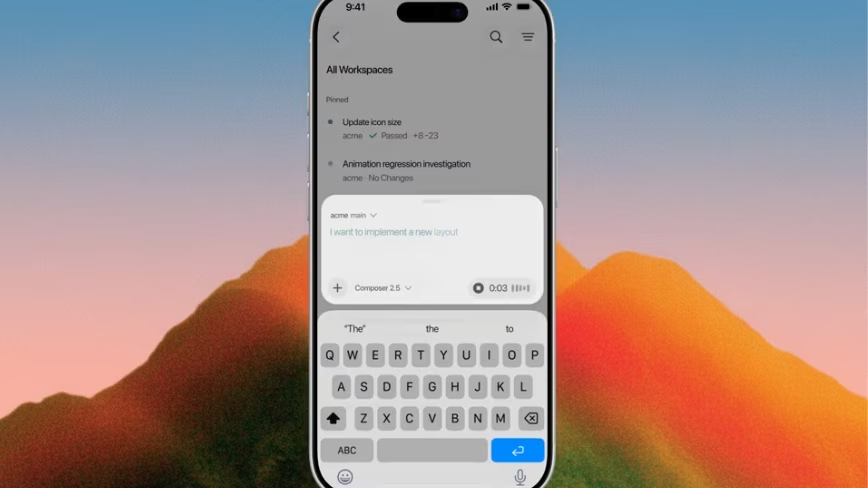
No longer just code. Cursor, the tool that won over developers with its AI-assisted editor, is now building Sand, a general-purpose agent designed to automate everyday office tasks. The move puts the company on a collision course with Anthropic's Claude Cowork, in a race already crowded by operators like those from OpenAI. But there is an unexpected variable: according to reports, the commercial fate of Sand could depend on Elon Musk.
The news marks a structural shift. Until yesterday, the battleground was code: software writers used Cursor, GitHub Copilot, or similar tools to boost productivity. Now the competition moves to the generic desktop, where an agent can read emails, organize documents, schedule meetings, and interact with business applications. It is no longer about assisting a programmer, but about replacing – or at least sitting alongside – the knowledge worker in a broad sense. This radically changes what is at stake for those who manage data.
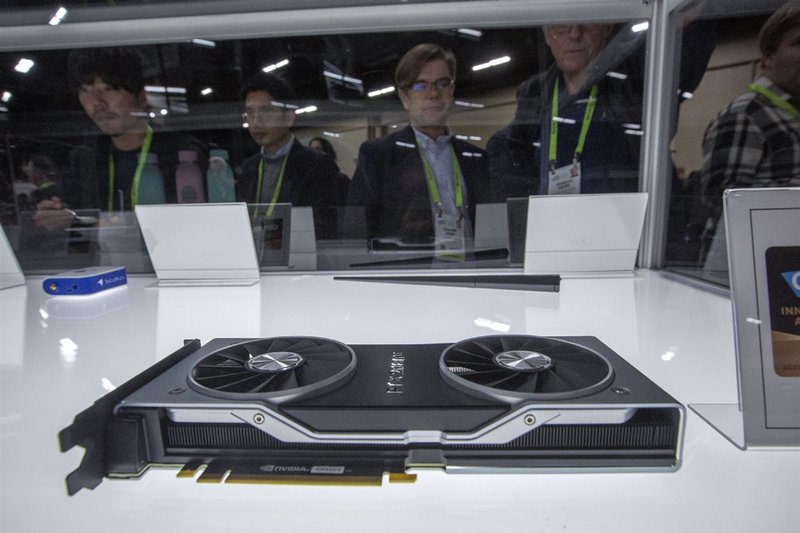
For enterprises, an agent that accesses confidential documents, email history, and internal tools immediately raises the issue of data sovereignty. Sending all this information to an external cloud API exposes organizations to compliance risks – GDPR, sector regulations, corporate policies – that many cannot afford. That is why the rise of agents like Sand or Claude Cowork will not merely be a battle of models, but also a battle of deployment. Whoever can run the agent locally, on on-premise or edge infrastructure, will have a competitive advantage with privacy-conscious clients. This drives demand for hardware capable of running LLMs with significant VRAM requirements directly on user machines or internal servers, a trend that GPU vendors and system integrators are already beginning to notice.
Musk’s shadow adds further uncertainty. The source does not explain exactly why Sand’s launch might depend on him, but it is easy to imagine scenarios: a strategic investment, a partnership with his companies (X, Tesla, SpaceX, xAI), or, conversely, competition that could convince Cursor to rethink the entire project. Musk has built an ecosystem where artificial intelligence plays an increasingly central role, with xAI developing Grok and Tesla betting heavily on autonomous driving. An office agent could integrate with – or clash against – this vision. For industry watchers, the point is not so much the specific outcome, but the signal that a single actor can influence the development of a technology now considered enabling for the entire digital economy.
Reading between the lines, the story says a lot about the direction of the LLM market. So far, fine-tuning and model inference have focused on vertical tasks or conversational interaction. General-purpose agents require complex orchestration (planning, tool use, persistent memory) and latency acceptable to the end user. Those who choose to keep everything on-premise face a non-trivial total cost of ownership (TCO), but gain full control of the data flow in return. It is a compromise many organizations are evaluating, particularly in Europe, where the regulatory framework often makes self-hosted setups preferable.
It is no accident that the debate is shifting from model specifications to their actual “habitability” in regulated environments. Sand may not yet be ready for the general public, but its very existence – and the tension surrounding its future – confirms that 2025 will be the year agents leave the lab and enter offices, bringing with them all the infrastructural and geopolitical baggage this entails.





💬 Comments (0)
🔒 Log in or register to comment on articles.
No comments yet. Be the first to comment!