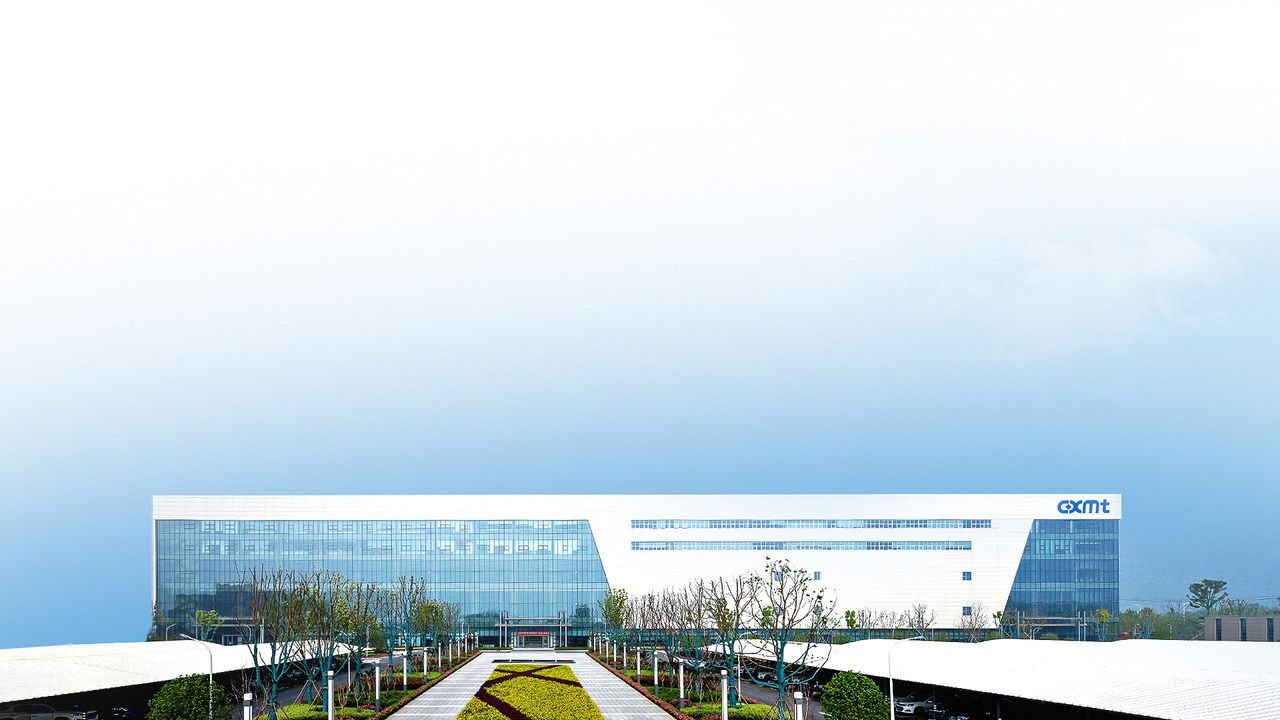
The news that CXMT, China's leading memory maker, is reportedly close to matching Micron's production capacity by 2026 — according to industry analysis — marks a potential turning point for the entire semiconductor ecosystem. If confirmed, China would become the world's second-largest DRAM producer, behind only Samsung. But beyond the geopolitical and market implications, the data raises a crucial question for those designing and managing AI computing infrastructure: what does this mean for the availability and cost of memory used in servers running LLMs on-premise?
DRAM is the essential component of every inference and training system: from GPUs to CPUs, volatile memory determines the ability to load complex models, processing speed, and ultimately the TCO of a platform. Today, the market is dominated by a few players, with production concentrated in South Korea and the United States. China's entry as a major player could reshape supply chains, influencing prices, volumes, and, just as importantly, export regulatory controls.
An often-overlooked aspect is the impact on data sovereignty. For many European organizations, using hardware manufactured by Chinese companies introduces an additional layer of evaluation in terms of compliance and security, especially in regulated contexts such as GDPR. At the same time, for markets that currently struggle to access memory at sustainable costs due to trade restrictions, a Chinese alternative could represent a concrete opportunity to expand their local deployment capacity.
In this scenario, CXMT's approach to Micron's volumes is not just a matter of production quantity. It signals that the AI value chain, heavily dependent on an oligopoly of suppliers today, could fragment and reorganize around regional hubs. Those planning on-premise LLM deployments today face a strategic choice: continue relying on established suppliers with their guarantees of continuity, or explore emerging alternatives that might offer cost advantages but raise questions about long-term resilience.
CXMT has yet to prove its ability to compete on advanced process technology — the density, energy efficiency, and speed of its DRAM are still under scrutiny. But its rise aligns with China's strategy of self-sufficiency in the chip sector, accelerated by US sanctions. For IT managers and AI system architects, this means procurement options will multiply in the coming years, along with the complexity of make-or-buy decisions and compliance assessments.
While spotlights are on GPUs and processors, it is often memory that represents the unseen bottleneck for intensive workloads. An increase in global production capacity, perhaps driven by competition, could translate into greater availability of high-density modules at more affordable prices, accelerating the adoption of on-premise solutions even by organizations that have so far favored the cloud for budget reasons.
AI-RADAR closely follows the evolution of physical infrastructure for local computing, offering analytical tools to compare on-premise and cloud deployment scenarios. The entry of new players into DRAM production is one of the factors that will redefine costs and architectural choices in the next three years.








💬 Comments (0)
🔒 Log in or register to comment on articles.
No comments yet. Be the first to comment!