
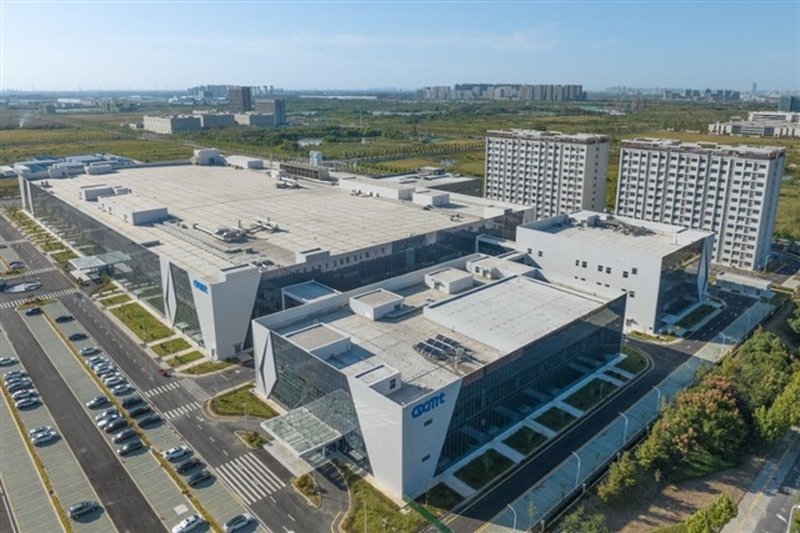
ChangXin Memory Technologies' (CXMT) move to list on the stock exchange is more than a financial operation: it signals the pace – or lack of it – at which China is building a domestic memory supply chain for artificial intelligence. The Hefei-based DRAM maker has raised fresh capital, but what analysts and investors are focusing on is the map included in the prospectus: a chart that, without much sugarcoating, shows just how long the road still is to compete with South Korean and US leaders.
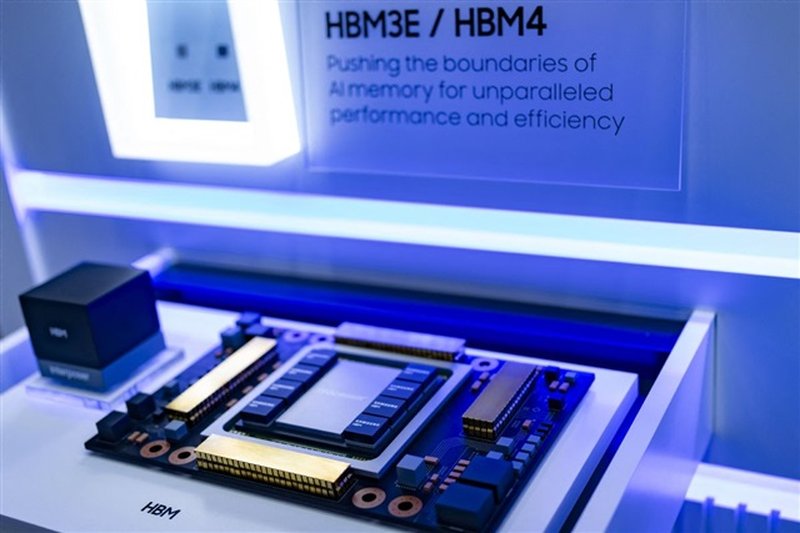
The issue is not standard DRAM production, where CXMT has already achieved significant volumes for consumer markets and traditional data centers. The real watershed is called High Bandwidth Memory (HBM), the vertically stacked memory that powers GPUs and AI accelerators, from NVIDIA’s flagship products to custom chips built by large cloud providers. Without cutting-edge HBM, any conversation about on-premise LLMs, efficient fine-tuning, and low-latency inference risks remaining just talk.
The HBM bottleneck and geopolitical leverage
Today, the HBM market is an oligopoly firmly in the hands of SK Hynix, Samsung, and, to a lesser extent, Micron. Demand exploded with the rise of Transformer models and continues to grow as context windows expand, requiring unprecedented bandwidth and memory capacity. In an on-premise deployment, where VRAM is often the primary bottleneck, having competitively priced HBM can make the difference between a sustainable Total Cost of Ownership and a project that never takes off.
China knows that dependence on foreign suppliers is a systemic risk, aggravated by US export controls that specifically target the most advanced HBM. In this landscape, CXMT represents a domestic option, but with a technology gap that the prospectus itself lays bare: the production node and packaging techniques needed to ship HBM3 or HBM3e at industrial volumes are still a distant target. The money raised through the IPO will be funneled into R&D, aiming to narrow the gap by 2027.
What it means for those choosing on-premise stacks
For organizations evaluating self-hosted AI infrastructure – from companies in regulated sectors to public administrations needing data sovereignty – the dynamic is twofold. On one hand, a potential entry by CXMT into the high-end HBM tier could ease price pressure, which today is driven by insatiable demand and concentrated production. On the other, China’s ongoing delay stretches out the timeline for any real diversification of supply, leaving buyers exposed to geopolitical tensions and supply chain volatility.
In short, the prospectus map is honest. It promises no miracles. And in the meantime, the industry is left wondering whether China’s push for self-sufficiency will produce a stabilizing effect, or whether the current leaders’ technological acceleration will widen the chasm even further. For those designing hardware or planning local inference clusters, the HBM bottleneck remains the critical thermometer to watch.




💬 Comments (0)
🔒 Log in or register to comment on articles.
No comments yet. Be the first to comment!