
Introduction
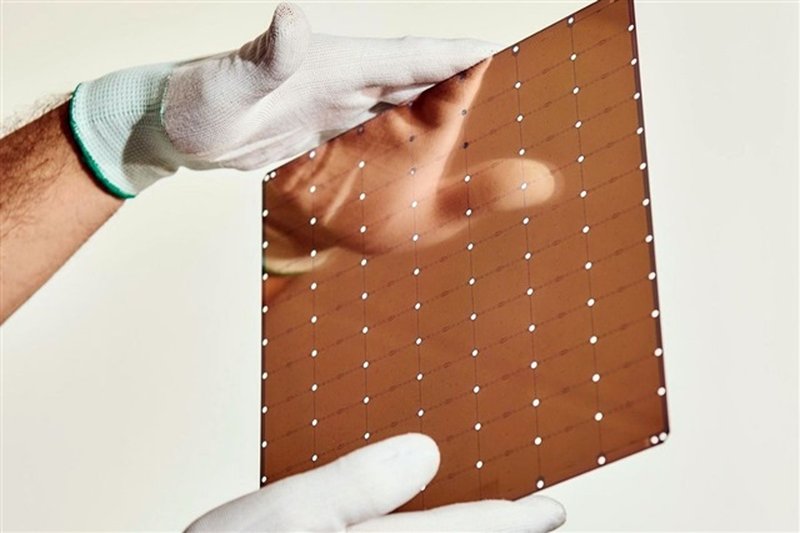
Cyient Semiconductors, an India-based company, has announced the completion of a $30 million funding round. This capital is earmarked to enhance its capacity to develop and scale the production of "power chips," which are optimized for energy efficiency, with a specific focus on global artificial intelligence markets. The operation underscores growing investor interest in innovative hardware solutions, which are fundamental to supporting the expansion of AI applications.
The artificial intelligence sector, particularly that of Large Language Models (LLM), demands increasingly performant and, at the same time, energy-efficient computational infrastructures. The investment in Cyient Semiconductors fits into this context, aiming to provide key components that can improve performance and reduce operational costs associated with training and inference of complex AI models.
The Context of AI Chips and Energy Efficiency
The race for artificial intelligence has generated unprecedented demand for specialized hardware. While high-end GPUs dominate the landscape for LLM training and inference, attention is also shifting towards more efficient and customized solutions, such as Application-Specific Integrated Circuits (ASIC) or power chips. These are designed to optimize energy consumption and heat dissipation, critical factors for the sustainability and scalability of data centers.
Energy efficiency is not just an environmental concern but a key element in calculating the Total Cost of Ownership (TCO) for AI infrastructures. A chip that consumes less energy not only reduces electricity bills but also cooling requirements, further lowering operational costs. This is particularly relevant for companies choosing a self-hosted or bare metal deployment, where every watt counts to keep expenses under control and maximize return on investment.
Implications for On-Premise Deployment
For CTOs, DevOps leads, and infrastructure architects evaluating self-hosted alternatives versus the cloud for AI/LLM workloads, advancements in power chips like those developed by Cyient Semiconductors are of great interest. The availability of more efficient hardware can make on-premise deployments more economically advantageous and technically manageable. This is crucial for scenarios requiring high data sovereignty, stringent compliance, or air-gapped environments, where complete control over the infrastructure is a priority.
The choice between cloud and on-premise involves a series of trade-offs. While the cloud offers flexibility and immediate scalability, self-hosted solutions can guarantee lower long-term TCO, greater data control, and reduced latency for critical applications. Hardware optimized for energy efficiency and performance, such as power chips, helps balance these trade-offs, making the on-premise option more attractive for intensive AI workloads. For those evaluating on-premise deployment, AI-RADAR offers analytical frameworks on /llm-onpremise to assess these trade-offs in detail.
Future Prospects and Challenges in the AI Market
The global AI market is rapidly evolving, with constant demand for innovation at all levels of the technology stack, from hardware to software frameworks. The investment in Cyient Semiconductors reflects the belief that hardware differentiation, particularly in terms of efficiency and AI-specific performance, will be a critical success factor. The ability to provide solutions that support LLM inference and fine-tuning with increasingly stringent VRAM and throughput requirements is fundamental.
Future challenges include not only the mass production of these chips but also their integration into existing hardware and software ecosystems. Collaboration with server manufacturers and AI solution providers will be essential to ensure that these "power chips" can be adopted on a large scale, helping to democratize access to advanced and sustainable AI computational capabilities for a wide range of industrial sectors.







💬 Comments (0)
🔒 Log in or register to comment on articles.
No comments yet. Be the first to comment!