
The Energy Crisis as a Strategic Warning
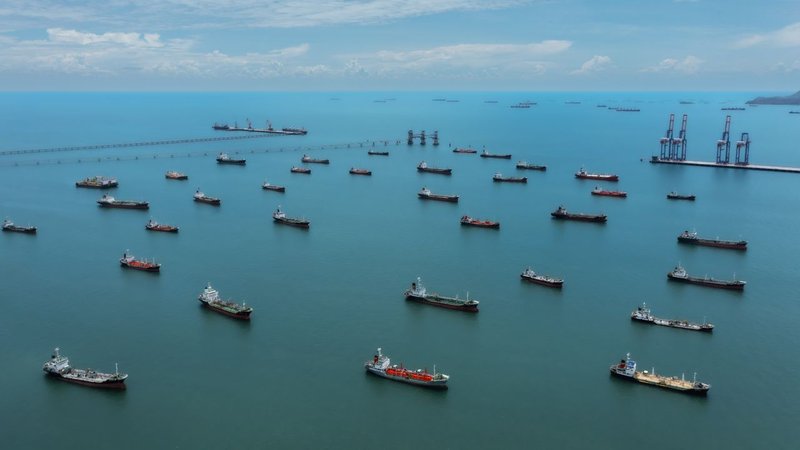
The closure of the Strait of Hormuz on March 27, following weeks of US and Israeli air strikes, triggered a chain reaction in global markets. Brent crude prices soared to $126 a barrel, and the World Bank promptly warned of a potential 24 percent surge in energy prices, marking the largest increase since the instability caused by the Russia-Ukraine conflict in 2022. For oil-importing nations, this scenario represented an immediate economic threat, highlighting the profound interconnectedness and vulnerability of global supply chains.
This event is not merely an energy issue but a powerful warning about the necessity of strategic sovereignty and resilience in every critical sector. Dependence on external trade routes or suppliers, subject to geopolitical instability, can have devastating repercussions. Australia's response, with a $22 billion investment in renewables, embodies the pursuit of greater independence and long-term security. This lesson finds significant parallels in the world of technology, particularly for artificial intelligence infrastructures.
Data Sovereignty and On-Premise AI Infrastructure
The concept of sovereignty, so evident in the energy context, is equally crucial for companies managing AI workloads and Large Language Models (LLM). Reliance on external cloud services for LLM deployment can expose organizations to risks related to data sovereignty, regulatory compliance, and operational continuity. On-premise, self-hosted, or air-gapped deployment decisions thus become a strategic choice to ensure total control over sensitive data and proprietary models.
Adopting an on-premise approach means having full control over hardware, from the silicio of GPUs (such as A100 or H100) to available VRAM, and network and storage configuration. This allows for optimizing performance for LLM inference and fine-tuning, directly managing parameters like throughput and latency. Furthermore, it offers the ability to implement rigorous security and compliance policies, essential for regulated sectors like finance or healthcare, where data localization and protection are imperative.
Evaluating Trade-offs: TCO and Control
The choice between cloud and on-premise deployment for AI workloads is not trivial and requires a careful analysis of the Total Cost of Ownership (TCO). While the initial investment in hardware and infrastructure for a bare metal deployment might seem high, long-term operational costs, especially for intensive and predictable workloads, can be significantly lower compared to cloud consumption-based models. Internal management also offers greater flexibility and the ability to customize the entire development and deployment pipeline, from software frameworks to quantization models.
For CTOs and infrastructure architects, the evaluation must go beyond mere cost. It includes factors such as data sovereignty, the ability to operate in air-gapped environments for maximum security, and the possibility of maintaining exclusive control over intellectual property. AI-RADAR offers analytical frameworks on /llm-onpremise to evaluate these trade-offs, providing tools to compare concrete hardware specifications and architectural implications of different solutions, without recommending a specific choice but highlighting constraints and opportunities.
Future Prospects and Strategic Decisions for AI
Geopolitical crises, such as the Strait of Hormuz incident, serve as powerful catalysts for rethinking strategies of dependence and autonomy. In the context of artificial intelligence, this translates into increasing attention to solutions that guarantee control, security, and resilience. Australia's investment in renewable energy is an example of how nations respond to these strategic challenges, seeking to reduce external vulnerability.
Similarly, companies developing and deploying LLMs must consider investing in on-premise infrastructures as a strategic move for the future. It is not just about optimizing costs or performance, but about building a solid and independent foundation for innovation and the protection of their most valuable digital assets. The ability to autonomously manage the entire AI stack, from training to inference, becomes a fundamental pillar for competitiveness and security in the age of artificial intelligence.







💬 Comments (0)
🔒 Log in or register to comment on articles.
No comments yet. Be the first to comment!