
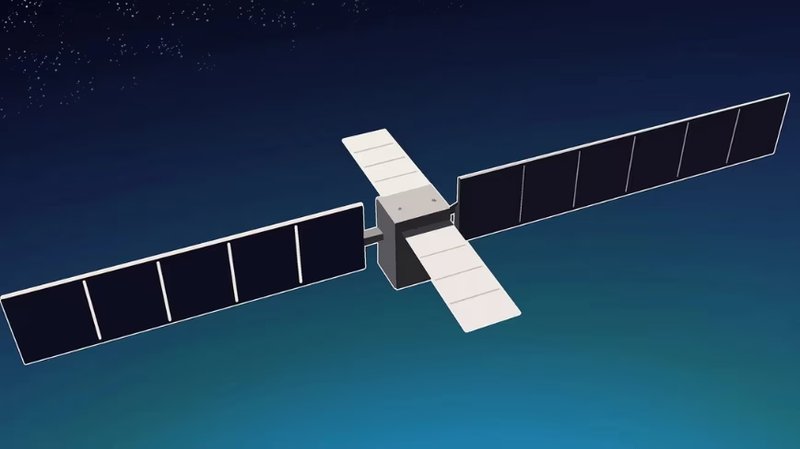
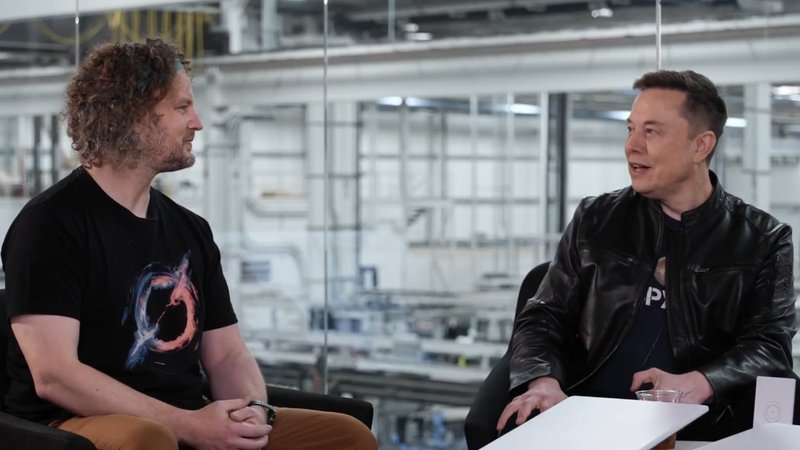
Elon Musk has made yet another bold prediction: “The lowest-cost place to put AI will be in space, and that will be true within two years, maybe three at the latest.” He spoke at the World Economic Forum in Davos as SpaceX was preparing to go public and filing with the FCC for a constellation of up to one million satellites in low Earth orbit, between 500 and 2,000 kilometers altitude. Just three days before the IPO, in a video interview, he even sketched initial specs for the AI-1 satellite data center. The usual comparisons follow: full self-driving cars by 2017, first human Mars mission in 2024, 10,000 Optimus robots by the end of 2025. History suggests taking the SpaceX founder’s timelines with a grain of salt.
Physics does not go public
Cooling a single Nvidia H100 GPU in space is a concrete hurdle. It draws 700 watts and needs a 1.4-square-meter radiator at 60 °C to dissipate the heat. A 40-kilowatt rack would require an 80-square-meter radiator; a 100-megawatt data center would need 2,500 such radiators. Starcloud, a startup that has flown one H100 to orbit, found its radiator too weak to run the chip at full power, as Dina Genkina, IEEE Spectrum’s computing and hardware editor, points out. And production? SpaceX currently builds about 4,000 Starlink satellites a year. Even with a tenfold capacity increase, a million satellites would take 25 years. At the record 165 orbital launches in 2025, assuming a Starship carrying 60 satellites per ride, you would need over 16,000 dedicated launches – a decade even at ten times that cadence.
What analysts are betting on
Michael Pierce of Technology Strategy Partners believes cost parity with terrestrial data centers may arrive in 5–10 years, not the promised 2–3. The existing Starlink laser-link network is an infrastructure advantage no newcomer can replicate quickly. The chip-agnostic design, according to Pierce, reflects both difficulty securing AI silicon and a modular philosophy. The only realistic near-term application would be a mega-constellation for inference; distributed training workloads likely cannot handle the synchronization and latency constraints. Independent AI strategist Matt Hasan adds that the AI-1 announcement does not rewrite the fundamental reasons but signals a shift from theoretical discussion to engineering and capital allocation decisions. Launch costs, maintenance, hardware replacement cycles, thermal management, and latency-sensitive workloads remain open questions.
For those looking on-prem: ground, not orbit
For anyone evaluating local infrastructure for LLMs, the orbital dream serves as a useful litmus test. The constraints are not so different: energy, heat dissipation, hardware procurement. The difference is that on Earth a mature ecosystem already exists for on-premises deployment, with air, liquid, or immersion cooling and full control over data residency. SpaceX hopes space-based compute can be deployed faster than building new terrestrial data centers, but the facts suggest that for the vast majority of organizations, the urgency for compute power is still met by rack-mounted servers, not by satellites. AI-RADAR provides analytical frameworks at /llm-onpremise for weighing trade-offs between cloud and self-hosted infrastructure, with data sovereignty – a concept that, out there beyond any earthly jurisdiction, becomes decidedly murky.







💬 Comments (0)
🔒 Log in or register to comment on articles.
No comments yet. Be the first to comment!