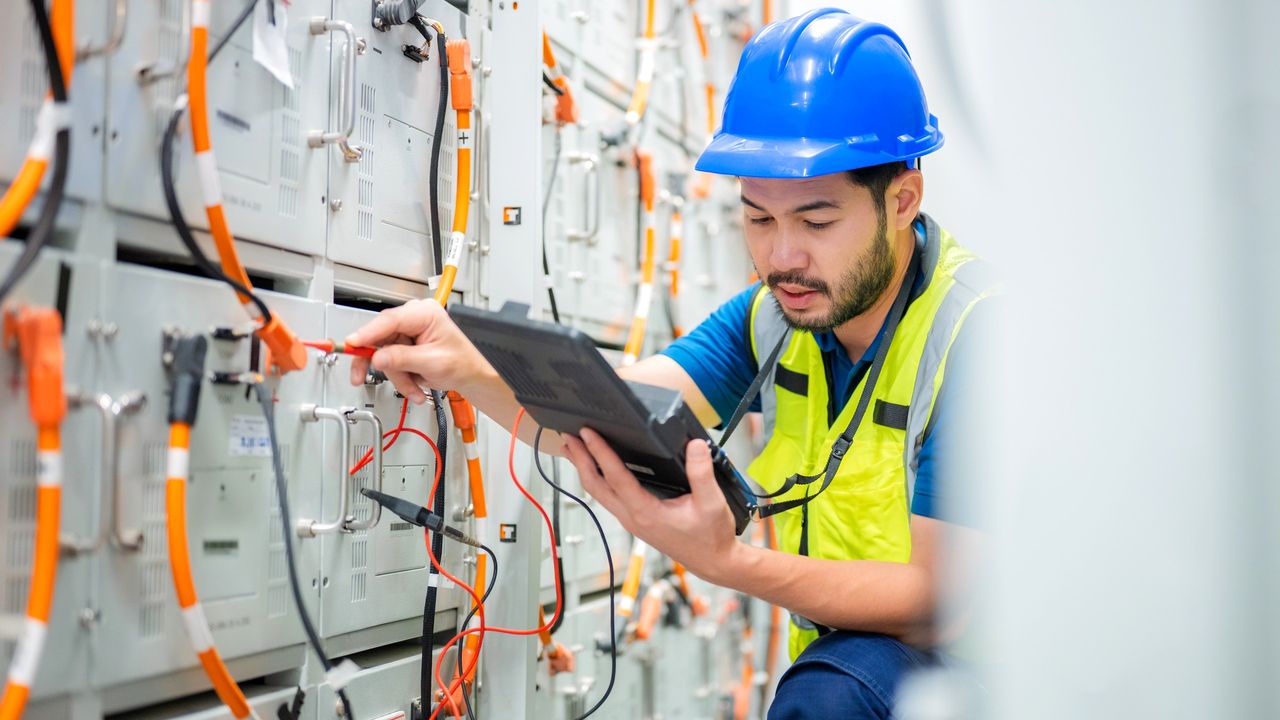
Recent industry reports leave no doubt: while billions are pouring into new AI-focused data centers, the reality on the construction site tells a different story. A chronic shortage of specialized labor—electricians, HVAC technicians, fiber-optic installers, systems engineers—is turning the boom into a bottleneck. Nearly complete facilities sit waiting for commissioning for weeks, and shipments of cutting-edge GPUs accumulate in warehouses without being powered on.
This is not an isolated trend: the surge in AI workloads, particularly inference on large language models, demands power densities up to ten times higher than traditional data centers. That means complex electrical systems, liquid cooling loops, NVLink and InfiniBand interconnects that require highly specific skills. We’re not just erecting warehouses; we’re building ultra-high-reliability environments where a cabling mistake can lead to unacceptable downtime for mission-critical loads.
The skills crunch: a human bottleneck
Data from industry watchers shows that the AI data center construction pipeline is saturated globally. In key markets like North America and Europe, demand for qualified personnel outstrips supply by 30–40%, with wait times for a refrigeration mechanic stretching to six months. Universities and training centers struggle to produce enough professionals with hands-on experience at scale, and on-the-job training takes years.
For on-premise projects, this bottleneck has a direct impact. A company looking to deploy a 100-GPU cluster in its own facility to retain data control is competing with hyperscalers for the same human resources. Large cloud providers can offer 20–30% higher salaries and multi-year contracts, draining the available workforce. It’s not a hardware budget issue—accelerators like H100 or B200 can be ordered with known lead times—but bringing the physical infrastructure online becomes the real choke point.
What it means for self-hosted deployments
Organizations weighing on-premise deployment—whether for GDPR compliance, data sovereignty, or a TCO analysis that favors self-hosting—now face fresh variables. The timeline to reach production stretches from 6–12 months to 18–24 months in some regions, with rising operational costs for overtime and contract penalties. In some cases, integration service providers are subcontracting to less experienced teams, increasing the risk of configuration errors that could compromise inference performance or network security.
AI-RADAR has analyzed several scenarios: in a cloud vs. on-premise comparison, the CapEx over OpEx advantage quickly erodes if activation times double, especially when model innovation cycles demand frequent hardware refreshes. Yet for workloads handling sensitive data—think healthcare or defense—decision latency and full control remain non-negotiable. Here, the cost of delay must be weighed carefully. Tools like those available on /llm-onpremise help map these trade-offs, but there’s no one-size-fits-all solution.
Beyond the bottleneck: investing in skills
The picture is not static. Forward-looking companies are investing in internal training programs, partnering with technical institutes, and funding simulation labs to build a skilled workforce on the ground. European governments, driven by the need for digital autonomy, are including data center construction in infrastructure resilience plans, which could accelerate the creation of a specialized labor pool. But it will take years for supply to realign.
In the meantime, those planning on-premise deployment should adopt an incremental approach: start with a minimum viable configuration, validate software on a small cluster, and scale only when the physical infrastructure is rock-solid. Considering hybrid setups, where less critical loads are temporarily shifted to a regional private cloud, can mitigate the risk of idle hardware. The lesson from this cycle is clear: in the AI era, the real luxury isn’t GPUs—it’s the skilled hands to install them.







💬 Comments (0)
🔒 Log in or register to comment on articles.
No comments yet. Be the first to comment!