DeepSeek Consolidates Position with 50% Capital Increase
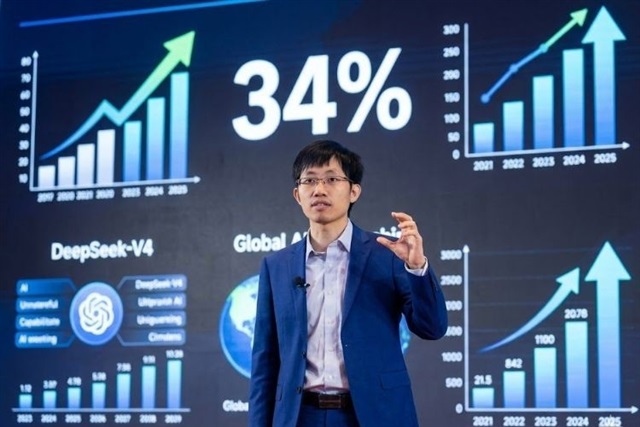
DeepSeek, an emerging player in the artificial intelligence landscape, has announced a significant capital increase of 50%. This strategic move precedes an upcoming funding round and sees founder Liang Wenfeng consolidate his position by securing a veto stake. The operation underscores the dynamism and intense competition characterizing the LLM and broader AI sectors, where strategic control and the ability to attract investment are key factors for growth.
Market Dynamics and Large Language Model Development
The injection of capital into companies like DeepSeek reflects investors' growing confidence in the transformative potential of artificial intelligence, particularly in the development and refinement of Large Language Models. Such funding is vital for sustaining research and development, acquiring advanced hardware infrastructure – such as high-performance GPUs with ample VRAM and specific computing capabilities for inference and training – and attracting top talent in the field.
A founder's decision to maintain a veto-wielding control stake, even in anticipation of new investments, highlights the desire to steer the long-term strategic vision. This is a critical aspect in a sector where technological directions and market needs can evolve rapidly. This approach ensures that the development roadmap, including the choice between proprietary models and the adoption of Open Source solutions, remains aligned with the company's original vision.
Implications for Enterprise Deployment and Data Sovereignty
For enterprises evaluating the adoption of AI and LLM solutions, the expansion and capitalization of players like DeepSeek offer an increasingly rich and competitive landscape of options. The choice between utilizing cloud-based LLM services and on-premise deployment remains a complex strategic decision for CTOs and infrastructure architects. Self-hosted solutions, for example, allow for complete control over data sovereignty, regulatory compliance (such as GDPR), and the customization of the entire inference and fine-tuning pipeline – crucial aspects for regulated industries or air-gapped environments.
However, on-premise deployment requires significant investments in hardware, such as bare metal servers equipped with specific GPUs (e.g., NVIDIA A100 or H100 with 80GB of VRAM), and in-house expertise for infrastructure management. The evaluation of TCO (Total Cost of Ownership), which includes acquisition, energy, cooling, and maintenance costs, therefore becomes a decisive factor when comparing economic sustainability against the OpEx models of the cloud.
Future Outlook and Strategic Infrastructure Choices
DeepSeek's financial consolidation signals the continued maturation of the AI market. As new models and capabilities emerge, organizations will need to continue weighing the trade-offs between the flexibility and scalability offered by the cloud and the long-term benefits of security, control, and cost optimization provided by on-premise or hybrid deployment. The ability to efficiently manage AI workloads, in terms of both throughput and latency, is paramount.
AI-RADAR, for instance, offers analytical frameworks on /llm-onpremise to support decision-makers in evaluating these complex scenarios, providing tools to compare hardware requirements, expected performance, and cost implications for various deployment architectures. The ability to choose the infrastructure best suited to specific needs will be crucial for fully capitalizing on AI's potential, while simultaneously ensuring data protection and operational control.





💬 Comments (0)
🔒 Log in or register to comment on articles.
No comments yet. Be the first to comment!