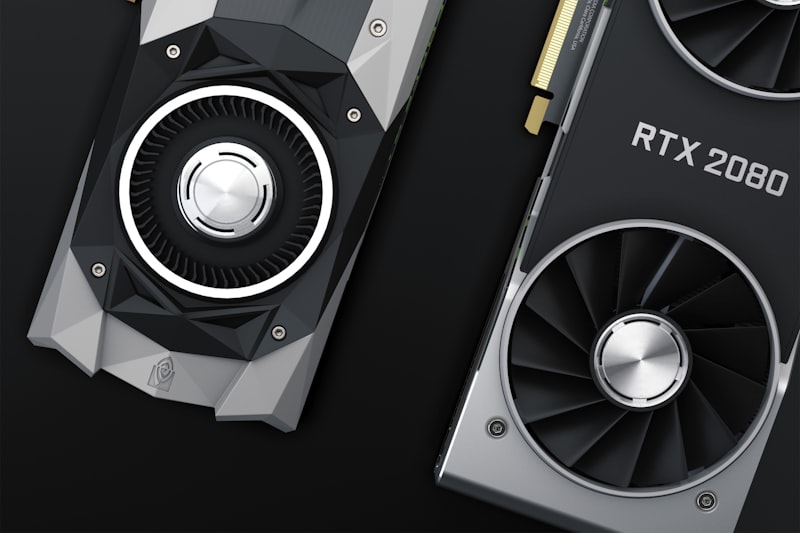
DeepSeek appears determined to move beyond software. The news that the Chinese company is developing its own AI processor – reported by multiple sources, though still lacking official details – redraws the boundaries of its strategy. This is more than a vendor going vertical; it signals that the race for model efficiency is moving to a deeper layer: silicon.
To grasp the significance, consider the environment DeepSeek operates in. The company has already shown, with models like DeepSeek-R1, that high quality is achievable through Mixture of Experts (MoE) architectures and innovative training techniques, all while reducing computational cost. But the hardware bottleneck remains critical: NVIDIA GPUs, especially H100s, are subject to export restrictions to China. Optimizing software is pointless if access to hardware acceleration becomes uncertain or prohibitively expensive.
Building a custom processor allows DeepSeek to break this dependency on two fronts. First, technological sovereignty: an internally designed chip, perhaps manufactured by domestic foundries, bypasses export controls and guarantees the compute capacity needed to serve customers who demand on-premises deployment for compliance and data residency reasons. Second, there is an architectural edge: an accelerator tailored exactly to DeepSeek workloads – with native support for quantization techniques, for MoE inference sparsity, and for the token dimensionalities typical of its models – can deliver a Total Cost of Ownership (TCO) far lower than general-purpose alternatives.
The implications for those evaluating self-hosted stacks are deep. Currently, anyone running LLMs on-premises must accept the margins and constraints of the NVIDIA-AMD duopoly, where no GPU is ever optimized for a single framework or model family. A DeepSeek chip, if made available externally or integrated into dedicated appliances, could reshape the economics of local inference, making affordable what today is only within reach of organizations that can afford high-VRAM GPU clusters.
Technical specifications remain unknown: frequencies, memory bandwidth, support for mixed precision (FP8, INT4), and compatibility with mainstream serving frameworks. Yet the direction is unmistakable: generative AI competition will never again be fought on model checkpoints alone, but on the ability to control the entire stack, from silicon to token.






💬 Comments (0)
🔒 Log in or register to comment on articles.
No comments yet. Be the first to comment!