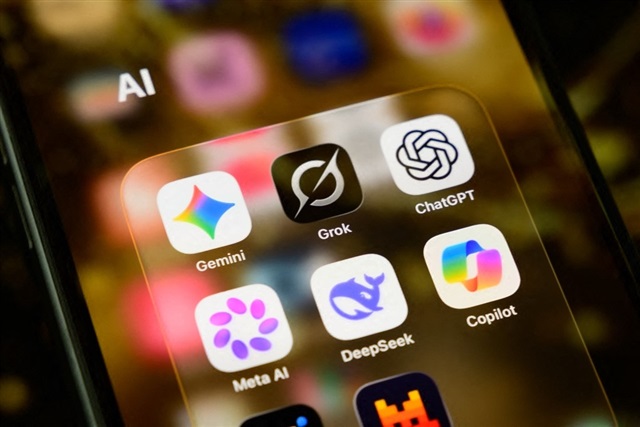
DeepSeek, the research lab that has cemented its reputation among LLM developers through open and remarkably efficient models, is reportedly preparing an initial public offering in Shanghai that could value the company at up to $70 billion. The news, relayed by AFP, comes as Apple accelerates plans to bring its Apple Intelligence platform to China, a market where the AI game is played on a regulatory and cultural field very different from the West's.
The decision to list in Shanghai, rather than on a US or Hong Kong exchange, is no minor detail. It signals DeepSeek's intention to remain anchored to the domestic tech ecosystem, raising capital that will primarily fund the expansion of computing capacity and the development of ever larger models, while keeping an eye on the efficiency that already defines its approach. The DeepSeek-V series models have indeed shown that it's possible to achieve competitive performance with reduced training budgets, a crucial factor in an ecosystem where access to advanced chips is limited by sanctions.
Apple Intelligence's entry into China adds another layer of complexity. To operate generative AI features on the ground, Apple will necessarily have to strike deals with local partners and ensure that data processing complies with stringent data residency and privacy regulations. This could push toward hybrid architectures, with a significant portion of inference executed on-device or on servers located within national borders. DeepSeek, for its part, already enjoys a privileged position: its models are often used in on-premise and self-hosted deployment contexts by Chinese enterprises that wish to avoid dependence on external clouds, in line with the data sovereignty directive that Beijing has made a priority.
The pursuit of a monster valuation, if confirmed, would reflect not only the company's commercial ambitions but also investors' conviction that the future of AI in China relies on a solid endowment of private infrastructure, away from the logic of global platforms. The funds raised through the IPO could be channeled into purchasing next-generation GPU clusters, even though US export restrictions make hardware planning a delicate exercise in trade diplomacy.
In the background, the TCO question for adopters of these technologies remains: if Apple Intelligence promises an integrated experience optimized for its devices, DeepSeek will need to continue proving that its lean approach – built on aggressive quantization and targeted fine-tuning – can compete even when VRAM availability is limited. In a market where cost per token is an increasingly strict yardstick, the game is still wide open.




💬 Comments (0)
🔒 Log in or register to comment on articles.
No comments yet. Be the first to comment!