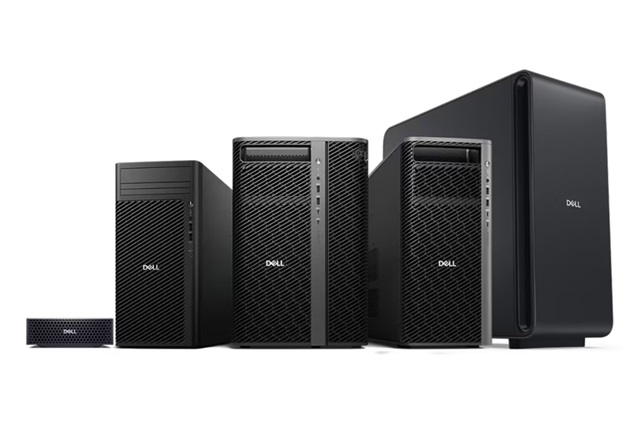
Dell AI Factory: An Ecosystem for Enterprise AI
Dell Technologies has announced a significant milestone for its AI Factory initiative, which has reached over 5,000 enterprise clients. This achievement underscores the rapid expansion of dedicated artificial intelligence infrastructure solutions within large organizations. Demand, according to Dell, is strongly fueled by Nvidia technologies, which represent a fundamental pillar for accelerating AI workloads.
Dell's AI Factory positions itself as an integrated ecosystem, designed to support companies in the development, training, and deployment of artificial intelligence models. This approach addresses the increasing complexity of AI pipelines, which require not only computational power but also high-performance storage, low-latency networking, and a cohesive software framework to manage the entire model lifecycle.
The Importance of Dedicated Infrastructure for AI
The adoption of solutions like the Dell AI Factory reflects a clear trend in the enterprise landscape: the need for robust and scalable infrastructure to handle increasingly demanding AI workloads. Companies, particularly those with stringent data sovereignty and regulatory compliance requirements, often prefer self-hosted or hybrid deployments. This allows for granular control over the environment, from the physical security of servers to the management of sensitive data.
Nvidia GPU-based solutions have become a de facto standard for AI acceleration, both for intensive Large Language Model (LLM) training and for large-scale inference. The choice of specific hardware, such as GPUs with high VRAM, is crucial for hosting complex models and ensuring high throughput, while reducing latency for critical applications. The ability to manage these requirements on-premise offers companies the flexibility to optimize resources and integrate AI directly into their existing operational processes.
Trade-offs and Deployment Considerations
The decision to invest in an on-premise "AI Factory" involves a series of trade-offs that CTOs and infrastructure architects must carefully evaluate. While a self-hosted deployment offers greater control, security, and potential optimization of the Total Cost of Ownership (TCO) in the long term, it also requires significant initial investment (CapEx) and internal expertise for infrastructure management and maintenance.
Cloud alternatives, while offering flexibility and an OpEx model, can present challenges related to data sovereignty, unpredictable operational costs at scale, and latency for applications requiring processing close to the data source. For those evaluating on-premise deployments, AI-RADAR offers analytical frameworks on /llm-onpremise to assess these trade-offs, considering factors such as VRAM requirements for specific LLMs, desired throughput, and security implications.
The Future of Enterprise AI and On-Premise
The milestone achieved by Dell with its AI Factory highlights a maturation of the artificial intelligence market, where companies are no longer just seeking raw computing power, but integrated solutions that simplify AI deployment and management. Nvidia's impetus in this context confirms the central role of GPUs and accelerated platforms in enabling the most advanced AI applications.
This trend suggests that the on-premise or hybrid approach will continue to be a strategic choice for many organizations, especially those operating in regulated sectors or handling sensitive data. The ability to build and manage one's own "AI factory" in-house offers a competitive advantage in terms of innovation, security, and control—fundamental elements for long-term success in the era of artificial intelligence.





💬 Comments (0)
🔒 Log in or register to comment on articles.
No comments yet. Be the first to comment!