The Growing Power Demands of AI
The advancement of Large Language Models (LLM) and artificial intelligence applications is pushing the limits of traditional IT infrastructures, particularly concerning power supply. Training and inference workloads demand ever-increasing computational density, concentrating a high number of GPUs and other accelerators in confined spaces. This trend leads to per-rack power consumption rapidly approaching megawatt levels, posing significant challenges for data center design and management.
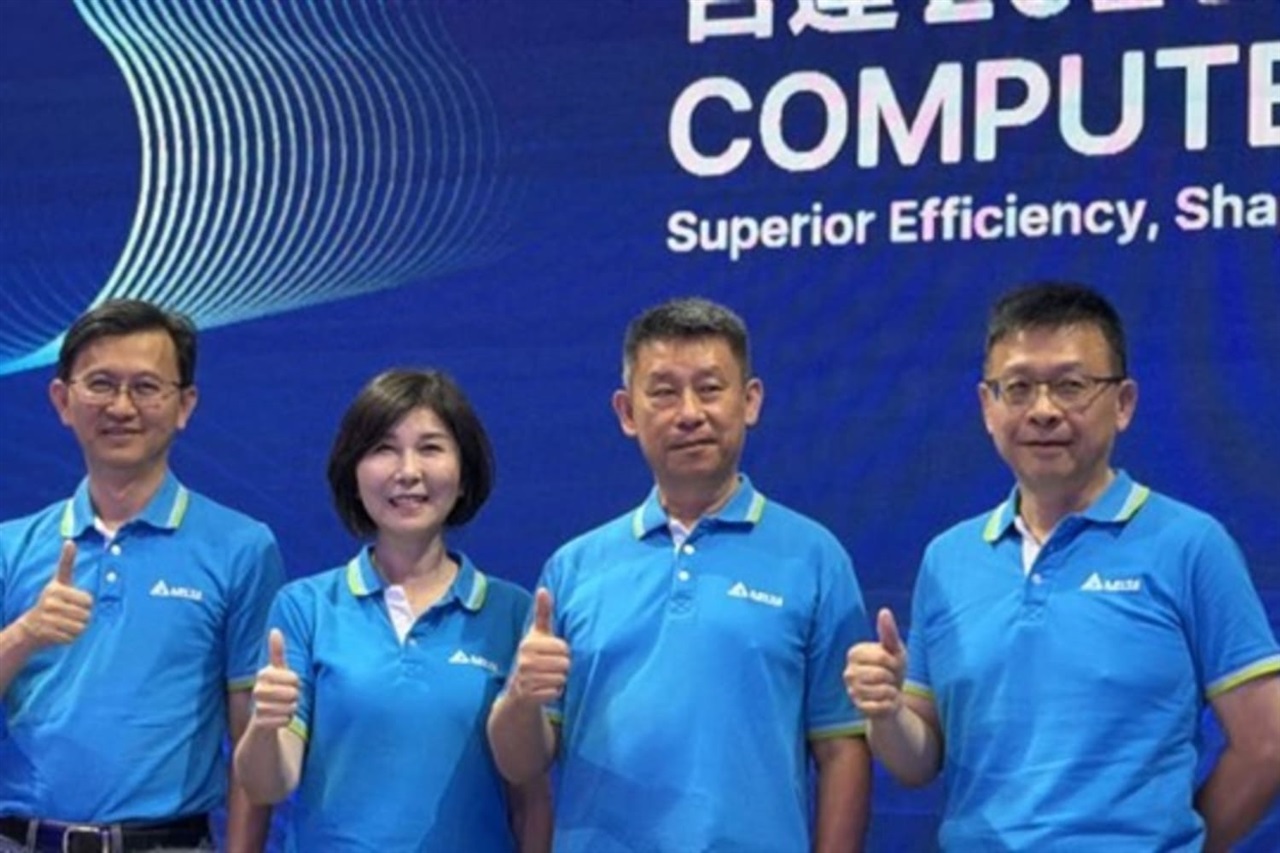
In this context, companies like Delta Electronics are exploring and promoting innovative solutions to meet these needs. The necessity to efficiently and reliably deliver power to these high-density environments has become a strategic priority for anyone managing AI infrastructures, especially in on-premise deployment scenarios where direct control over hardware and energy is paramount.
800V HVDC Systems: An Answer to Efficiency
Delta Electronics, a key player in the power management solutions sector, is advocating for the adoption of 800V High Voltage Direct Current (HVDC) power systems. This technology represents an alternative to the traditional Alternating Current (AC) systems commonly used in data centers. The HVDC approach offers several advantages in terms of efficiency and power density, crucial aspects for modern AI racks.
HVDC systems reduce the number of power conversions required between the power source and IT components, minimizing energy losses that occur at each stage. Increasing the voltage to 800V also allows the same amount of power to be transmitted with lower currents, resulting in thinner cables, reduced Joule losses, and overall higher efficiency. This not only contributes to a more favorable TCO in the long term but also facilitates thermal management and optimizes space within data centers, vital elements for high-density AI architectures.
Implications for On-Premise Deployment
For CTOs, DevOps leads, and infrastructure architects evaluating on-premise deployment for AI/LLM workloads, power infrastructure is a critical factor. The choice of systems like 800V HVDC can significantly impact scalability, reliability, and operational costs. The ability to support racks with near-megawatt consumption without compromising efficiency or stability is a non-negotiable requirement for enterprises seeking to maintain data sovereignty and full control over their AI assets.
Implementing HVDC solutions requires careful planning and integration with existing infrastructure, but the benefits in terms of reduced energy consumption and cooling requirements can justify the initial investment. For those evaluating on-premise deployment, analyzing these trade-offs is fundamental, and resources like those offered by AI-RADAR on /llm-onpremise can support strategic decisions, providing analytical frameworks to compare CapEx and OpEx, as well as constraints related to compliance and air-gapped environments.
Future Perspectives and Strategic Trade-offs
The push towards more efficient, high-density power systems, such as 800V HVDC, reflects an inevitable trend in the AI sector. As models evolve and computational complexity increases, energy demand will continue to grow. Companies will need to balance the need for power with sustainability goals and cost management.
The decision to adopt new power architectures involves strategic trade-offs. While the investment in HVDC systems may represent a higher initial CapEx, it promises significant long-term operational cost (OpEx) savings due to energy efficiency and reduced cooling needs. For organizations aiming to build and maintain robust, scalable AI capabilities in self-hosted environments, upgrading power infrastructure is not just an option, but an essential component of the overall strategy.







💬 Comments (0)
🔒 Log in or register to comment on articles.
No comments yet. Be the first to comment!