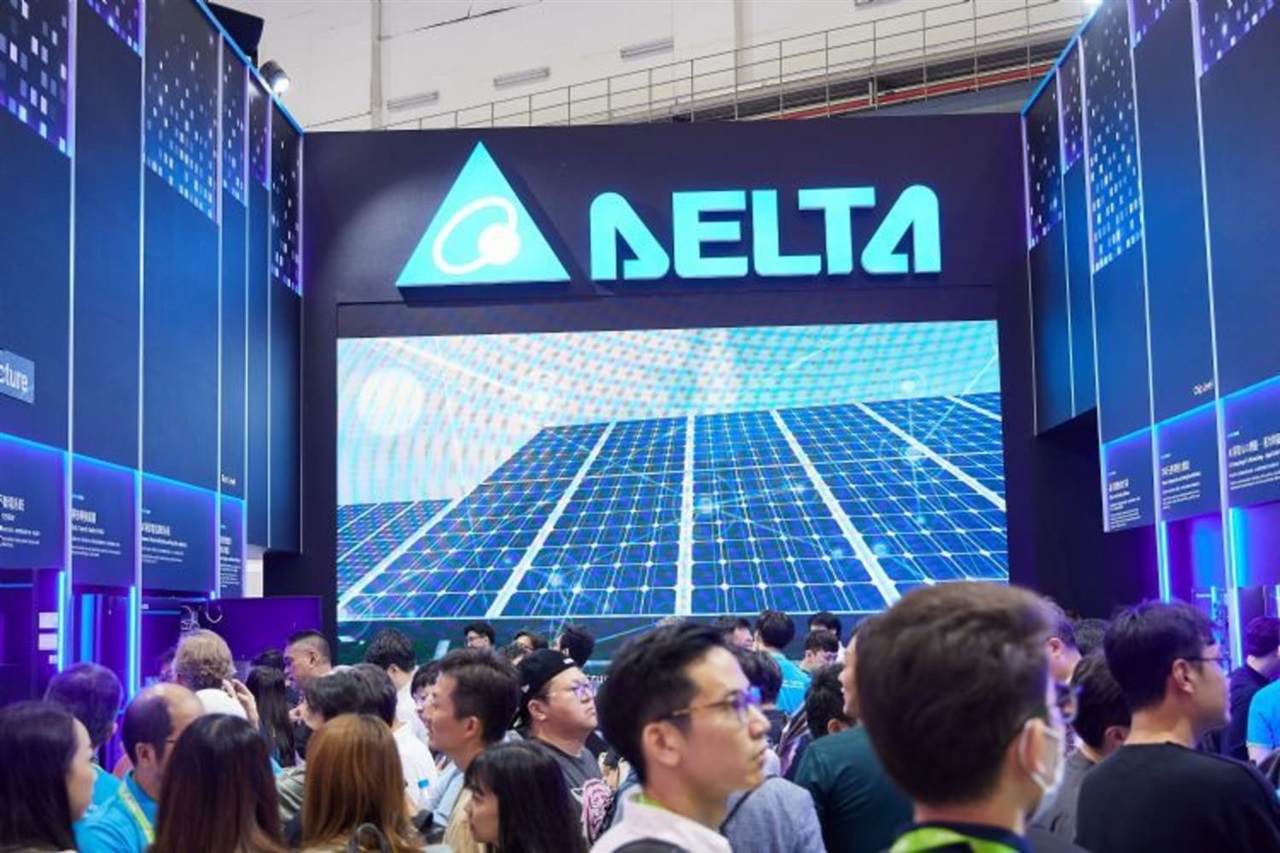
This time, the spotlight isn't on the chips, but on the system that keeps them alive. Delta Electronics closed the first half with a 41% revenue surge, powered by the race for high-efficiency power supplies and cooling systems for AI servers. The figure speaks of data centers hungry for watts and heat to dissipate, shining a light on a part of the AI supply chain often overlooked: the one that turns energy into useful computation.
The Taiwanese company, a historic player in power electronics and thermal management, is now seeing its converters and liquid cooling solutions climb the procurement rankings of large cloud operators and integrators assembling inference clusters. The reason is straightforward: the latest GPUs—and increasingly specialized training processors—push power consumption well beyond the limits that traditional air-cooled infrastructures can handle. In a rack packed with accelerators, thermal density can exceed 30–40 kW, making the shift to direct liquid or immersion cooling mandatory.
Delta's numbers reveal an interesting asymmetry. While the public narrative remains fixated on ever-larger models and performance benchmarks, the silent battle for AI's physical sustainability is fought over titanium-grade power supplies and cold plates. For those planning on-premise deployments—research labs, organizations with data sovereignty constraints, healthcare facilities—this translates into a higher barrier to entry. It's no longer enough to buy a few GPUs and plug them into existing electrical infrastructure: cooling and power distribution become design prerequisites, with upfront capital costs (CapEx) that can exceed those of the servers themselves. Delta's revenue jump is a thermometer for this metamorphosis: more on-premise AI means more orders for those providing the "cooling" and clean energy.
A second, less visible but equally structural effect is at play. The concentration of demand on a few specialized suppliers like Delta risks stretching lead times and stiffening supply chains. Anyone planning a local inference cluster today finds themselves competing with the massive orders of hyperscalers, which devour stock and production capacity for months. It's a paradox of digital sovereignty: to break free from the cloud, you must queue up behind the very giants that populate it. And cooling adds significant lead time, impacting Total Cost of Ownership and time-to-operation.
The 41% leap is not just a financial metric. It's a signal that the market is moving past AI's experimental phase into a mainstream dimension where heat and power management become competitive factors. The winners are frontier component makers like Delta, as well as early adopters who invested in liquid cooling early on and can now scale without overhauling their plants. The losers are data centers designed only for forced air and enterprises underestimating the retrofit needed for high-density AI. In an ecosystem racing toward distributed inference and robust edge computing, thermal constraints become architectural, and the choice of cooling system directly affects the achievable compute density per square meter.
For those watching the roll-out of on-premise AI, the lesson is clear: the hype over petaflops is out of focus if the energy equation remains unsolved. Delta's exploit is not an isolated event, but a sign of supply chain maturation, with implications extending well beyond quarterly earnings.







💬 Comments (0)
🔒 Log in or register to comment on articles.
No comments yet. Be the first to comment!