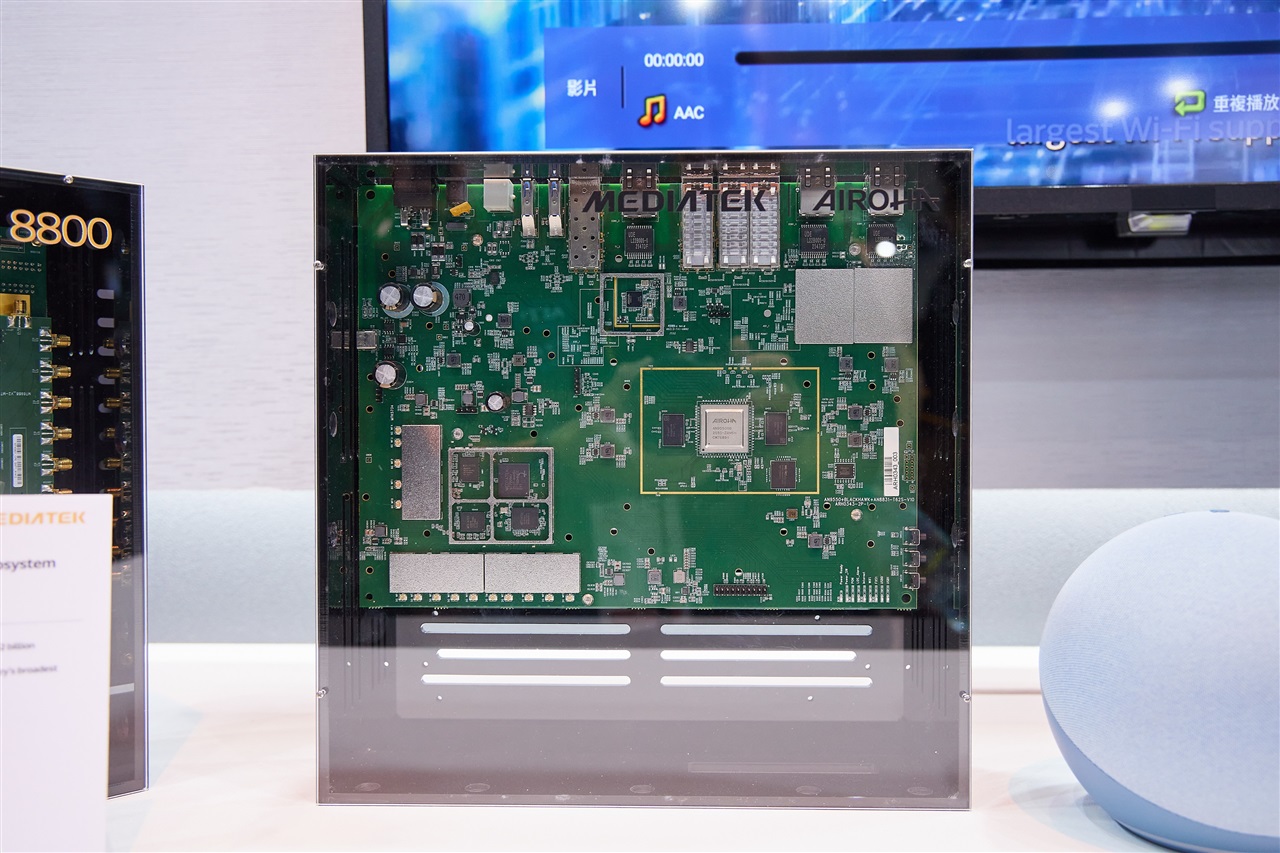
Taiwan's IC Sector Sees Strong Growth: A Signal for AI
Taiwan's integrated circuit (IC) design sector has recorded its most significant growth in years, a trend clearly indicated by May's data. This dynamic is not isolated but suggests a potential further acceleration that could extend into the second half of 2026. For the global technology ecosystem, and particularly for companies operating with AI workloads and Large Language Models (LLMs), this development holds strategic importance.
Taiwan has long been a fundamental pillar in the global semiconductor supply chain. Its leadership in chip design and manufacturing is a critical factor for innovation and the availability of high-performance hardware, essential for training and inference of complex AI models. The recent surge in the IC design sector suggests robust demand and expanding production capacity, key elements for market stability.
Taiwan's Crucial Role in the AI Ecosystem
The Taiwanese IC design industry is not limited to generic chip production; it is a primary player in developing specific solutions for artificial intelligence. This includes the design of advanced GPUs, AI accelerators, and System-on-Chips (SoCs) optimized for machine learning workloads. The ability to innovate rapidly in this segment is vital to support the evolution of LLMs, which demand increasingly high computational resources.
The availability of cutting-edge silicon is a decisive factor for organizations aiming to implement robust and scalable AI solutions. A rapidly growing IC design sector in Taiwan can translate into a greater supply of specialized hardware, potentially mitigating supply chain bottlenecks and offering more options for acquiring critical components such as VRAM and high-performance processors. This scenario is particularly relevant for those evaluating on-premise deployment strategies, where direct access to hardware is a priority.
Implications for On-Premise LLM Deployments
For CTOs, DevOps leads, and infrastructure architects considering the deployment of LLMs in self-hosted or air-gapped environments, the performance of Taiwan's IC design sector has direct implications. The availability and cost of hardware, such as GPUs with high VRAM or optimized bare metal servers, are crucial factors in calculating the Total Cost of Ownership (TCO) and planning CapEx investments.
An acceleration in chip production can foster greater competition among hardware suppliers, potentially leading to more accessible prices or a wider variety of configurations. This is an advantage for companies prioritizing data sovereignty and complete control over their infrastructure, choosing on-premise solutions over cloud services. The ability to acquire specific hardware and manage it internally is fundamental for meeting stringent compliance requirements and optimizing LLM inference and training performance.
The choice between cloud and on-premise always involves a careful evaluation of trade-offs. While the cloud offers immediate scalability and flexible operational costs, self-hosted solutions provide unparalleled control over data and security, as well as a potentially lower TCO in the long run for stable and predictable workloads. The dynamics of the semiconductor market, influenced by players like the Taiwanese IC sector, are a key element in this decision-making equation.
Future Outlook and Market Constraints
The indication of further acceleration until the second half of 2026 suggests that the semiconductor market for AI will remain dynamic and expanding. This outlook offers a degree of predictability for companies that need to plan the expansion of their AI infrastructures. However, it is essential to consider that the global supply chain is subject to complex variables, from geopolitical tensions to the availability of raw materials.
For organizations investing in on-premise LLM infrastructures, monitoring the performance of the IC design sector is crucial. The ability to anticipate market trends and secure necessary hardware is a competitive advantage. The goal remains to balance performance, cost, and control, ensuring that deployment decisions support long-term strategic objectives in AI innovation and data security.









💬 Comments (0)
🔒 Log in or register to comment on articles.
No comments yet. Be the first to comment!