Behind the AI Scenes: Internal Critiques, Engagement Strategies, and Data Manipulation
The artificial intelligence landscape is constantly evolving, but behind the promises of innovation often lie complex and less transparent dynamics. A recent podcast has shed light on critical aspects concerning the internal quality of models, the engagement strategies of large companies, and even the manipulation of AI-based search results. These revelations offer an interesting insight into the challenges organizations face when evaluating the deployment of AI solutions, especially in contexts where trust and data sovereignty are paramount.
The information that emerged highlights how even tech giants are not immune to internal problems and aggressive strategies, which can have significant repercussions on the reliability and integrity of AI systems. For CTOs, DevOps leads, and infrastructure architects, understanding these dynamics is essential for making informed decisions about their AI stacks, balancing the advantages of cloud solutions with the control and security needs offered by on-premise deployments.
AI Quality: From Google's Internal Critiques to Deployment Challenges
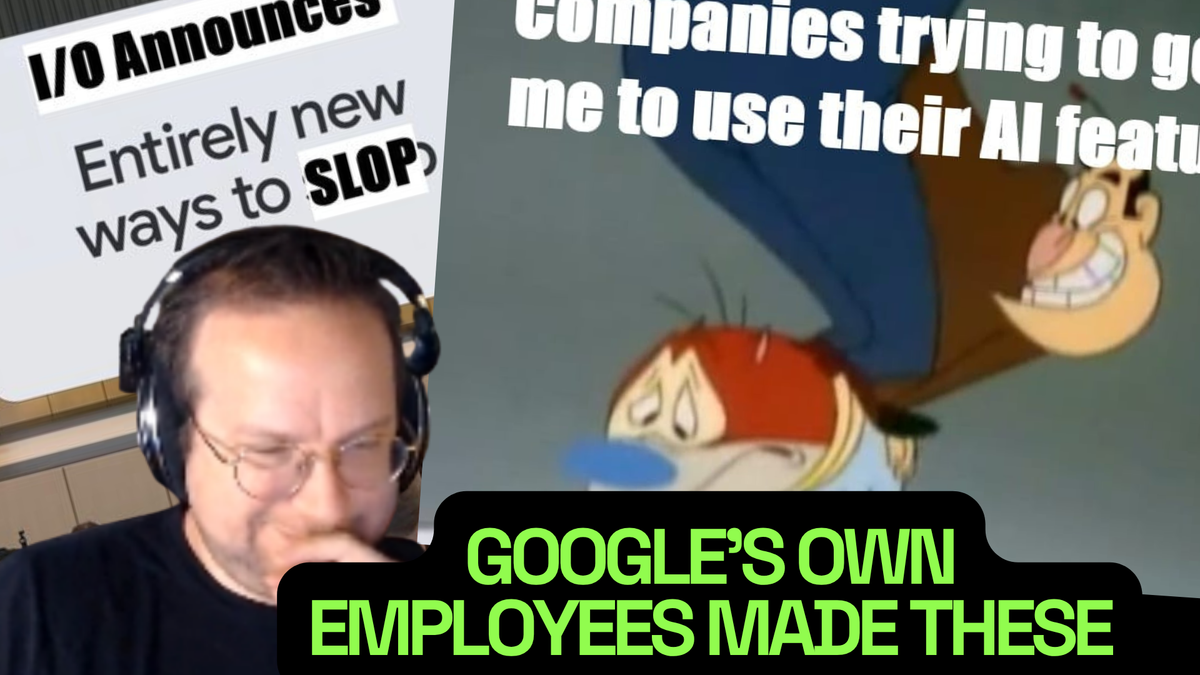
The podcast revealed that within Google, employees share memes that satirize the poor quality of their own artificial intelligence. This internal self-deprecation, though informal, raises significant questions about the maturity and reliability of Large Language Models (LLMs) even among industry leaders. For companies considering the adoption of LLMs, whether through cloud services or self-hosted deployments, model quality is a critical factor.
An LLM with inconsistent performance or prone to generating "hallucinations" can compromise the effectiveness of business applications, from customer service to data analysis. For those opting for on-premise solutions, the need for a rigorous fine-tuning and validation process becomes even more stringent. Ensuring that a model is robust, accurate, and free from undesirable biases requires investment in training infrastructure, curated datasets, and continuous testing pipelines, all essential elements for guaranteeing trust in the deployed AI system.
Engagement Strategies and Data Manipulation: A Risk to Sovereignty
Another aspect that emerged concerns Microsoft's strategy, which, according to internal documents, aims to make users "addicted" to its new AI assistant. This tactic highlights the desire of large platforms to consolidate user engagement, potentially leading to increased vendor lock-in. For companies seeking to maintain control over their data and operations, over-reliance on a single cloud provider for AI services can pose a risk to data sovereignty and operational flexibility.
Even more concerning is the revelation that some companies are using platforms like Reddit to manipulate AI search results from systems like ChatGPT and Google AI Search. This practice raises serious concerns about the integrity of the data on which LLMs are trained and the results they produce. If information sources are intentionally polluted, an LLM's ability to provide accurate and impartial answers is compromised. For organizations handling sensitive data or requiring reliable AI responses for critical decisions, the provenance and quality of training data become a non-negotiable requirement. Air-gapped or self-hosted deployments offer greater control over the datasets used, mitigating the risk of external manipulation and ensuring compliance with privacy and security regulations.
Towards Controlled and Transparent AI: Deployment Choices
Google's internal dynamics, Microsoft's engagement strategies, and the manipulation of data on Reddit underscore the complexity and the ethical and technical challenges surrounding AI adoption. These factors strengthen the argument for a more controlled and transparent approach to artificial intelligence deployment. For companies that cannot afford compromises on security, privacy, and reliability, evaluating on-premise or hybrid solutions becomes crucial.
The ability to manage the entire AI stack locally, from training to inference, offers unparalleled control over data, models, and underlying infrastructure. This approach helps mitigate risks of external manipulation, ensures regulatory compliance, and optimizes the Total Cost of Ownership (TCO) in the long term, despite the initial investment in hardware and expertise. AI-RADAR continues to explore these trade-offs, providing in-depth analysis to help decision-makers navigate this complex landscape and choose the deployment strategy best suited to their sovereignty and performance needs.







💬 Comments (0)
🔒 Log in or register to comment on articles.
No comments yet. Be the first to comment!