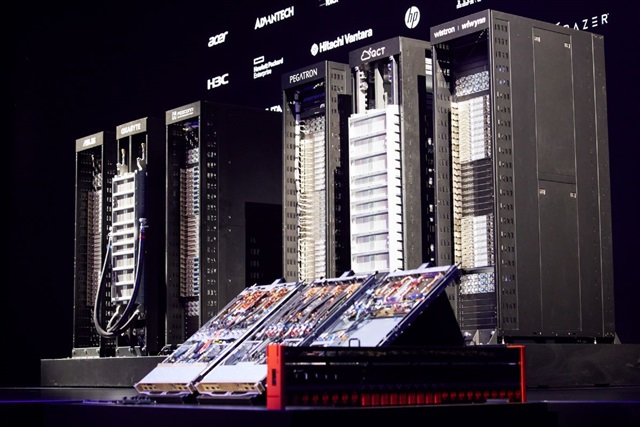
The AI Server Market and Pressure on ODMs
The artificial intelligence sector is driving unprecedented demand for specialized hardware infrastructure, with AI servers at the heart of this expansion. These systems, essential for training and Inference of Large Language Models (LLM), require high-density GPU configurations, high-speed interconnects, and advanced cooling solutions. In this scenario, Original Design Manufacturers (ODMs) play a crucial role, designing and producing the hardware that powers data centers worldwide.
Despite the exponential growth of the market, ODMs are facing increasing pressure on their margins. The inherent complexity of AI servers, coupled with the volatility of prices for key components like GPUs and HBM memory, makes cost management a constant challenge. The need to invest in research and development to stay at the forefront with the latest technologies, such as next-generation GPUs or liquid cooling systems, further contributes to eroding profitability.
Margin Pressure and Technical Complexity
Producing AI servers is not a simple undertaking. It requires specialized expertise in designing motherboards capable of supporting multiple high-power GPUs, robust power supply systems, and efficient thermal solutions to manage intensive workloads. Each new generation of GPUs, such as NVIDIA H100 or AMD Instinct MI300X, brings increasingly stringent power and cooling requirements, which translate into higher development and production costs for ODMs.
Furthermore, the market is extremely competitive, with major players seeking to obtain the best prices for their voluminous orders. This purchasing dynamic by a few large customers, often with strong negotiating power, forces ODMs to operate with thinner margins. The ability to optimize the supply chain and efficiently manage inventory therefore becomes fundamental to maintaining economic sustainability in such a dynamic environment.
The Consignment Model and Its Implications
In this context of compressed margins and high demand, the consignment model is gaining traction. With consignment, components or finished products are shipped to the customer, but ownership and payment occur only at the time of actual use or sale. This approach can offer significant advantages to customers, reducing their capital tied up in inventory and improving cash flow.
For ODMs, however, consignment can represent an additional challenge. While it can facilitate the movement of large volumes of products and strengthen relationships with strategic customers, it also shifts inventory risk and the cost of capital onto the ODM itself. Managing consignment inventory requires extremely precise logistical and financial planning to avoid excessive capital immobilization and ensure the necessary liquidity to sustain continuous production of high-value AI servers.
Outlook for On-Premise AI Infrastructure
These market dynamics have direct implications for companies evaluating the deployment of on-premise AI infrastructure. Hardware availability, lead times, and pricing models are all influenced by the pressure on ODM margins and the adoption of models like consignment. For CTOs and infrastructure architects, understanding these trends is crucial for effective strategic planning.
Choosing a self-hosted approach for LLM workloads offers advantages in terms of data sovereignty and control but requires careful management of TCO, which includes not only the initial hardware cost but also operational, energy, and maintenance expenses. Fluctuations in the AI server market and the procurement strategies adopted by manufacturers can significantly impact these calculations. For those evaluating on-premise deployment, AI-RADAR offers analytical frameworks on /llm-onpremise to assess trade-offs between costs, performance, and control, helping to navigate an evolving market.







💬 Comments (0)
🔒 Log in or register to comment on articles.
No comments yet. Be the first to comment!