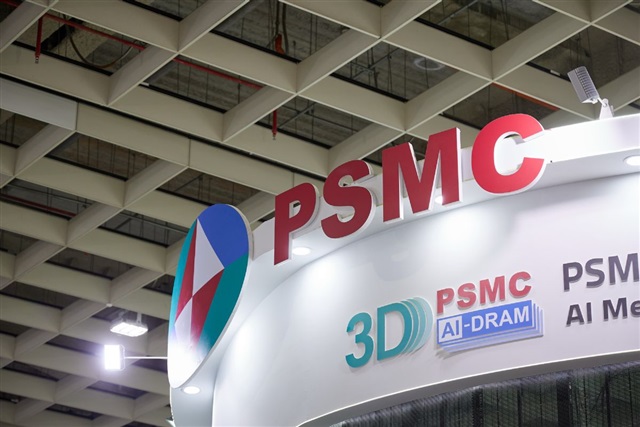
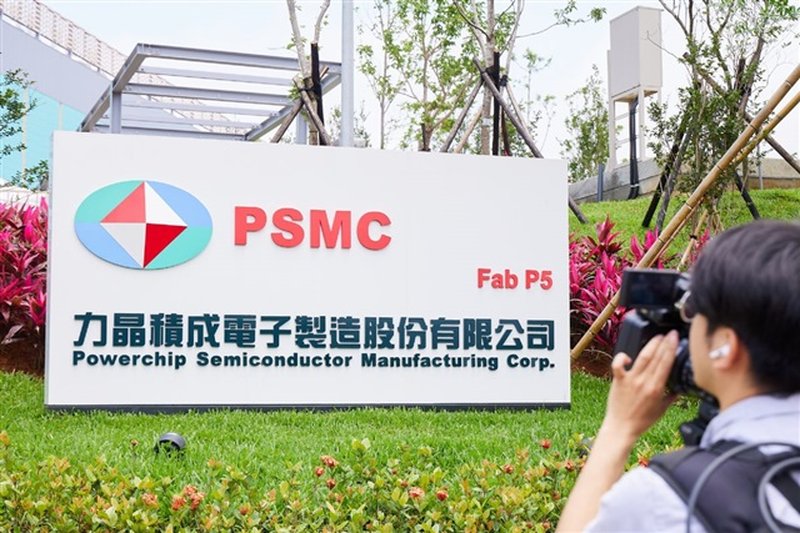
PSMC has jolted the memory market with a blunt 45% hike on its DRAM foundry prices. This is no marginal tweak: it signals a structural strain that AI demand is placing on the entire semiconductor supply chain. The Taiwanese company, which manufactures memory chips for third parties, announced the increase just as it launches its “3D AI Foundry” unit, with a stated target of reaching 20% of total revenue. A double message that redraws the map for anyone building infrastructure for Large Language Models, especially those deploying on-premise.
Behind the 45% lies far more than a tactical price move. DRAM is an invisible but ubiquitous component in servers hosting LLMs: we’re talking about the system memory that sits alongside GPUs and dictates overall performance, not just the HBM fused to processors. When models are loaded into VRAM, system DRAM acts as a buffer and is critical during data pre-processing and workload orchestration. Such a steep cost increase directly impacts the Total Cost of Ownership of an on-premise cluster, where each node is not only GPU but also tens of gigabytes of RAM. For those who have already budgeted for new machines, the increase translates into an unexpected expense; for those still deciding, it lifts the minimum investment threshold and makes economic justification harder when compared to cloud options.
Yet the story doesn’t end there. The second leg of the announcement, the 3D AI Foundry, goes straight to the heart of the current architectural evolution of AI chips. 3D packaging, advanced interposers, multi-layer memory-logic integration: these are technologies that promise to boost memory bandwidth while cutting power consumption – exactly what’s needed to sustain ever-larger models without exploding energy costs. PSMC is not alone: other foundry players are investing in AI-dedicated lines, and this separate segment could over the medium term alleviate prices for the most advanced components. But the transition won’t be immediate. Over the next twelve to eighteen months, pressure on legacy memory costs will remain high, fueled not only by AI but also by the cyclical market rebound after a long period of depressed prices.
Who wins and who loses in this scenario? Large cloud providers have long-term contracts and enough volume to absorb shocks better, though they will pass some of the pain onto customers. Companies that have chosen to keep their AI workloads in-house, driven by data sovereignty requirements or a demand for full control, bear the full brunt. For them, every DRAM cost increase is a direct budget hit, with none of the dilution available to a hyperscaler. This could trigger a rethink: quantizing models down to extreme levels (INT4, INT8) becomes not merely an optimization exercise but an economic necessity. Similarly, adoption of memory-offloading techniques or CPU-centric architectures could gain momentum in settings where GPU-at-all-costs is no longer viable.
A third-order implication deserves attention: the gap between those who can afford cutting-edge hardware and those left behind risks widening, precisely as data protection regulations that push towards self-hosting multiply. A regulatory paradox that may force enterprises into complex trade-offs, such as keeping fine-tuning and inference on-premise but using smaller or distilled models, with all the quality challenges that entails.
In the end, PSMC’s move isn’t just about a price list. It tells of an AI ecosystem growing ever more resource-hungry, where memory is the new gold and foundries are reorganizing strategies to capture this value stream. For those building on-premise infrastructure, the message is a wake-up call: the true cost of AI is never just the price of GPUs, and every link in the supply chain can become a financial bottleneck. In the short term, the path is efficiency through aggressive quantization and pruning; in the medium term, perhaps the arrival of integrated memory solutions will reshuffle the cards once again.






💬 Comments (0)
🔒 Log in or register to comment on articles.
No comments yet. Be the first to comment!