DrayTek, a familiar name for those managing mid-sized business networks, is going through turbulent times: the latest financial indications point to a revenue decline that will drag on until 2026. It’s a contraction that comes as no surprise to industry watchers, caught between the commoditization of network hardware and mounting pressure on margins. The company, however, is not standing still: it has decided to place its bets on two technologies that are reshaping on-premise networking – Wi-Fi 7 and cybersecurity.
A slowdown with deep roots
Founded in 1997, DrayTek built a solid reputation around routers, firewalls and VPN solutions for small and medium-sized businesses. In recent years, however, the market has shifted: competition from brands like Ubiquiti, MikroTik and major enterprise vendors has eroded share, while the post-pandemic supply chain has squeezed profits. The striking figure is the forecast of prolonged weakness through 2026, a sign that the road to recovery will not be short and that the company is undergoing a strategic repositioning.
Wi-Fi 7, the generational leap that was missing
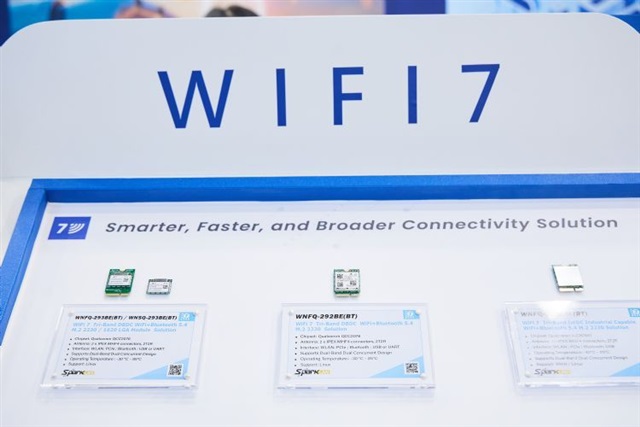
The first bet is on Wi-Fi 7, the IEEE 802.11be standard still in ratification. The specifications promise theoretical maximum throughput of 46 Gbps, latencies under 5 milliseconds and advanced band management thanks to Multi-Link Operation. For local networks – offices, campuses, branches – that means being able to replace Ethernet cabling in many cases, with flexibility previously unthinkable. DrayTek aims to embed Wi-Fi 7 in its access points and integrated routers, hoping to capture demand from businesses that want high-performance infrastructure without the costs and rigidity of wired. All of it, naturally, on-premise and under their own control.
Cybersecurity, the pillar on which to rebuild trust
The second front is security, a topic that has become central with the explosion of distributed work and the rise in attacks on corporate networks. DrayTek has historically included firewall, VPN and content filtering features in its products, but now intends to strengthen this component with more integrated and updatable solutions. In a context where regulations – from GDPR to industry-specific rules – mandate data protection even when it travels over private networks, a network device that acts as an on-premise security guardian becomes a strategic asset. Especially for organizations that distrust the cloud or are required to keep data on-site.
A mirror of the on-premise market
DrayTek’s move is not isolated. It picks up a clear signal: companies continue to invest in physical appliances for local networks, but they want them to be up to date – meaning natively compatible with the latest wireless standards and with a security-first approach. For those planning an on-premise deployment, the choice of network components affects data sovereignty, latency and total cost of ownership (TCO). A router that integrates Wi-Fi 7 and cybersecurity reduces the need for extra devices, simplifies the architecture and keeps data flows under the corporate roof. AI-RADAR reminds that when evaluating on-premise versus cloud trade-offs, the networking layer is often overlooked, yet it is the foundation on which every subsequent decision rests.
DrayTek’s story, with its financial fallout and dual technology bet, is a temperature check of a sector that cannot afford to stand still. The game will be played on the ability to bring Wi-Fi 7 and security on board reliable, competitively priced products. If the move succeeds, it could not only straighten out the company’s finances but also provide a concrete option for those rethinking their networks with a local and secure mindset.






💬 Comments (0)
🔒 Log in or register to comment on articles.
No comments yet. Be the first to comment!