
It's not just a business match anymore. When Brussels and European capitals evaluate a drone supplier, they no longer look only at spec sheets and prices—they shine a light on the geography of components, the transparency of the assembly chain, and the jurisdiction the company answers to. In this scenario, being a "trusted supplier" becomes a strategic asset, and Taiwan appears to have grasped it earlier than others.
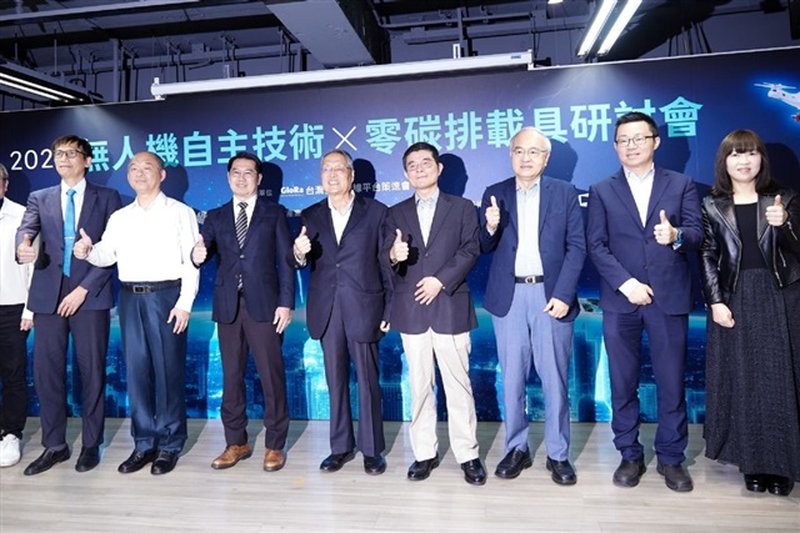
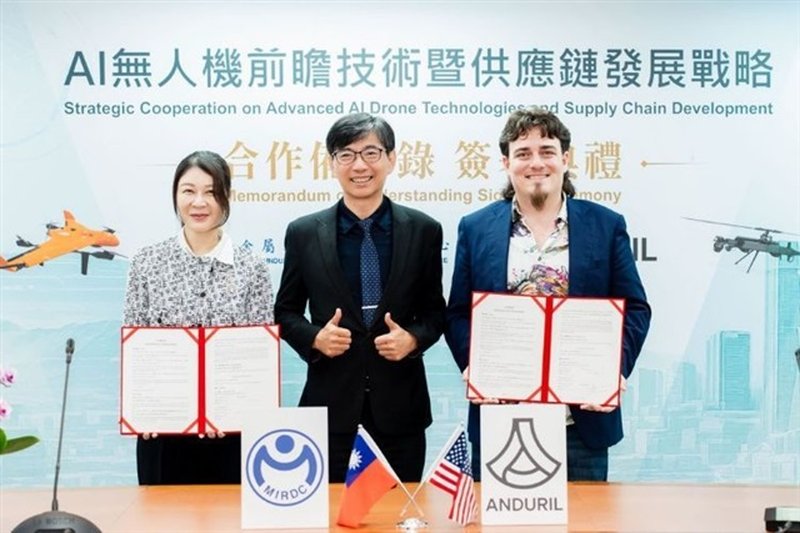
Industrial chronicles of recent months confirm it: the island's drone makers are gaining share in Europe precisely as the debate on security and technological autonomy heats up. This is no isolated exploit but a structural realignment. Europe's focus on supply chain resilience—accelerated by global crises and geopolitical tensions—is rewarding players that can demonstrate end-to-end control over manufacturing and offer verifiable guarantees against unwanted interference, physical backdoors, or dependence on actors perceived as risky.
For those operating in IT infrastructure, and particularly for anyone assessing on-premise deployment of AI systems, this dynamic feels familiar. Data sovereignty is not won through software or service contracts alone: it begins with the choice of silicon, the network node where packets travel, the right to inspect hardware in one's own lab. The rise of Taiwanese drones in Europe acts as a thermometer showing how the "trust but verify" principle is extending from the semiconductor world to entire categories of smart devices.
The connection to our own observatory is direct. AI-RADAR has long analyzed the trade-offs between cloud and on-premise, including Total Cost of Ownership evaluations and fine-tuning strategies for Large Language Models on local stacks. Today, the news that Europe is choosing "made in Taiwan" for its skies adds a concrete piece to the puzzle: trust in the hardware supply chain is not an abstract variable but a selection factor that affects costs, delivery timelines, and regulatory compliance. The very same logic that leads a government agency to exclude a drone due to supply chain opacity can steer a company toward a server GPU or an inference appliance with traceable components and documented assembly.
Of course, shifting demand toward trusted suppliers is no magic wand. Alternative chains must be built, audits multiplied, and Europe's certification fabric must be updated to cover devices that blend flight, sensors, and onboard algorithms. But the signal is clear and strong: resilience is no longer an optional extra to be negotiated after the lowest price has been skimmed. It is the baseline requirement.
For makers of hardware destined for AI workloads—from cards with 80 GB of VRAM to bare-metal compute nodes—the drone precedent is instructive. Even in on-premise inference, the demand for transparency can become a competitive differentiator. And those designing a self-hosted LLM environment today would do well to look not only at quantization numbers or latency but also at the geography of the chips that process the tokens.








💬 Comments (0)
🔒 Log in or register to comment on articles.
No comments yet. Be the first to comment!