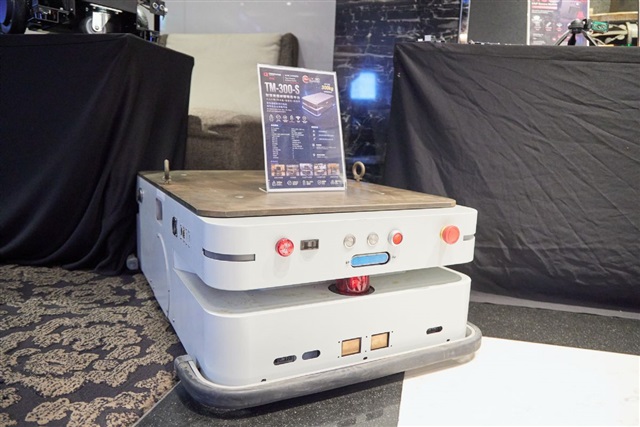
Etron's Growth in Robotics
Etron, a notable player in the technology landscape, is seeing its investments in the robotics sector gain significant traction. This progress unfolds at a particularly opportune moment, coinciding with a turning phase in the memory market cycle. Such a conjunction suggests that Etron's strategies could benefit from favorable market conditions, potentially accelerating the development and adoption of their robotic solutions.
The growing interest in robotics is closely linked to the advancements in artificial intelligence, particularly Large Language Models (LLM). Modern robotic systems demand increasingly sophisticated processing capabilities for tasks such as perception, motion planning, and human-machine interaction. These requirements translate into a rising demand for high-performance hardware, where memory plays a fundamental role.
The Critical Role of Memory for AI and Robotics
Memory is an essential component for any AI workload, including those powering advanced robotics. GPU VRAM, for instance, is crucial for both Inference and model training, determining the maximum model size that can be loaded and the processing speed. An evolving memory market cycle can directly influence the availability and cost of these hardware resources, impacting investment strategies and TCO for enterprises.
When the memory cycle "turns," it can indicate a phase of increased supply or technological innovation leading to lower costs or improved performance. This scenario is particularly relevant for AI and robotics implementations, where the need for large quantities of high-speed memory is constant. The ability to handle complex models and voluminous datasets directly depends on the availability of adequate memory, both for local processing and for integration into autonomous robotic systems.
Implications for On-Premise Deployments
For organizations considering on-premise deployments of AI and robotics solutions, memory market dynamics are a key factor. Opting for a self-hosted infrastructure involves a careful evaluation of the Total Cost of Ownership (TCO), which includes initial hardware costs (CapEx) and long-term operational expenses (OpEx). A more favorable memory market can reduce the acquisition costs of high-VRAM GPUs, making on-premise deployments more accessible and competitive compared to cloud alternatives.
Furthermore, data sovereignty and regulatory compliance are often primary motivations for choosing an on-premise or air-gapped infrastructure. The ability to maintain physical control over hardware and data is indispensable for sectors such as finance, healthcare, or defense. The availability of competitively priced memory components facilitates the construction of robust local stacks, ensuring that AI and robotic workloads can operate in secure, controlled environments, without reliance on external providers.
Future Outlook and Infrastructure Challenges
The progress of companies like Etron in robotics, supported by an evolving memory market, highlights the sector's increasing maturity. However, the large-scale adoption of AI-powered robotic systems still presents significant infrastructure challenges. The need to balance performance, costs, and security requirements drives companies to carefully evaluate every component of their technology stack.
For those evaluating on-premise deployments of LLM and AI solutions, complex trade-offs exist between cloud flexibility and local infrastructure control. The availability of specific hardware, such as high-VRAM GPUs and high-speed interconnects, is crucial. AI-RADAR offers analytical frameworks on /llm-onpremise to help assess these trade-offs, providing tools for informed decisions that consider factors like TCO, data sovereignty, and the concrete hardware specifications needed to sustain innovation in robotics and AI.







💬 Comments (0)
🔒 Log in or register to comment on articles.
No comments yet. Be the first to comment!