
Everlab's Investment and Vision
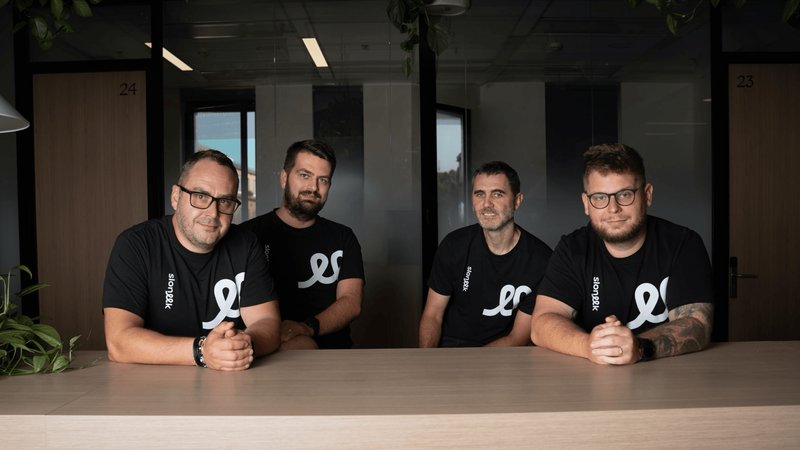
Everlab, a healthtech startup based in Melbourne, recently announced the closing of an AU$65 million Series A funding round. The oversubscribed operation was led by investment firm Airtree, underscoring market interest in innovative healthcare solutions.
The capital raised is earmarked to support Everlab's expansion into the United Kingdom, a strategic market for its vision. At the core of the company's value proposition is the ambitious goal of coordinating a patient's health data over their entire lifetime, rather than limiting it to single appointments or care episodes. This approach aims to transform primary care, shifting the focus from reactive treatment of illnesses to proactive prevention, a significant change from traditional models.
The Challenge of Health Data Management
The current landscape of healthcare systems is often structured to intervene when a problem arises, with appointments scheduled only after a symptom appears. This setup fragments health data, making it difficult to gain a holistic and longitudinal view of a patient's health. Everlab's vision, which aims for integrated lifetime data management, directly addresses this gap.
Such a data management model implies the collection, storage, and analysis of vast volumes of sensitive information. This scenario opens the door to the application of advanced technologies, including Large Language Models (LLMs) and other artificial intelligence tools, to identify patterns, predict risks, and personalize prevention pathways. However, implementing these solutions requires robust infrastructure and clear strategies for data privacy and security.
Implications for Infrastructure and Data Sovereignty
Managing highly sensitive health data (Protected Health Information, PHI) imposes stringent requirements in terms of security, regulatory compliance (such as GDPR), and data sovereignty. For organizations operating in this sector, the choice of deployment infrastructure becomes crucial. Self-hosted, air-gapped, or hybrid solutions are often considered to ensure maximum control over data location and access, reducing reliance on third parties and mitigating privacy-related risks.
The potential use of LLMs or other AI models to analyze this data in controlled environments requires careful planning of hardware, such as GPU VRAM and compute capacity, as well as an infrastructural architecture that can support intensive workloads. The Total Cost of Ownership (TCO) of such on-premise solutions, which includes capital expenditures (CapEx) for hardware acquisition and operational expenditures (OpEx) for power and maintenance, must be carefully evaluated against cloud-based models. For those evaluating on-premise deployment for AI/LLM workloads, AI-RADAR offers analytical frameworks on /llm-onpremise to understand and assess these complex trade-offs.
Towards a Future of Proactive Care
The investment in Everlab highlights a growing trend in the healthcare sector towards more proactive, data-driven care models. The ability to coordinate an individual's health information over time is fundamental to realizing this vision, enabling timely and personalized interventions that can significantly improve patient outcomes.
The success of initiatives like Everlab's will largely depend on the ability to build and maintain a secure, efficient, and compliant data infrastructure. This represents a significant challenge for CTOs, DevOps leads, and infrastructure architects, who must balance technological innovation with privacy and control requirements. The transition from a reactive to a preventive care model is a paradigm shift that inherently relies on advanced data management and, potentially, artificial intelligence, making infrastructure choices paramount.








💬 Comments (0)
🔒 Log in or register to comment on articles.
No comments yet. Be the first to comment!