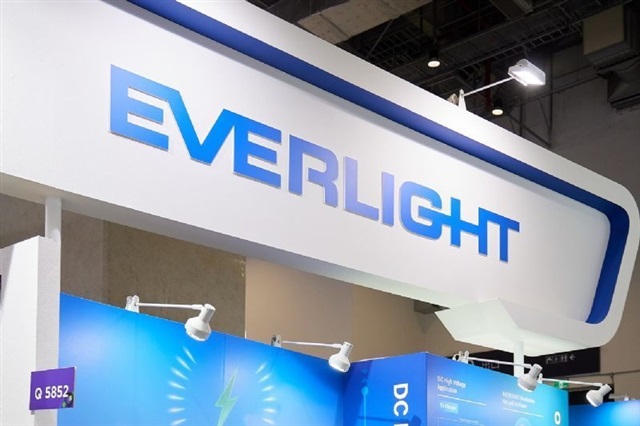
Everlight has sold its Tongluo facility in Taiwan while concentrating the production effort for automotive components in Thailand. The operation, reported by Digitimes, marks another step in the reshaping of supply chains that is moving manufacturing capacity away from the island, especially for sectors where price competition and proximity to end markets outweigh technological concentration.
The company, originally a LED manufacturer and now a supplier of optical modules for the automotive industry, chose Southeast Asia for reasons that go well beyond labor costs. Thailand is becoming a second-tier electronics manufacturing hub, with an already proven network of subcontractors, aggressive tax incentives, and a logistical position that shortens routes to the region's car assembly plants. For Everlight, this also means diluting country risk: while Taiwan remains an irreplaceable ecosystem for advanced semiconductors, it suffers from a geopolitical exposure that pushes companies to distribute less strategic lines elsewhere.
The automotive sector is an interesting observatory for anyone assessing hardware infrastructure. The components Everlight produces — sensors, solid-state lighting, cabin modules — are not directly tied to the world of Large Language Models or on-premise deployment. Yet they share with data centers a dependence on a globalized electronics supply chain made of ceramic substrates, control chips, power supplies, connectors. When a factory closes in Taiwan and reopens in Thailand, it changes more than just the geographical address: delivery times, batch availability, transport costs, and overall resilience shift. For procurement managers tasked with ensuring the supply of servers, GPUs, or storage systems, every movement of manufacturing capacity is a signal worth monitoring, because the chain is so interconnected that a bottleneck in seemingly distant components can propagate all the way to the racks of training clusters.
There is a structural aspect that deserves attention: the gradual relocation of electronics manufacturing phases outside Taiwan is not a rush for the exit, but a normalization. For years, the island centralized not only advanced chip production but also significant volumes of packaging, assembly, and passive components. Today, under the combined pressure of US tariffs, European incentives, and the desire for industrial sovereignty, manufacturers are building a second operational leg. Thailand, Vietnam, Malaysia are absorbing growing shares of this diaspora, creating hubs that could become direct interlocutors even for those designing on-premise AI infrastructures in regulated markets — where data residency and supply chain traceability matter.
It is no coincidence that Everlight's move comes at a time when even the big names in servers are questioning how to balance production between China, Taiwan, and the rest of Asia. For those running self-hosted architectures that must comply with strict regulations, supply chain mapping is now an integral part of Total Cost of Ownership: a supply discontinuity, even on minor components, can delay deployment and wipe out expected savings.
The operation also says something about Taiwan's specialization. The island cannot compete on every link in the chain: it sheds mature, low-margin volumes and focuses where the technological gap is vast. For the LLM ecosystem, this means that critical hardware — GPUs, interconnects, high-bandwidth memory — will likely remain anchored to Taiwan for a long time, but the data center periphery (power, thermal management, optical components) will be increasingly distributed. A shift that forces system integrators to update their procurement models, looking at hubs like Thailand not as simple low-cost alternatives but as structural nodes of the future value chain.








💬 Comments (0)
🔒 Log in or register to comment on articles.
No comments yet. Be the first to comment!