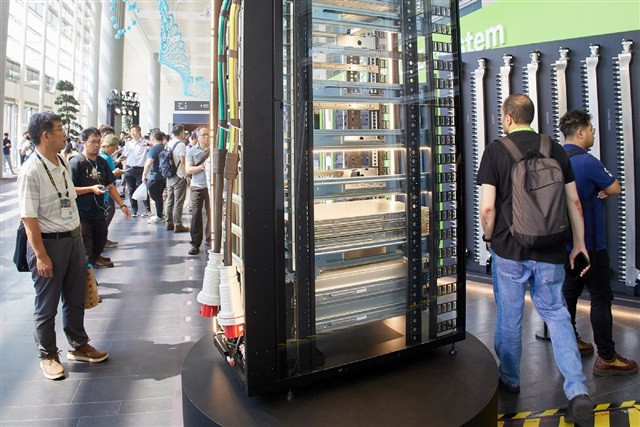
According to a recent report by DIGITIMES, global server demand is set to stay strong through 2027. The trend, already noticeable in recent quarters, comes alongside mounting pressure on global supply chains, which are struggling to keep up with orders. While the news might seem most relevant to massive cloud providers, it directly impacts anyone planning on-premise infrastructure, especially for AI workloads.
The sustained wave of server demand
The growth isn't uniform: AI applications, machine learning, and cloud expansion are the main drivers. Hardware vendors are dealing with inflated order backlogs, with lead times in many cases stretching beyond a year. This situation, already complicated by well-known semiconductor production challenges, introduces uncertainty for organizations sizing their compute capacity.
What it means for on-premise LLM deployments
For teams evaluating on-premise deployment of Large Language Models (LLMs), server availability—often requiring cutting-edge GPUs or accelerated compute—is a critical factor. A constrained supply chain can mean budgets need revisiting, more conservative planning, and in some cases, the need to place orders months earlier than originally scheduled.
On the other hand, the environment pushes for greater attention to inference optimization and model choices that make the most of available resources. Techniques like quantization and the use of models with smaller context windows can reduce VRAM requirements and deliver acceptable performance on older hardware, mitigating the impact of logistical bottlenecks.
TCO (Total Cost of Ownership) analysis becomes central in this context: the cost of servers goes beyond list prices, encompassing risks related to availability, warranties, and maintenance in a stressed ecosystem. For organizations handling sensitive data or operating under regulations like GDPR, on-premise deployment often remains the only viable path, turning procurement planning into a balancing act between financial resources, timelines, and compliance demands.
In conclusion, sustained demand and supply chain pressures are not merely a market trend; they are a signal for anyone designing local compute architectures. Early vendor assessments, multi-year contract negotiations, and consideration of optimized models can make the difference between a timely rollout and a delay that hobbles the entire strategy.
For those weighing on-premise deployment, complex trade-offs exist; AI-RADAR offers analytical frameworks on /llm-onpremise to help navigate these decisions, never providing one-size-fits-all answers but rather decision maps.








💬 Comments (0)
🔒 Log in or register to comment on articles.
No comments yet. Be the first to comment!