Fiberhome and Innovation for AI Data Centers
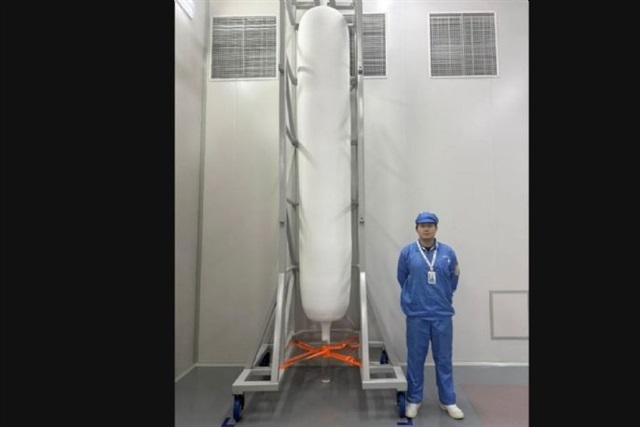
Fiberhome Telecommunication Technologies, a leading company in the fiber optic communications sector based in China, has recently captured market attention with a significant announcement. The company revealed that it has produced the world's largest optical preform, a fundamental component in the manufacturing of optical fibers. This innovation comes amidst a rapid expansion of data centers dedicated to artificial intelligence, a sector that demands ever-increasing data transmission capacities.
Fiberhome's presentation of a record-sized preform highlights the industry's commitment to meeting the infrastructural needs generated by the AI boom. With the advancement of Large Language Models (LLM) and other artificial intelligence applications, the need for high-speed, low-latency networks has become an absolute priority for service providers and companies managing AI workloads.
Technical Detail and Fiber Optic Context
An optical preform is the "starting block" from which optical fiber is drawn. Its size is directly related to the length of fiber that can be produced from it, and indirectly to production capacity and efficiency. Creating a larger preform means being able to produce more fiber in a single process, reducing costs and increasing production scalability. This is crucial in an era where the demand for fiber optic connectivity is constantly growing, driven not only by consumer use but especially by the needs of data centers.
Modern data centers, particularly those optimized for AI, require massive internal and external bandwidth. LLM training operations, for example, involve moving terabytes of data between GPUs and servers, requiring extremely fast interconnects. Similarly, large-scale Inference applications generate considerable data traffic, which must be managed with high Throughput and minimal latency to ensure rapid responses. Innovation in optical preforms is therefore a fundamental step to ensure that the physical infrastructure can keep pace with the evolution of AI software.
Implications for On-Premise Deployments
For organizations choosing on-premise or hybrid Deployment strategies for their AI workloads, the quality and capacity of network infrastructure are critical factors. Robust and scalable fiber optic infrastructure is essential for building efficient AI compute clusters, where communication between nodes and GPUs must not become a bottleneck. The availability of high-performance optical fibers, made possible by innovations like Fiberhome's preform, directly impacts the long-term TCO (Total Cost of Ownership), reducing the need for frequent upgrades and improving operational efficiency.
Data sovereignty and compliance requirements often push companies towards self-hosted or air-gapped solutions. In these scenarios, having complete control over the physical infrastructure, including the network, is paramount. Innovation in foundational technologies like fiber optics indirectly supports these decisions, providing the building blocks for secure, performant, and controllable AI environments. For those evaluating on-premise deployments, AI-RADAR offers analytical frameworks on /llm-onpremise to assess trade-offs between performance, costs, and control, highlighting how each infrastructural component contributes to the overall picture.
Future Outlook for AI Infrastructure
Fiberhome's announcement underscores a broader trend in the tech industry: innovation is not limited to chips or algorithms but also extends to the physical foundations that enable the era of artificial intelligence. The ability to transmit enormous volumes of data at ever-increasing speeds is a prerequisite for the development and large-scale adoption of advanced AI technologies.
As the industry continues to push the limits of computing capabilities and models, the underlying network must evolve in parallel. Larger optical preforms and more efficient fibers are crucial steps to ensure that the global infrastructure can support the next generation of AI innovations, whether these are implemented in hyperscale clouds or dedicated on-premise environments.





💬 Comments (0)
🔒 Log in or register to comment on articles.
No comments yet. Be the first to comment!