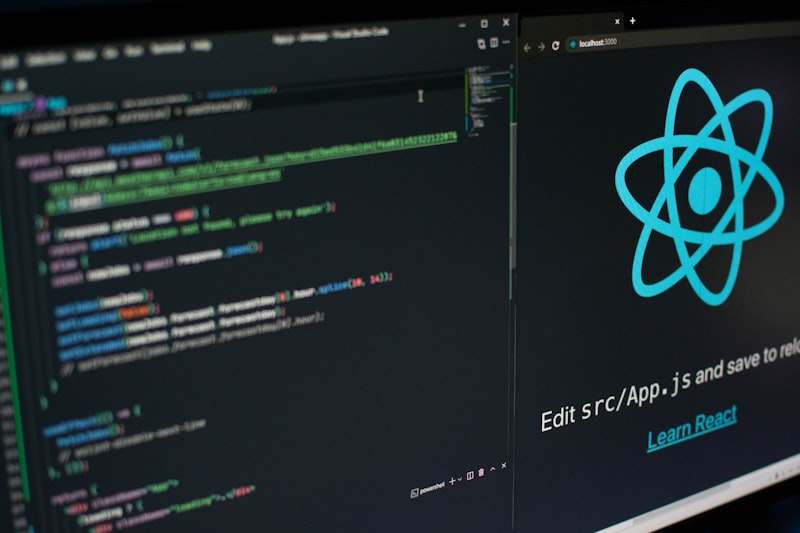
The news is a Reddit post, but what it describes has broader implications. After training Qwen3.5-4B-3D-Coder and its GLB asset variant, the project author admits to underestimating how much 4-billion-parameter models can learn when trained for a specific task. This is not an official benchmark: it is a report from ongoing experiments, with a second 350-million-parameter model still training and uneven results. Yet the shift in perspective is already visible.
The numbers tell a story of constraints. The 350M model, weaker than the Qwen models and struggling with long contexts, initially fell into repetition loops and unfinished code. After more epochs it began to complete code and generate recognizable scenes, with surprising generalization beyond the prompts shown. On medium-complexity coding tasks it reaches up to roughly 16K tokens; the specialized 4B models handle far more complex scenes and contexts approaching 96K tokens. The key point is not the superiority of 4B, but that the best checkpoint rarely matches the lowest eval loss. Stopping after one or two epochs would have created a completely different impression.
The implicit thesis is that supervised fine-tuning (SFT) on high-quality data can deliver very good results at a fraction of the cost of reinforcement learning (RL), provided the samples truly cover the domain. The cost does not disappear: it moves to dataset creation and validation. But once built, that dataset is reusable across model sizes and multiple experiments, without requiring a full RL pipeline. This changes the incentive: the scarce resource is no longer just compute, but dataset quality and the ability to evaluate functional code, not loss.
The detail that shifts the axis toward local deployment is the memory constraint. 350M models can be fully fine-tuned, not just with LoRA, on GPUs with only 8GB of VRAM. With the right memory optimizations, training can take a few hours for manageable datasets and context lengths; longer contexts and larger datasets increase time considerably. The barrier to entry falls: you do not necessarily need cloud clusters to produce a useful model on a narrow domain. For teams with proprietary data, sovereignty constraints, or limited budgets, this reduces dependence on generic APIs and shifts cost toward consumer hardware and data curation.
What loses is the cloud provider selling generic inference for tasks that a local specialized model can cover. What gains are teams owning vertical datasets that can iterate without sending prompts outside their own infrastructure. The phenomenon also points a direction for tooling: functional checkpoint evaluation methods are needed because loss is insufficient, and data curation pipelines capable of generating reusable datasets become central. The assumption that larger models are always necessary for practical tasks is starting to show cracks, not just theoretical but experimental.
The author plans to release new models and datasets, including the expanded 3D dataset; if the 350M model continues improving to a satisfactory level, it will be released too. For those evaluating on-premise deployment, trade-offs between training costs, dataset quality, and model maintenance remain; AI-RADAR discusses them on /llm-onpremise. But the most interesting message is different: scale does not explain everything, and fine-tuning on specific data can be worth more than many extra parameters.




💬 Comments (0)
🔒 Log in or register to comment on articles.
No comments yet. Be the first to comment!