
Mozilla released Firefox 153 as the new Extended Support Release, and MZLA quickly followed with Thunderbird 153, codenamed “Meadow”. Beyond a browser and an email client, these updates mark a decisive step toward tools designed for those who want to keep data under their own control, without delegating everything to cloud services.
Local containers: identity stays on the device
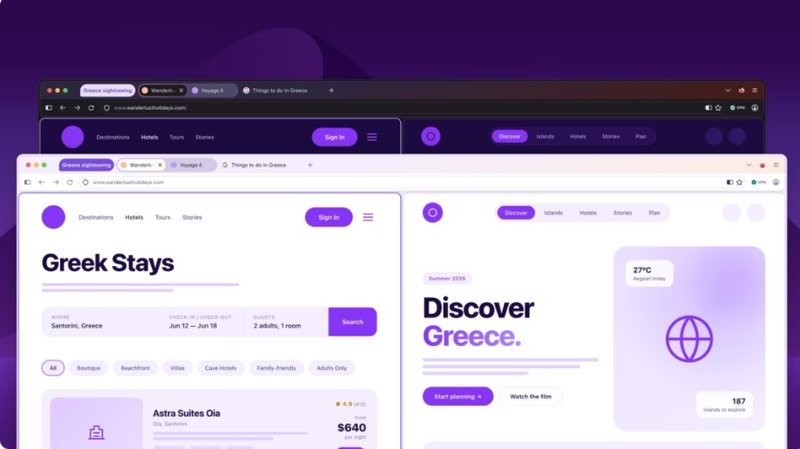
The most relevant novelty in Firefox 153 is the built-in preview of Multi-Account Containers, previously only available as an extension. Each container isolates credentials and sessions: you can have a “home container” with personal logins to various sites and a “work container” that opens the same platforms with professional accounts, without the two worlds mixing. Unlike user profiles, which require separate windows, containers work at the tab level, making the separation seamless and immediate.
This move is not just a convenience for multitasking. It is a message for organizations that handle sensitive data and want to avoid digital identities ending up in ungoverned cloud silos. In a landscape where companies evaluate on-premise deployments for language models and proprietary data, a browser that segments credentials directly on the client becomes a coherent piece of a data sovereignty strategy. Firefox 153 provides this capability without third-party extensions, reducing the attack surface and dependency on external ecosystems.
A similar philosophy appears on mobile. The new Quick Answers feature for iOS in the United States performs speech recognition locally on the device, sending only the transcribed question to the cloud for an answer. The voice data never leaves the phone—a small detail that, in an on-device architecture, means protecting highly personal information. It is a hybrid approach reminiscent of edge inference in AI, where sensitive processing happens locally while a central model handles completion.
Thunderbird and self-hosted email as a stronghold of autonomy
Thunderbird 153 is no less significant. With 181 bug fixes and dozens of improvements, the mail client solidifies itself as a professional tool for those who manage communications in-house. The updates touch OpenPGP encryption, OAuth authentication, folder handling, and address book export, strengthening features critical for environments where confidentiality is non-negotiable.
But the element that looks further ahead is the support for Thundermail, the paid, self-hosted email service still in the launch phase, designed as part of the Thunderbird Pro offering. A “Sign in with Thundermail” button already appears in the Account Hub, a sign that the infrastructure is nearly ready. If the project matures, it will offer a viable path for organizations that want corporate email entirely under their own control, bypassing large cloud providers, and integrating it into a proven open-source client.
Here lies the structural point: tools like Thunderbird and Firefox are filling a gap that was once covered almost exclusively by centralized commercial services. The growing focus on digital sovereignty, fueled also by the AI world with the need for on-premise stacks, pushes to reconsider the entire chain of daily tools. It is not enough to train a language model on proprietary hardware if corporate email and browser identity still pass through third-party servers. With these two ESR releases, Mozilla proposes an ecosystem where local segmentation and self-hosted mail become building blocks for a coherent infrastructure.
The sustainability question remains: MZLA, responsible for Thunderbird, struggles to keep up with the monthly release cadence inherited from Firefox, and an annual rhythm would likely benefit release quality. The Thundermail service could represent a stable funding source, but also an adoption challenge in a market dominated by giants. Those investing in on-premise environments for AI know that data governance does not stop at models: it extends to every application, browser, and mail client. Mozilla provides the open-source tools; the choice to integrate them into a sovereignty strategy belongs to those who must decide where their data should flow.







💬 Comments (0)
🔒 Log in or register to comment on articles.
No comments yet. Be the first to comment!