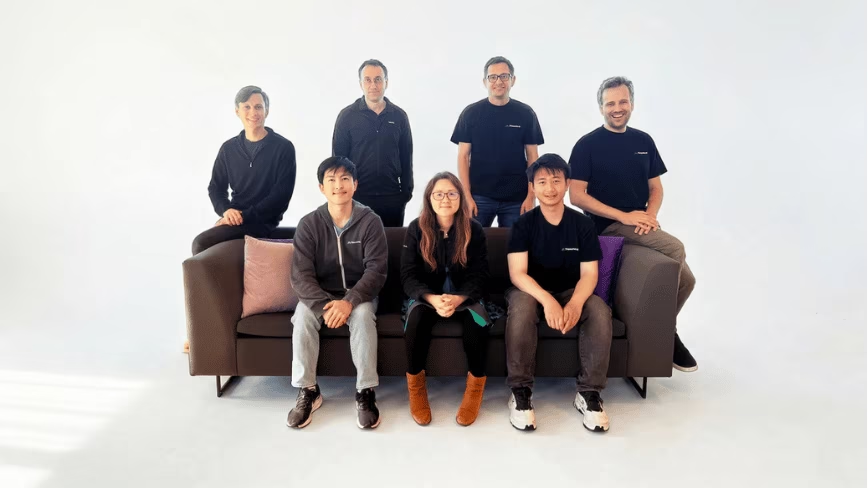
The announcement makes noise: San Mateo-based Fireworks has closed a $1.5 billion Series D round, bringing its valuation to $17.5 billion. Atreides Management, Index Ventures, and TCV lead the round, with Nvidia also among the investors — a detail that on its own signals how deeply this story touches hardware and compute infrastructure.
But it’s not just a round number. Fireworks embodies a precise thesis: that the AI economy will no longer be sustained by simply renting models from big labs, but by building proprietary AI capabilities, managed in-house by companies. In practice, instead of paying for every token sent to an API, enterprises will bring LLMs into their own data centers — or at least onto controlled stacks.
A paradigm shift: from renting to owning
Fireworks’ platform is known for offering optimized inference, serving open-source and proprietary models with low latency and predictable costs. But the real game is not strictly technological: it is strategic. The $1.5 billion investment rewards a long-term bet that the market will shift toward deployments that prioritize control, latency, and data sovereignty. At AI-RADAR we have been tracking this tension between renting and owning in the LLM on-premise space: it’s not merely a matter of price, but of decision-making architecture. Those who adopt on-premise — or hybrid solutions with dedicated nodes — can customize models, fine-tune on proprietary data without exposing it to third parties, and handle load spikes without surprises on their cloud bill.
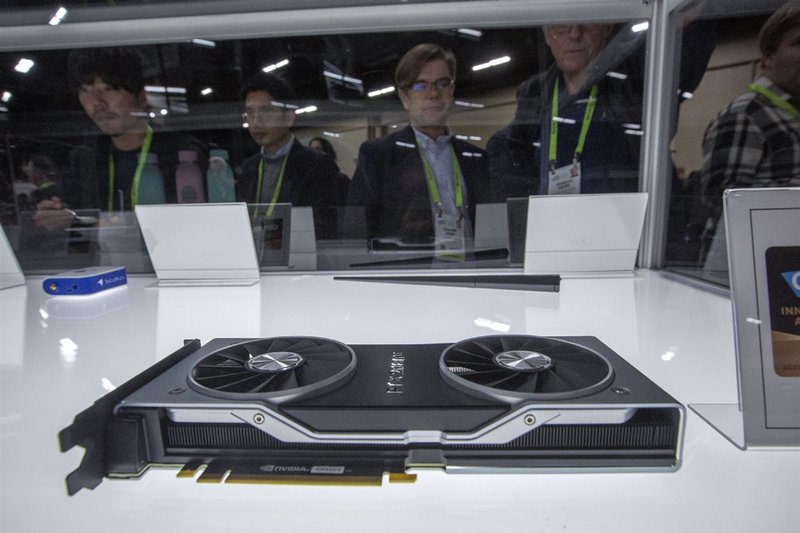
Nvidia’s entry into the capital is no accident. Demand for inference GPUs is exploding precisely because serving models in-house requires optimized hardware. If Fireworks’ thesis holds, we won’t just need massive training clusters, but also a distributed machine fleet to run daily workloads. This reshapes incentives across the supply chain: no longer a race solely for the largest model, but ecosystems of smaller, efficient models optimized for specific enterprise domains and on-prem GPU execution.
Winners and those who should worry
Organizations with stringent privacy requirements — healthcare, finance, defense — and those for whom API costs become unsustainable at scale stand to gain from this transition. On the losing side are providers that build all their value on an unattainable proprietary model, accessible only through rental. It’s no coincidence that Fireworks’ round arrives at a time when discussions about TCO and vendor lock-in are more heated than ever.
The analysis doesn’t stop there. If AI ownership becomes a competitive asset, the market will demand tools for on-premises model lifecycle management, orchestration frameworks, and continuous update pipelines. This is a structural shift that redefines the skill sets required of IT teams and pushes toward an increasingly distributed AI infrastructure, where on-premise is not an anomaly but a deliberate architectural choice. The $17.5 billion valuation assigned to Fireworks is not just confidence in a startup: it’s a directional indicator for the entire sector.






💬 Comments (0)
🔒 Log in or register to comment on articles.
No comments yet. Be the first to comment!