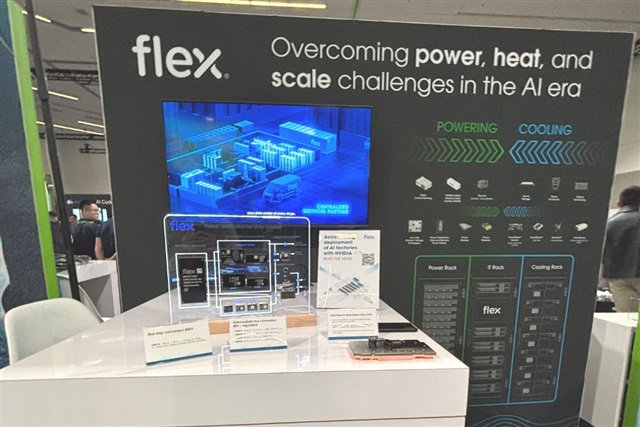
Flex and its AI Strategy
Flex, a global player in manufacturing and supply chain management, has recently captured market attention with significant announcements. The company exceeded expectations for its 2027 financial outlook, signaling strong performance and an optimistic vision for the future.
Concurrently, Flex announced a plan to spin off its unit dedicated to artificial intelligence data centers. This strategic decision reflects a broader trend in the technology sector, where companies seek to optimize their portfolios and capitalize on the rapid growth of the AI market, focusing efforts on high-potential segments.
The Importance of AI Data Centers and On-Premise Challenges
The establishment of AI-specific data centers represents a crucial component for the deployment of Large Language Models (LLM) and other artificial intelligence applications. These centers demand highly specialized infrastructure, with stringent requirements in terms of computing power, VRAM, network throughput, and advanced cooling systems, far exceeding the capabilities of traditional data centers.
For companies evaluating self-hosted or on-premise solutions, managing such infrastructure involves significant considerations. The Total Cost of Ownership (TCO) is not limited to purchasing high-performance hardware like GPUs but also includes operational costs, energy, maintenance, and specialized personnel management, which can heavily impact the overall budget.
Furthermore, aspects such as data sovereignty, regulatory compliance, and the need for air-gapped environments drive many organizations to prefer local deployments, despite the initial complexity. The ability to physically control infrastructure and data becomes a discriminating factor, especially in regulated sectors or for sensitive workloads where security and privacy are absolute priorities.
Market Implications of the Spinoff
The spinoff of an AI data center unit by a company like Flex can have several market implications. It allows the new entity to focus exclusively on developing and offering AI infrastructure solutions, potentially accelerating innovation and attracting targeted investments that might otherwise be diluted within a larger organization.
This approach addresses the growing demand for optimized infrastructure for LLM Inference and Fine-tuning, a rapidly expanding segment that requires increasingly performant and scalable solutions. Specialization can lead to more efficient and customized solutions, capable of tackling the technical challenges related to latency, capacity, and performance required by modern AI workloads.
Flex's decision also underscores the maturation of the AI infrastructure market, which is becoming a distinct sector separate from more generic manufacturing and supply chain operations. This indicates a clear market segmentation and a growing awareness of the need for dedicated expertise and resources to support the artificial intelligence ecosystem.
Future Prospects for AI Infrastructure
The landscape of artificial intelligence infrastructure is continuously evolving, with an increasing emphasis on efficiency, scalability, and security. Companies are constantly seeking ways to optimize their AI development and deployment pipelines, balancing costs and performance in a rapidly transforming technological environment.
Flex's move fits into this dynamic context, highlighting how the ability to provide robust and specialized AI infrastructure has become a critical success factor for the widespread adoption of AI. For those evaluating on-premise deployments, complex trade-offs exist between flexibility, control, and TCO, requiring a thorough analysis of hardware specifications and operational requirements, often supported by analytical frameworks like those offered by AI-RADAR on /llm-onpremise.
The creation of dedicated entities for this purpose could accelerate the offering of more targeted and performant solutions, supporting the widespread adoption of AI in sensitive and data-intensive enterprise environments, and helping to define future standards for AI infrastructure.







💬 Comments (0)
🔒 Log in or register to comment on articles.
No comments yet. Be the first to comment!