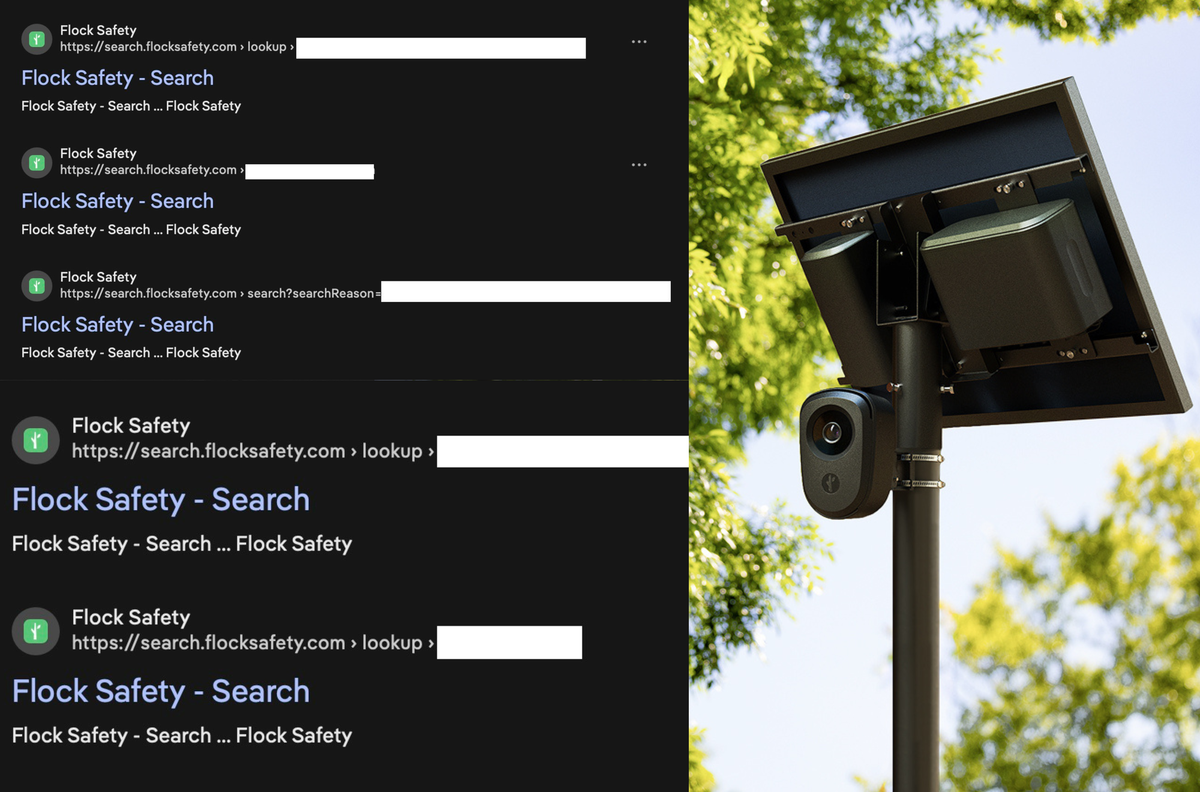
Data Breach: Flock Exposes ALPR Search Data
Flock, a company known for its Automatic License Plate Reader (ALPR) systems, is at the center of a data security controversy. According to investigations by privacy advocates and 404 Media, subsequently confirmed by Flock itself, sensitive data related to law enforcement searches was publicly exposed. This breach allowed the reasons behind police investigations and, in some cases, the specific license plates being searched, to become accessible via common search engines such as DuckDuckGo and Bing.
The incident represents an atypical data breach, as the leak did not occur through a direct attack or traditional compromise, but rather through the indexing of information that should have remained private. This raises significant questions about the configuration and data management within infrastructures supporting surveillance technologies. The ease with which such information became searchable online highlights the complexity and pitfalls of data protection in interconnected ecosystems.
The Nature of the Leak and Technical Implications
ALPR systems are designed to automatically capture and analyze vehicle license plates, providing law enforcement with tools to track suspicious or wanted vehicles. Their effectiveness relies on the ability to process large volumes of data in real-time. However, managing this data, especially when it contains sensitive information like investigation motives, requires extremely stringent security protocols. The exposure via search engines suggests an incorrect server or API configuration, which allowed search engine crawlers to index content that should have been protected by authentication or excluded from indexing via robots.txt files or meta tags.
This type of vulnerability is not exclusive to ALPR systems but can manifest in any infrastructure that handles sensitive data and exposes it, even indirectly, to the web. For organizations evaluating the deployment of Large Language Models (LLM) or other AI solutions with proprietary or regulated data, the Flock incident serves as a warning. Data sovereignty and regulatory compliance, such as GDPR, mandate that every access point and every stage of the data pipeline be protected and auditable, whether operating in the cloud or in self-hosted environments.
Context and Precedents: A Pattern of Exposure
This is not the first time Flock has been under scrutiny for security issues. Previously, 404 Media had documented how the company exposed live feeds from some of its cameras, making them accessible without adequate protection. This pattern of exposure suggests a potential systemic gap in the company's security practices and data governance. The NoCo Privacy Coalition, an activist organization based in Northern Colorado, played a crucial role in bringing this latest breach to light, sharing search results with 404 Media that demonstrated the data exposure.
The recurrence of such incidents raises broader concerns about the reliability of surveillance technologies and the ability of companies to protect the information they collect. For CTOs and infrastructure architects, the lesson is clear: the choice of a technology provider cannot be made without rigorous due diligence on its security practices and its history in terms of data protection.
Implications for On-Premise Deployments and Data Sovereignty
The Flock incident, while not directly related to Large Language Models, offers crucial insights for those managing AI infrastructures. The decision to adopt an on-premise deployment for AI workloads, including LLMs, is often driven precisely by the need to maintain strict control over data sovereignty and security. A self-hosted environment, if configured correctly, can offer a higher level of isolation and control compared to multi-tenant cloud solutions, reducing attack vectors and the possibilities of unintentional exposure.
However, as the Flock case demonstrates, even a controlled environment requires constant vigilance. Security is not a product, but a continuous process that includes regular audits, careful configurations, and a corporate culture oriented towards privacy. For those evaluating on-premise deployments, AI-RADAR offers analytical frameworks on /llm-onpremise to assess the trade-offs between control, TCO, and operational complexity, always with an eye towards protecting sensitive data and ensuring regulatory compliance.









💬 Comments (0)
🔒 Log in or register to comment on articles.
No comments yet. Be the first to comment!