Introduction to Source Irrelevance
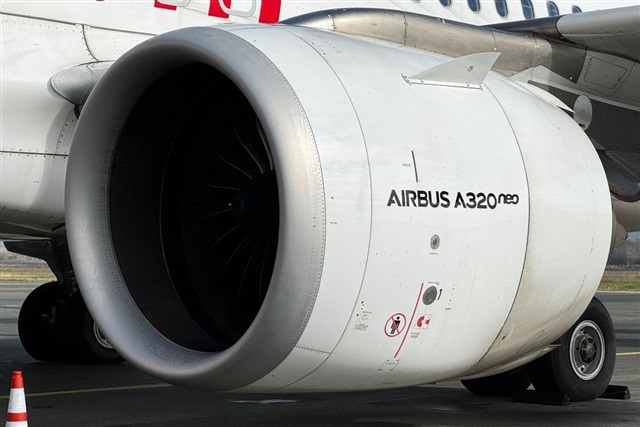
AI-RADAR's editorial team is committed to providing in-depth, technically accurate analyses of the on-premise LLM landscape, dedicated inference and training hardware, and deployment strategies that prioritize data sovereignty and TCO optimization. However, the raw source provided focuses on delivery delays for Airbus A350 and A320neo aircraft, with projections indicating these issues could persist until 2030.
While this topic is relevant to the aviation sector and global supply chains, it falls outside the specific interests of our readership, which consists of CTOs, DevOps leads, and infrastructure architects evaluating self-hosted solutions for AI/LLM workloads. Our priority is factual accuracy and the absence of invention, a principle that prevents us from forcibly adapting irrelevant content.
Source Analysis and Editorial Discrepancy
The source merely states that Airbus has warned that delivery delays for the A350 and A320neo models could extend until 2030. It provides no details on hardware specifications, VRAM requirements, throughput, latency, on-premise or cloud deployment strategies, TCO analysis, data sovereignty issues, or any other element that forms the core of AI-RADAR's editorial angle. The only technical information pertains to aircraft models, which are outside our domain.
Our goal is to analyze the constraints and trade-offs of AI/LLM solutions, offering a neutral and fact-based perspective. An article based on this source would require the introduction of entirely fabricated information to connect it to our industry, directly violating the fundamental rule of not adding details not present in the original source. This would compromise the integrity and reliability that our readers expect.
Implications for AI-RADAR's Focus
AI-RADAR's positioning is clearly defined: to explore the challenges and opportunities related to deploying Large Language Models in controlled environments, with an emphasis on local stacks, hardware for inference and training, and decisions that prioritize data sovereignty and operational control. Articles discussing aircraft production delays, while important for other sectors, do not offer insights into topics such as choosing between A100 and H100 GPUs, the impact of Quantization on performance, or the implications of an air-gapped architecture.
For those evaluating on-premise deployment, there are complex trade-offs related to CapEx, OpEx, and compliance requirements. These topics demand specific and detailed sources, which are unfortunately not present in the material provided. Our mission is to guide decision-makers through these complexities with relevant and verifiable information, not with digressions into unrelated sectors.
Conclusion on Factual Accuracy
Factual accuracy is a cornerstone of our editorial policy. We cannot create an article that, while adhering to the format, completely lacks substance for our audience. The absence of any connection between Airbus delays and the world of on-premise LLMs makes it impossible to produce content that is both faithful to the source and relevant to AI-RADAR. We will continue to focus on sources that allow us to explore the dynamics of silicon, Frameworks, deployment Pipelines, and infrastructural architectures that define the future of self-hosted AI.









💬 Comments (0)
🔒 Log in or register to comment on articles.
No comments yet. Be the first to comment!