
A Strategic Turn for Formosa Plastics Group
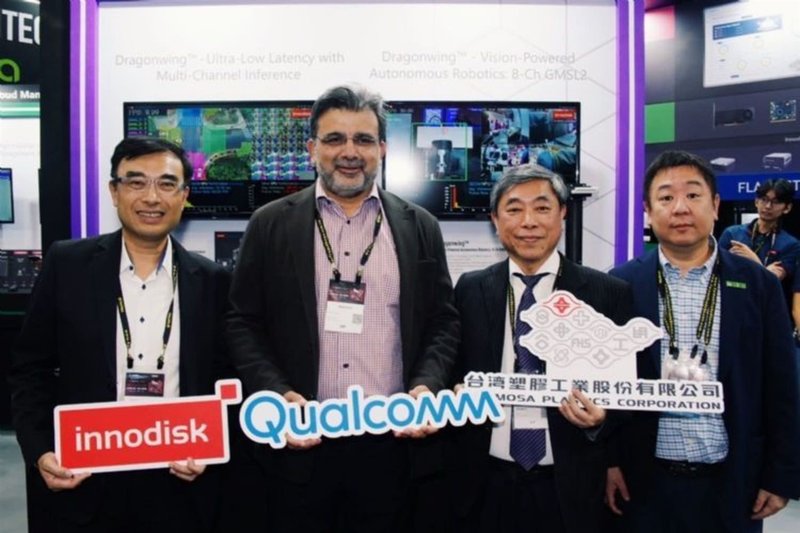
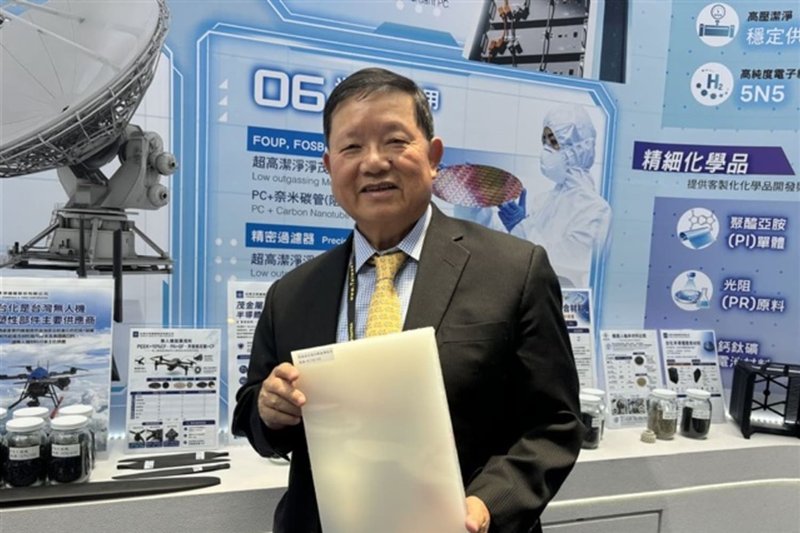
Formosa Plastics Group (FPG), one of Taiwan's largest industrial conglomerates, has announced a significant strategic reorientation, as highlighted by statements from Nanya Plastics chairman Chia-Chau Wu. The group intends to concentrate its investments and resources on three emerging technological pillars: artificial intelligence (AI), the semiconductor sector, and opportunities related to energy infrastructure and grids. This decision marks an important evolution for a company traditionally rooted in chemistry and plastics, indicating a clear vision towards the sectors that will define the next technological decade.
FPG's move is part of a global context where technological innovation has become a primary driver of growth and competitiveness. For an entity of this scale, entering these areas is not just diversification but a reaffirmation of its desire to play an active role in the value chain of the most advanced technologies. This type of strategic transition is often driven by the need to gain greater control over the supply chain and to capitalize on the increasing demands for computing capacity and data management.
Implications for AI and On-Premise Infrastructure
FPG's interest in AI and semiconductors has direct implications for companies involved in deploying Large Language Models (LLM) and AI workloads. The investment in semiconductors, in particular, suggests potential participation in the production or development of chips dedicated to AI acceleration, such as GPUs or ASICs. This is a crucial aspect for those evaluating on-premise solutions, where hardware availability and specifications (such as VRAM, computing power, and throughput) are decisive factors for efficiency and TCO.
Greater control over silicon production can translate into increased supply chain resilience and, potentially, more competitive costs or greater customization for specific needs. For CTOs and infrastructure architects, the ability to access hardware optimized for LLM inference or training in self-hosted or air-gapped environments is fundamental to ensuring data sovereignty, regulatory compliance, and optimal performance. The choice between different GPU architectures, for example, such as NVIDIA A100 or H100, depends strictly on memory requirements (e.g., 80GB VRAM for complex models) and the ability to handle high batch sizes with low latency.
Market Context and Technological Sovereignty
FPG's decision reflects a broader trend in the global market: the convergence between industrial production and high technology. Many conglomerates are recognizing the strategic importance of owning or controlling the production capabilities of key components, especially in the semiconductor sector, which has been at the center of geopolitical tensions and supply chain disruptions in recent years. The investment in energy grids, on the other hand, underscores the growing awareness of the energy impact of digital infrastructures, particularly those dedicated to AI, which require significant consumption.
For companies considering the deployment of LLMs and other AI applications, these market dynamics are crucial. Dependence on external suppliers for hardware or cloud services can entail risks in terms of costs, availability, and data sovereignty. The on-premise approach, while requiring a higher initial investment (CapEx), offers unparalleled control over infrastructure, security, and data management—critical aspects for regulated industries or sensitive workloads. Evaluating the Total Cost of Ownership (TCO) thus becomes a complex exercise that includes not only direct costs but also intangible benefits related to security and operational autonomy.
Future Prospects for the AI-RADAR Ecosystem
Formosa Plastics Group's reorientation towards AI, semiconductors, and energy grids is a clear signal of the evolving global technological landscape. This move highlights how vertical integration and control over enabling technologies have become priorities for large enterprises. For our audience, which focuses on on-premise LLMs, local stacks, and hardware for inference/training, such developments are of great interest. The availability of more performant and optimized silicon, coupled with increased attention to the energy efficiency of infrastructures, can facilitate the adoption of more robust and sustainable self-hosted solutions.
A company's ability to manage its AI workloads in a controlled environment, ensuring data sovereignty and compliance, is an increasingly relevant competitive advantage. As the market continues to evolve, understanding the trade-offs between cloud and on-premise solutions, supported by in-depth analysis on /llm-onpremise, remains essential for making informed decisions. The path taken by FPG suggests a future where technological autonomy and infrastructural efficiency will be the pillars for innovation in the era of artificial intelligence.






💬 Comments (0)
🔒 Log in or register to comment on articles.
No comments yet. Be the first to comment!