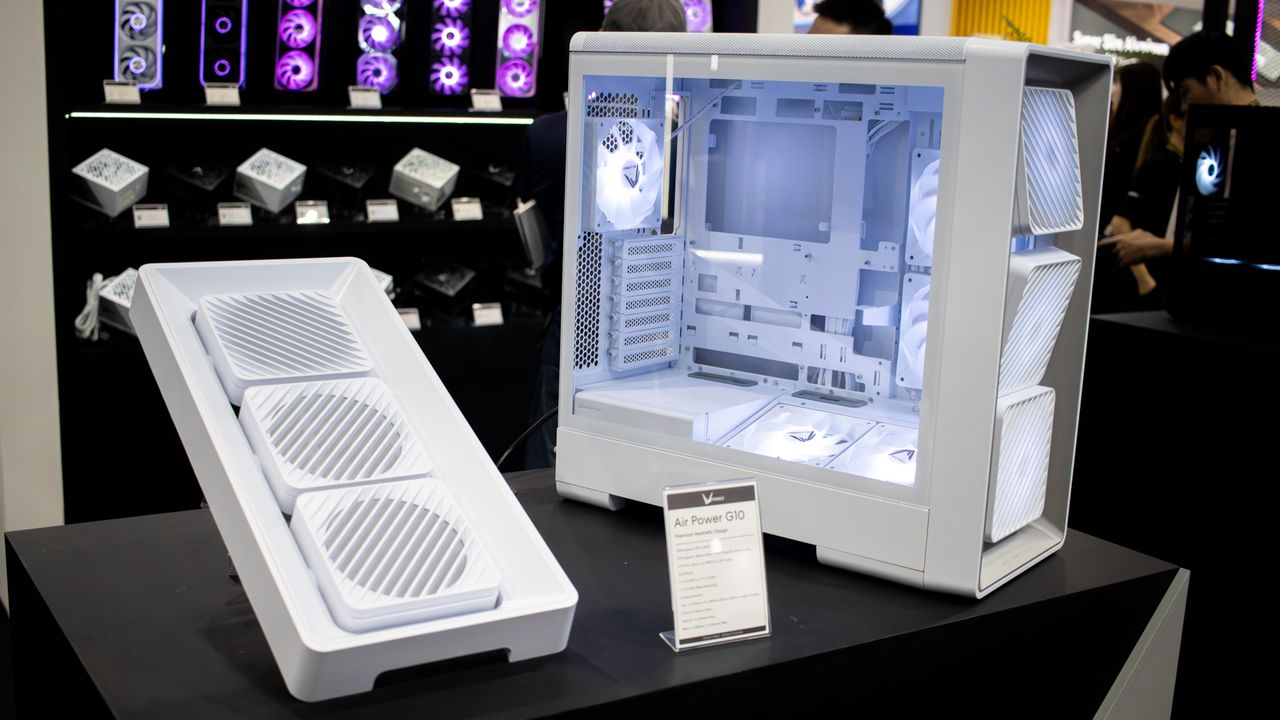
FormulaV Line and its US Market Expansion
Taiwanese startup FormulaV Line has announced its intention to expand its presence in the US market with the launch of two new PC chassis models. These products, described as "unique," are expected to be available on the Newegg e-commerce platform later this year. The entry of new players into the hardware components sector is always a sign of dynamism, especially in an era where computing demands are rapidly evolving.
For infrastructure architects and DevOps leads, the choice of chassis is not a minor detail, particularly when dealing with systems intended for intensive workloads such as those related to artificial intelligence. An innovative design can significantly influence a system's ability to house powerful hardware, manage heat, and ensure operational stability.
The Importance of a Robust Chassis for Advanced Computing
Specific details about FormulaV Line's "unique cases" have not yet been disclosed, but the term suggests a particular focus on design and functionality. In the context of AI, a chassis is not just an aesthetic enclosure; it is a critical component that must support large motherboards, multiple high-power GPUs (like NVIDIA A100 or H100), robust power supplies, and advanced cooling systems.
Thermal management is fundamental for modern GPUs, which can generate hundreds of watts of heat. A well-designed chassis offers optimized airflow, space for large radiators, and multiple fans—essential elements for maintaining operating temperatures within acceptable limits and preventing performance throttling during prolonged training or Inference sessions of Large Language Models. The capacity to accommodate a high number of storage units and expansion cards is equally relevant for the data pipelines and voluminous datasets typical of AI.
Implications for On-Premise AI Deployment
The emergence of specialized hardware solutions, even at the chassis level, is particularly interesting for organizations evaluating on-premise AI deployment strategies. Building local infrastructure offers significant advantages in terms of data sovereignty, regulatory compliance (such as GDPR), and security, allowing sensitive data to be kept within physical or air-gapped network boundaries.
A self-hosted system, assembled with quality components and an adequate chassis, may represent a higher initial investment (CapEx) compared to adopting cloud services, but it can lead to a lower Total Cost of Ownership (TCO) in the long run by eliminating recurring and unpredictable cloud operational costs. Configuration flexibility and the ability to optimize every aspect of the hardware for specific workloads are additional benefits. For those evaluating on-premise deployment, AI-RADAR offers analytical frameworks on /llm-onpremise to assess these trade-offs, considering factors such as compute density, energy consumption, and scalability.
Future Prospects for Local AI Hardware
FormulaV Line's initiative, while not directly focused on AI, fits into a broader trend of increasing demand for high-performance, customizable hardware. As Large Language Models and other artificial intelligence applications become more complex and require ever-increasing computing resources, the ability to build and manage efficient local systems becomes a crucial competitive factor.
The attention to chassis design and functionality, as suggested by FormulaV Line's announcement, reflects the maturation of the PC components market. This development is essential to support not only gamers and content creators but also professionals and businesses that require robust local workstations and servers to power their ambitions in artificial intelligence, ensuring control, performance, and security.




💬 Comments (0)
🔒 Log in or register to comment on articles.
No comments yet. Be the first to comment!