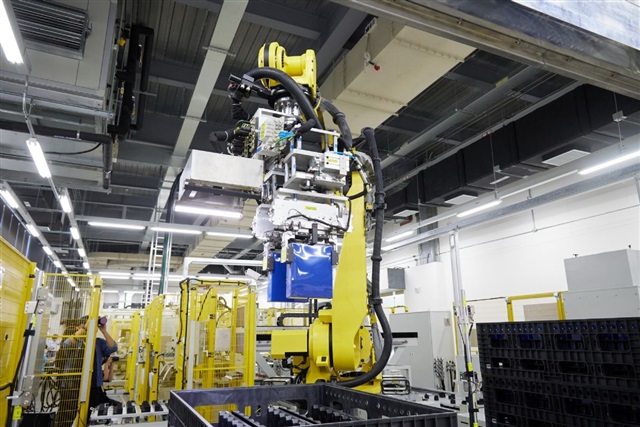
Foxconn's Evolution: From Simulated AI to Real-World Production
Foxconn, one of the world's largest electronics manufacturers, is taking a significant step in its digital transformation journey. The company has announced the transition of one of its US plants from the simulation phase to operational status, thanks to the implementation of an AI-driven factory setup. This development underscores a growing trend in the manufacturing sector: the deep integration of AI to optimize production processes and enhance operational efficiency.
The transition from a simulated environment to a real-world one represents a milestone for AI adoption in industrial contexts. It's no longer just about testing models in controlled environments, but about seeing them operate in the field, managing machinery, analyzing real-time data, and supporting critical decisions. For companies like Foxconn, which handle extremely high production volumes and complex supply chains, AI offers unprecedented opportunities to refine every aspect of production.
On-Premise AI at the Heart of the Smart Factory
The implementation of an "AI-driven factory setup" often implies the adoption of AI solutions deployed directly on-site, i.e., on-premise. This choice is particularly relevant in industrial contexts where data sovereignty, low latency, and security are absolute priorities. Data generated within a factory, from machine performance to quality controls, is often sensitive and requires immediate processing to ensure efficiency and prevent disruptions.
On-premise deployment allows companies to maintain full control over their data and infrastructure, avoiding the risks associated with transferring and processing critical information on external cloud platforms. This approach requires an initial investment in dedicated hardware, such as servers with high-performance GPUs for local Inference and training, but can result in a more favorable TCO in the long term by reducing operational costs related to data traffic and cloud service usage.
From Modeling to Operational Reality: Challenges and Opportunities
The transition from simulation to operational status with AI is not without its challenges. It requires the ability to translate theoretical models into robust and reliable systems that can operate 24/7 in a dynamic physical environment. This includes optimizing models for Inference on specific hardware, managing integrations with existing control systems, and ensuring resilience against failures and anomalies.
However, the opportunities are immense. AI can enable predictive maintenance, identifying potential failures before they occur; it can optimize machinery energy consumption; and it can improve product quality through automated inspections and real-time defect analysis. For technical decision-makers, the choice between a cloud-first architecture and a self-hosted approach becomes crucial, balancing flexibility, costs, and security requirements.
Future Prospects for Industrial AI and On-Premise Deployment
Foxconn's move reflects a broader trend in manufacturing and beyond, where AI is becoming a fundamental pillar for innovation and competitiveness. The emphasis on an "AI-driven factory setup" suggests a holistic approach to automation and optimization, extending beyond a single application to encompass the entire production pipeline. This scenario makes on-premise deployment increasingly attractive for companies seeking to maximize control, security, and cost efficiency.
For those evaluating different deployment options for AI/LLM workloads, AI-RADAR offers analytical frameworks on /llm-onpremise to understand the trade-offs between self-hosted and cloud-based solutions. Foxconn's decision to bring AI from simulation to operation in a US plant is a clear indicator of the maturity achieved by AI technologies and their ability to generate tangible value in complex industrial environments, emphasizing the need for robust and locally controlled infrastructures.





💬 Comments (0)
🔒 Log in or register to comment on articles.
No comments yet. Be the first to comment!