The Imperative of Cooling in the AI Era
The advancement of Large Language Models (LLM) and artificial intelligence workloads has pushed the boundaries of computing capabilities, bringing with it an increasingly pressing infrastructural challenge: thermal management. Modern GPUs, essential for the inference and training of these models, generate significant amounts of heat, which must be dissipated effectively to ensure stability, optimal performance, and hardware longevity. In this context, exploring advanced and customized cooling solutions becomes a key element for infrastructure designers.
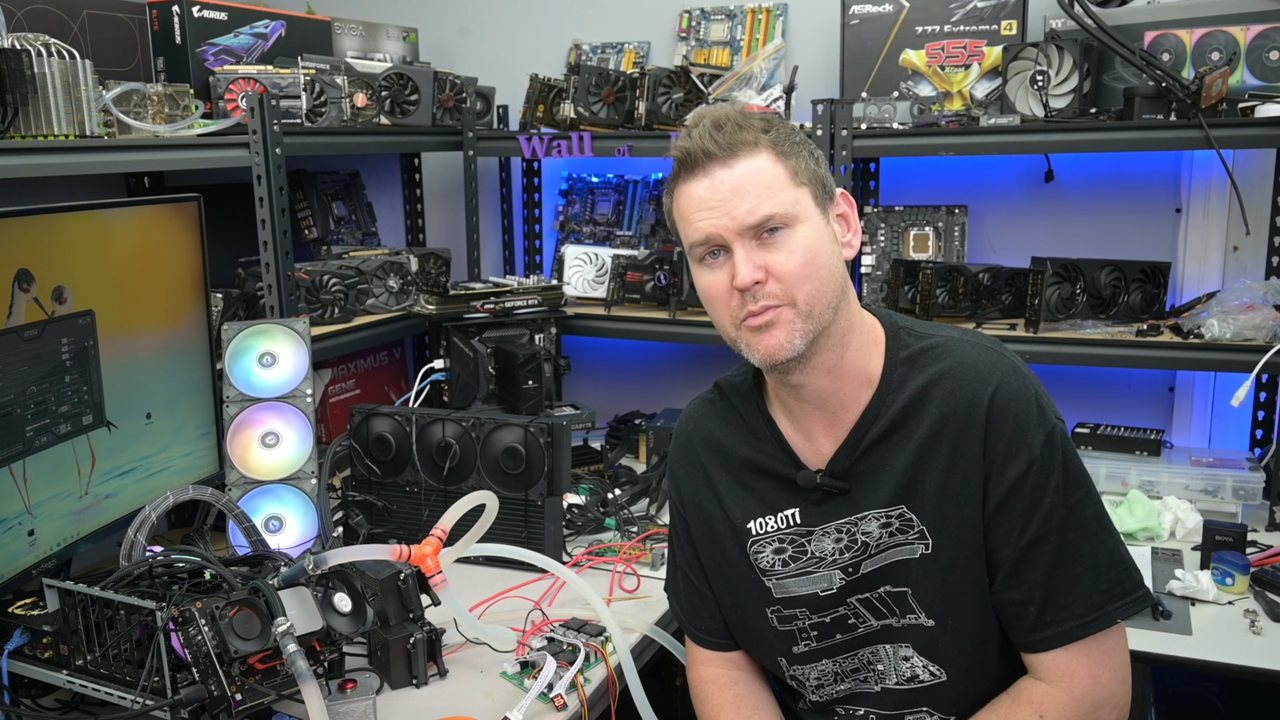
An example of this drive towards tailored solutions also emerges from the enthusiast community, where a project named “TrashBench” demonstrated the creation of a Peltier thermoelectric cooling system from scratch. This setup, which utilizes two 360mm AIOs, homemade DC controllers, and a custom loop, highlights how creative engineering can address extreme thermal demands. Although on a different scale and context, the “TrashBench” approach offers insight into the philosophy of adapting and building specific solutions for unique cooling requirements.
The Challenges of Cooling in AI Infrastructure
Latest-generation GPUs, with their high transistor density and high-bandwidth VRAM, are veritable thermal furnaces. Excessive heat can lead to throttling, reducing performance and energy efficiency, and in the long term, can compromise component reliability. For on-premise LLM deployments, where the goal is often to maximize compute density per unit of space and minimize operational TCO, efficient thermal management is not just desirable but indispensable.
Traditional air-cooling solutions may not be sufficient for densely packed AI server racks. This drives the adoption of liquid cooling systems, such as direct-to-chip cooling or immersion solutions. The choice of cooling system directly impacts critical factors such as the overall data center power consumption, noise levels, maintenance complexity, and the ability to scale the infrastructure.
The Custom Approach and On-Premise Deployments
For organizations opting for on-premise deployments, the ability to implement customized cooling solutions offers a level of control and optimization that standard cloud offerings can hardly match. A custom-designed cooling system can be calibrated for the specific needs of the hardware used (e.g., GPUs with particular thermal requirements), for the physical environment of the data center, and for energy efficiency goals. This is particularly relevant for scenarios requiring data sovereignty, air-gapped environments, or predictive performance with low latency.
Investing in self-hosted infrastructure, including advanced cooling systems, is a strategic decision that balances CapEx and OpEx. While custom solutions may require a higher initial investment and internal expertise for design and maintenance, they can result in a lower TCO in the long run, thanks to greater energy efficiency, extended hardware lifespan, and the ability to optimize performance for specific workloads.
Future Prospects and Trade-offs
The evolution of AI architectures will continue to pose new challenges for thermal management. The search for more efficient materials, innovative heatsink designs, and advanced cooling fluids is constantly evolving. For CTOs and infrastructure architects, evaluating cooling options must consider a wide range of trade-offs: from implementation and maintenance complexity, to initial and operational costs, and environmental impact.
While “turnkey” solutions offer simplicity, the custom approach, inspired even by projects like “TrashBench” in its essence of dedicated engineering, allows for unlocking levels of optimization and control that are otherwise difficult to achieve. For those evaluating on-premise deployments for their AI/LLM workloads, AI-RADAR offers analytical frameworks on /llm-onpremise to assess these trade-offs, providing the tools to make informed decisions that balance performance, cost, and data sovereignty.








💬 Comments (0)
🔒 Log in or register to comment on articles.
No comments yet. Be the first to comment!